


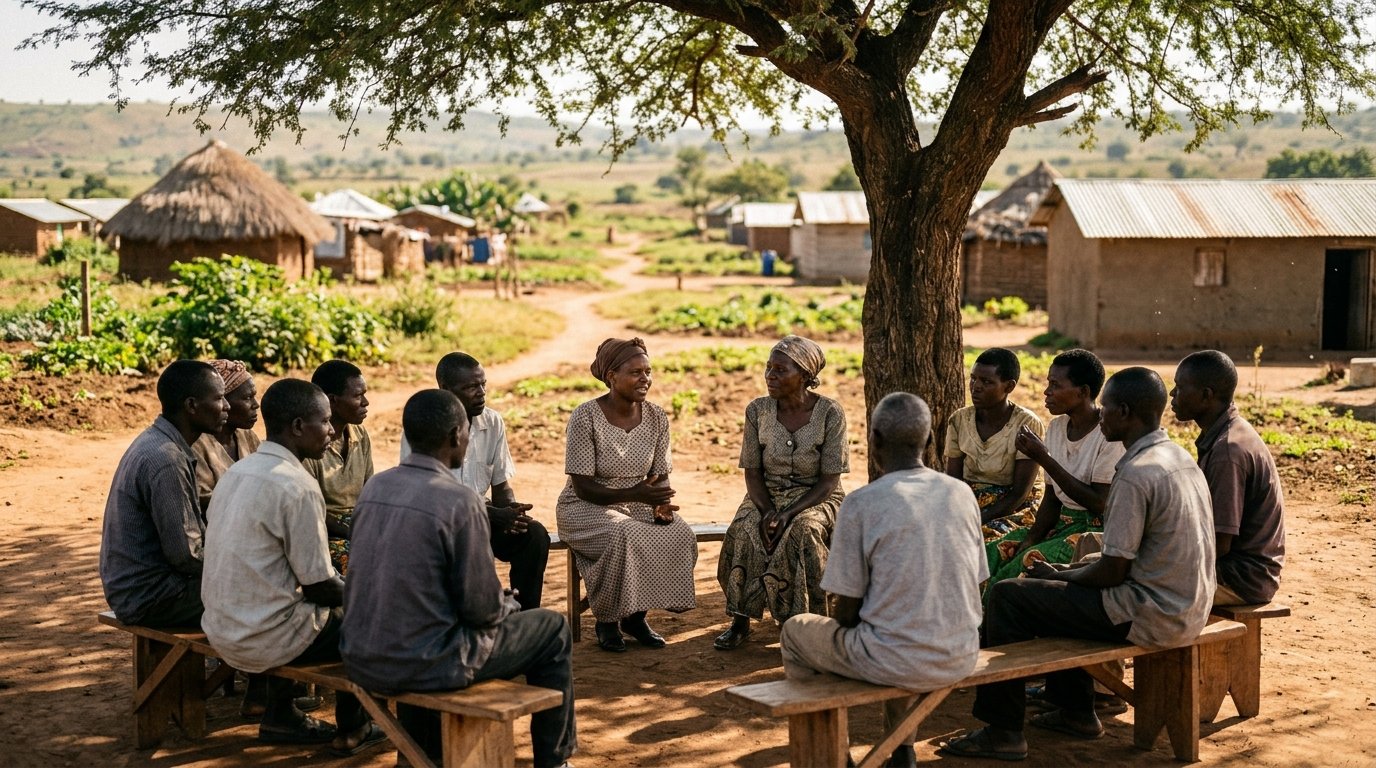
Refugees living in Ugandan settlements who received food assistance or water and sanitation support exhibited significantly lower odds of probable depression and anxiety compared to those without such aid, according to findings from a cross-sectional household survey.
Displaced populations across sub-Saharan Africa have historically been the focus of limited mental health research, even though Uganda serves as one of the largest refugee-hosting countries in the world. To address this knowledge gap, investigators analyzed survey data to identify factors linked to psychological distress and determine which modalities of humanitarian or government assistance correlated with better mental health outcomes.
The study utilized data collected through the 2021 Uganda Refugee Population-based HIV Impact Assessment, a cross-sectional survey conducted among households residing within refugee settlements across the country. Household heads reported whether their families had received any government or humanitarian support during the previous 12 months, while individual mental health symptoms were screened using the Patient Health Questionnaire-4 to evaluate probable depression and anxiety.
Among the 2,555 participants who provided complete survey data, 54.6 percent were female, and the median age was 28 years, with an interquartile range spanning 20 to 39 years. Food aid represented the most prevalent assistance modality, reaching 76.0 percent of individuals in surveyed households, with receipt differing significantly by age group, country of origin, length of residence in Uganda, settlement region, and socioeconomic wealth index.
Overall, screening identified probable depression in approximately 13.3 percent of participants (409 individuals) and probable anxiety in 14.0 percent (421 individuals). Survey-weighted logistic regression analysis revealed that individuals living in households that received food support had 57 percent lower odds of probable depression (adjusted odds ratio 0.43, 95% confidence interval 0.29 to 0.65) and 52 percent lower odds of probable anxiety (adjusted odds ratio 0.48, 95% confidence interval 0.32 to 0.71).
Receipt of water and sanitation support was likewise linked to reduced psychological morbidity, corresponding to 40 percent lower odds of probable depression (adjusted odds ratio 0.60, 95% confidence interval 0.37 to 0.99) and 45 percent lower odds of probable anxiety (adjusted odds ratio 0.55, 95% confidence interval 0.35 to 0.88). In contrast, other modalities of support assessed in the study did not demonstrate statistically significant associations with mental health benefits.
The authors noted that interventions addressing basic physiological needs, specifically food and clean water, are associated with enhanced mental well-being in displaced populations. Nonetheless, because the investigation was cross-sectional in design, researchers underscored that the causal direction of these relationships cannot be determined from the available data.
Subject of Research: Association between humanitarian assistance and refugee mental health in Uganda
Article Title: Humanitarian and government support and mental health among refugees in Ugandan settlements, 2021
Article References: Roberts, L. E., Kirungi, W., Biraro, S., Currie, D. W., Farley, S. M., Gianetti, B., Hoos, D., Kusasira, D., Nyakoojo, R., Okimait, D., Sendagala, S., West, C. A., & Low, A. (2026). Humanitarian and government support and mental health among refugees in Ugandan settlements, 2021. Conflict and Health. https://doi.org/10.1186/s13031-026-00828-8
Image Credits: AI Generated
DOI: 10.1186/s13031-026-00828-8
Keywords: refugee health, mental health, depression, anxiety, humanitarian aid, Uganda, food assistance, water and sanitation, Humanitarian, government, support, mental
