


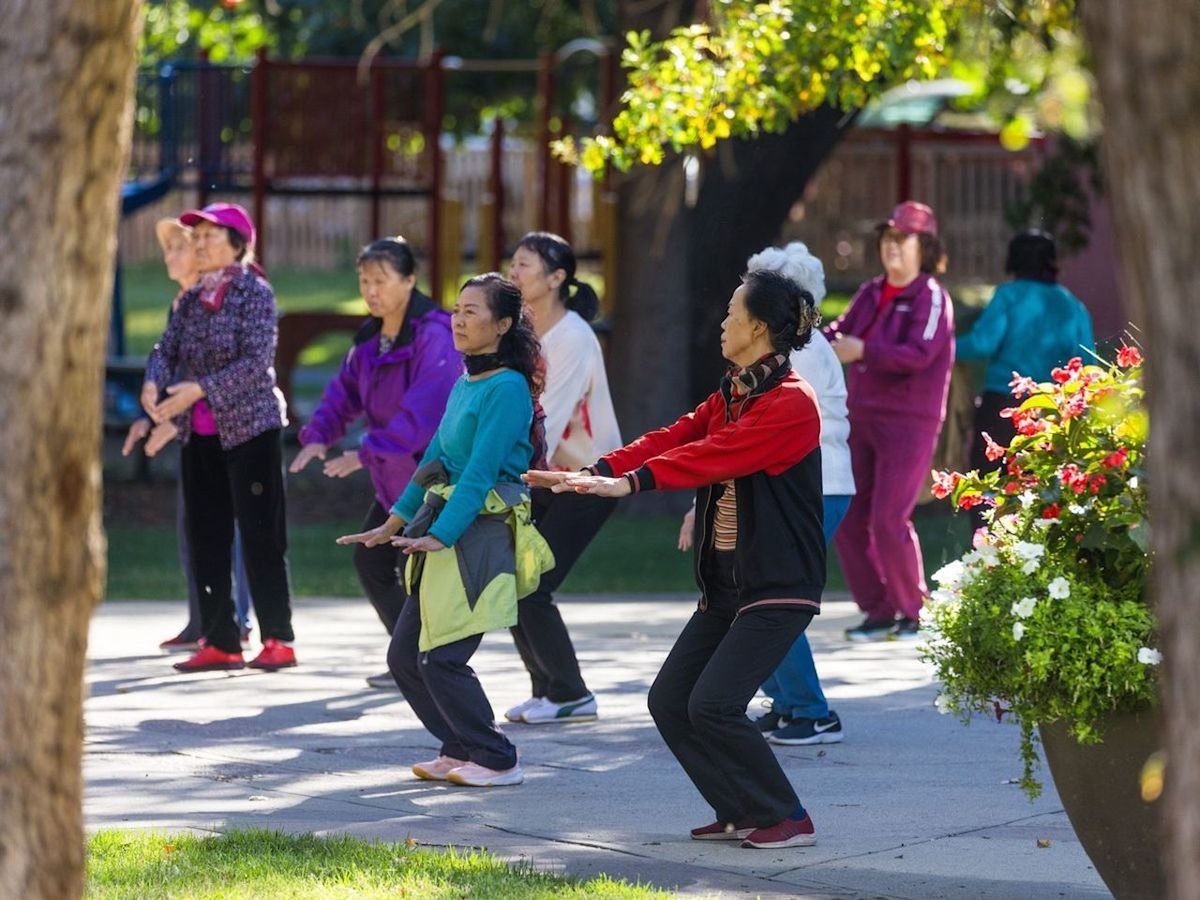
A study by the University of Calgary found there can be benefits of mindful practices and Tai Chi for cancer survivors.
Mindfulness and Tai Chi for Cancer Health, or the MATCH study, was published in the Journal of Clinical Oncology on Wednesday.
It was the largest study that has ever been done comparing two different mind-body therapies for cancer survivors experiencing distress and symptoms post-treatment, said study lead investigator and oncology professor in the Cummings School of Medicine Dr. Linda Carlson.
“Lots of people are struggling with symptoms after cancer treatment with things like pain, fatigue and sleep are some of the most distressing that impair their quality of life,” Carlson said. “People often don’t want to take medications for those treatments and so they turn to mind-body therapies.”
It compared an eight week program called Mindfulness-based Cancer Recovery that trains people in mindfulness meditation and gentle yoga with a group-based Tai Chi Qigong program that met once a week over 11 weeks.
The study was a collaborative effort between the University of Calgary, University of Toronto and Mass General Brigham in Boston, Massachusetts.
Research on each of these programs has been done individually, comparing it to usual cancer care and no other treatment.
This was the first and largest study that compared them both head on to see if there’s a different range of benefits.
“We included people with all different types of cancers and all different stages,” Carlson said. “Research in the past has just been, for example, for women with breast cancer, but not other types of cancers. Here, we looked at everybody. They could have had any kind of cancer, any type of severity and we showed that these therapies were beneficial for people across the whole spectrum.”
University of Calgary cancer researcher Dr Linda Carlson.
These findings reinforce the value behind a whole-person approach to cancer survivorship, said director of the Osher Center for Integrative Health at Mass General Brigham Dr. Peter Wayne.
“We found that both mindfulness-based cancer recovery and tai chi/qigong helped participants manage some of the most common and burdensome challenges faced after cancer treatment, including fatigue, pain and, in the case of tai chi/qigong, sleep difficulties,” Wayne said. “The strong relationships among improvements in these symptoms suggest that mind-body interventions may help support health and well-being in an integrated way.”
The study was published in the flagship journal of the American Society of Clinical Oncology, the largest professional body of mainstream oncologists around the world.
MATCH has further outcomes to publish which looks at biomarkers like blood and saliva samples, she said.
“We looked at stress hormones, immune system function and we can even look at the level of the DNA at telomere length, which is the measure of cell aging and gene expression,” Carlson said. “That hasn’t been published yet, but that’ll be the next to come out where we’re showing how these mind-body therapies affect the biology and really get under the skin.”
These therapies are already offered at the Arthur J.E. Child Comprehensive Cancer Centre and in the community at Wellspring Alberta.
Carlson hopes the published study will provide the scientific basis to prove that these forms of therapy will be beneficial and are more widely available in cancer centres around the world.
Research continues with another project that combines mindfulness-based therapy with psychedelic-assisted therapy, she said.
“So we’ve been working on that for the last year or so, and there’s probably going to be more news when we launch that first study in the next six months or so,” Carlson said. “We just got ethics approval (and) we’re going to be launching a pilot trial in probably November (or) December.”
