


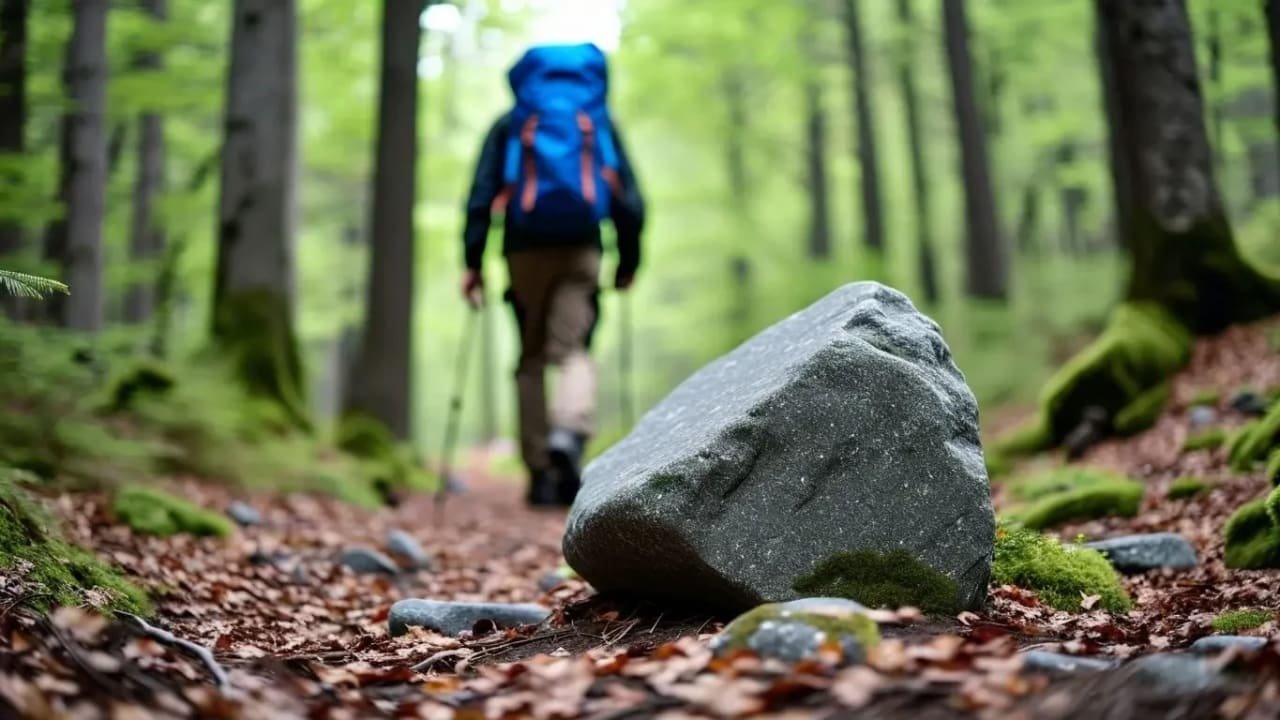
We are used to thinking of stress, anxiety and depression as conditions that require complex solutions: Psychological therapy, medications, major life changes or medical interventions. All of these are certainly important and sometimes necessary. But a new study reminds us that sometimes a very basic and fairly simple action can affect the body and mind: Going out into nature.
A new systematic review and meta-analysis published in the journal BMC Public Health examined the effect of “forest therapy,” known in Japan as Shinrin-yoku, or “forest bathing,” on mental stress, depressive symptoms and anxiety symptoms. The researchers analyzed 25 controlled studies comprising a total of 1,876 participants, and found that structured time spent in a forest environment was linked to a significant decrease in stress, anxiety and depression metrics, at least in the short term.
The findings do not mean that a forest replaces medical or psychological treatment for those who need it. However, they do reinforce an idea that is increasingly taking hold in modern medicine: The environment in which we live, breathe, work and relax affects our nervous system far more than is commonly thought.
What even is “forest therapy”?
Despite the romantic name, forest therapy is not just a short walk with a coffee in hand. In most studies, it refers to deliberate and structured exposure to a forested environment: Slow walking, sitting among trees, listening to the sounds of nature, paying attention to breathing, observing the greenery, and sometimes guided group activity.
The idea is not to “do sports,” but rather to allow the body and brain to enter a different state. Instead of car noise, screens, workload, crowding and phone notifications, the forest offers a slower pace, softer stimuli, natural sounds and aromas of earth, leaves and trees.
Simply put, the forest may help the nervous system transition from a state of alertness, arousal and stress to a state of relaxation, regulation and recovery.
Illustration: A stressed woman (credit: SHUTTERSTOCK)
What did the study find?
The researchers reviewed studies in which people were directly exposed to a forest environment and compared them to control groups, such as urban walking, resting indoors, standard treatment or a waiting list. The participants included diverse populations: Students, employees, healthy individuals, people with burnout, patients with depression or anxiety, individuals suffering from post-trauma, and people with various medical conditions.
The results were consistent in their direction: Forest therapy was found to be associated with an improvement in mental distress metrics.
In stress metrics, a moderate to large effect was found in favor of spending time in the forest. Significant reductions compared to control groups were also found in depression and anxiety metrics. Particularly interesting was that the effect on anxiety was slightly stronger than the effect on depression, although the difference between the two was not statistically significant.
Another important finding: Exposure duration likely matters. In programs lasting more than a week, a greater improvement in stress was found compared to very short exposures of minutes or hours. Regarding depression and anxiety as well, the longer the program was, the greater the observed trend of impact.
In other words, it is not necessarily a one-off outing to the forest once a year. The study hints that a regular, recurring habit is likely what makes the difference.
Why does a forest specifically calm us down?
There are several possible explanations:
The first relates to the nervous system. Modern life activates us constantly: Messages, noise, overload, traffic jams, work, news, screens and uncertainty. All of these repeatedly trigger the sympathetic system, which is responsible for the “fight or flight” response.
By contrast, a natural environment may support the activity of the parasympathetic system, which is responsible for rest, digestion, sleep, repair and healing. This is the exact state in which the body allows itself to shift into a lower gear.
The second explanation relates to brain overload. In the city, we are constantly processing information: Cars, people, signs, noises, screens and small hazards. The forest offers softer stimuli. The brain does not have to make the same effort, allowing it to recover.
The third explanation relates to the senses. Sounds of birds, rustling leaves, natural light, green scenery and aromas of trees and earth are not merely a “pleasant atmosphere.” They can affect mood, the feeling of safety and the body’s physiological response to stress.
Additionally, in some of the studies, forest therapy was conducted in a group setting. For people experiencing loneliness, burnout or emotional strain, the very combination of nature, slowing down and human connection may enhance the effect.
But we shouldn’t turn the forest into a magic cure
Here it is important to pause and beware of exaggeration. While the study is encouraging, it has limitations.
First, most studies measured participants immediately after the intervention. That is, we know that spending time in a forest may improve stress, depression and anxiety in the short term, but it remains unclear whether the effect is maintained over weeks or months.
Second, it is impossible to truly conduct a “blinded” study on forest therapy. Participants know whether they are in a forest or in a room. Therefore, it is possible that part of the improvement stems from positive expectations, the pleasant experience or the desire to report improvement.
Third, most metrics in the studies were based on questionnaires. Questionnaires are an important tool, but they are influenced by a person’s subjective feeling. Future studies will need to incorporate more objective metrics, such as heart rate, heart rate variability (HRV), blood pressure, cortisol, sleep or inflammation indicators.
Furthermore, the studies varied widely from one another. Some examined 15-minute exposures, while others examined multi-week programs. Some included healthy individuals, while others included people with mental or medical distress. Therefore, it is still impossible to say what the exact “dose” of nature required for optimal impact is.
What does this mean for us in practice?
The study reminds us that our mental health is also influenced by the environment we inhabit daily.
If a person lives in a crowded city, works long hours in front of screens, and is exposed to noise, news, pressure and lack of sleep, their nervous system may remain in a heightened state over time. In such a scenario, regular time spent in nature can be a simple, accessible and relatively safe tool that helps the body remember how to relax.
And there is no need for a dense forest or a flight to a forest abroad. A quiet park, a grove, a nature reserve, a tree-lined path or a green spot near home can also be a good start. The main thing is to turn it into a habit rather than a rare event.
Dr. Dalit Dreman-Medina is a specialist in family medicine as well as integrative and functional medicine.
