


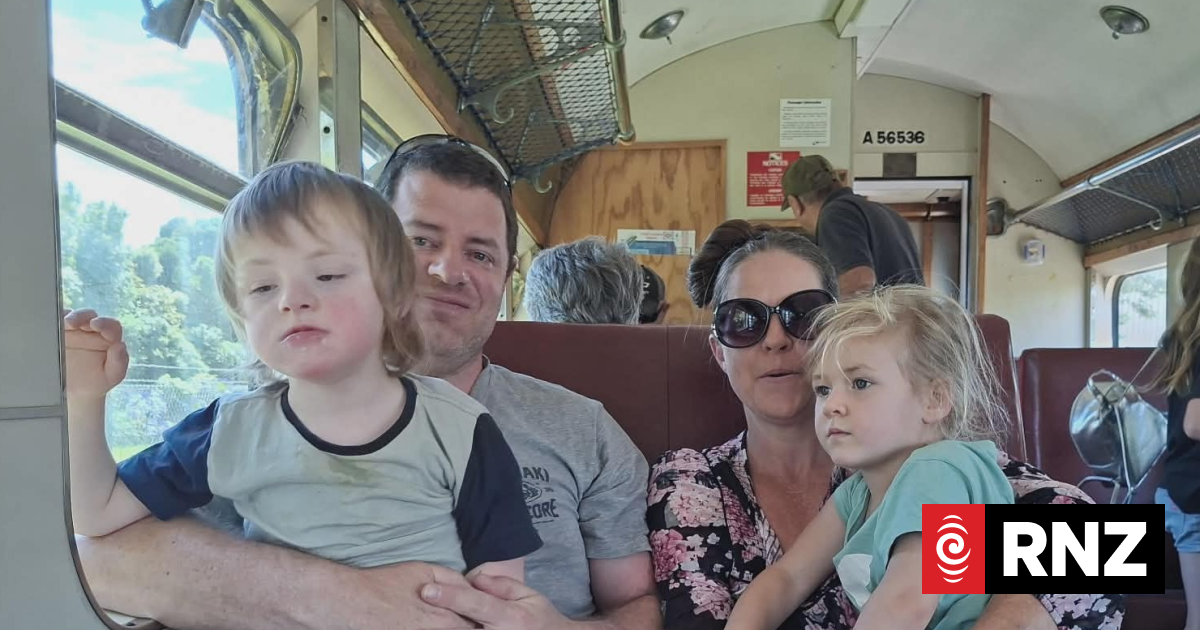
From left: Levi, Tim, Victoria and Millie.
Photo: Supplied
As the submission deadline nears for the Disability Support Services (DSS) Bill, people with disabilities, their families and advocates are calling for drastic changes.
The Bill aims to set up a formal framework for disability funding, through the Ministry of Social Development rather than the Ministry of Health, and ensure its fiscal sustainability going forward.
It also shifted the responsibility for care, in the first instance, from the government to families, while simultaneously halting any legal process currently underway which would recognise family carers as government employees with entitlements like sick pay and minimum wage.
It follows a Supreme Court ruling late last year, in which two carers of adult children with disabilies, Christine Fleming and Peter Humphreys, were ruled to be employees of the government, and were therefore entitled to the same legal protections and benefits.
This Bill responds to that ruling – and while it would not affect the status of cases already decided, it would stall others currently before the courts.
One of those is that of Victoria Coleman, a fulltime carer for her severely disabled son, Levi, living in Taranaki.
Levi, age 7, has two rare bowel disorders, Down Syndrome, Autism, ADHD, and has had a dozen surgeries.
Photo: Supplied
Levi’s needs were “incredibly complex”, she explained – two rare bowel disorders, Down Syndrome, Autism, ADHD, and with a dozen surgeries in his medical history.
“There’s the physical caring – he’s also got a special diet, rounds of medications. He’s double-incontinent, so constant nappies, constantly trying to keep him safe because of his intellectual disability,” she said.
“So just being switched on all the time. There’s never a time that you get to switch off. And then on top of that, we’ve got all the advocacy and all the forms and all the broken system that we have to navigate.
“If we were supported, if the funding was there as it’s meant to be, and we’re allowed to just get on with our job, we would have half the stress we do.”
She explained they had only recently secured appropriate funding for Levi’s care, which only partly made up for the fact that she couldn’t work. On top of that, he had so many extra needs which required regular appointments, sometimes in different cities, that the costs were high.
If funding was removed, “we’ll be driven into poverty”, Coleman said.
“Life is already really high stress and it’s really terrifying because you’re just constantly trying to make sure everything’s okay. Knowing that government support could be just ripped away at any time, you know, we’ve got no backstop. It’s just absolutely frightening.”‘
According to analysis from the Ministry of Justice, the Bill would mean “families, whanau, and other culturally recognised family groups, where appropriate, have responsibility in the first instance for the wellbeing of their members and that before accessing DSS-funded disability support, an eligible person should, where appropriate, use their resources and any other support that is available to them, including from their family, whanau, and broader social networks.”
Dr Rebekah Graham, national director for Parents of Vision Impaired New Zealand, said that was incredibly unfair on adults with disabilities who could make their own decisions about their care.
“What it’s saying to disabled people is it doesn’t [matter] how old you are, your family are responsible for you,” she said. “We don’t do that to any other sector of our society. And so there’s a presumption of incompetence for disabled adults which I think is incredibly insulting.”
It would also give the minister powers to make changes to disability support services.
Coleman said that was a tough one to swallow. “It gives the government a blank check, basically. And we’re being asked to trust them blindly after several years of just being constantly kicked.”
Levi and his dad Tim.
Photo: Supplied
And importantly for people with cases before the courts, it would mean carers were only employees of the government if they had a written employment agreement.
Graham said that affected about 40 families.
“It is concerning that the immediate response is not, ‘These parents are actually really struggling and we need to find a better way to support them.’ It really concerns me that the immediate response is, ‘We have to change the law so that we don’t have to pay.'”
Disability advocate Blake Forbes, who himself has cerebral palsy, said the consultation period for the Bill was too short, with only three weeks for submissions.
“We don’t deny that there are problems,” he said. “But this isn’t the way to fix it.”
Disability advocate Blake Forbes.
Photo: RNZ / Samuel Rillstone
A petition against the bill, started by Victoria Coleman, had garnered more than 10,000 signatures, with plans to hand it over at Parliament on 2 July.
Louise Upston, the minister for disability issues, told RNZ the Bill did not change current eligibility and access settings for disabled people, families or carers – rather, it reflected the way DSS already worked, and was intended to make it easier for disabled people to understand what support was available and how decisions were made.
“People will continue to access support as they currently do,” she said. “There are no changes to current supports for disabled people, whānau and carers; to current funding allocations; or to who can get disability support services. Current care and employment arrangements remain in place.”
It also did not remove the rights of adults with disabilities to make decisions about their care, she said. “Making the system fairer and more straightforward will in fact allow them greater choice and control over their care.”
Louise Upston, the minister for disability issues.
Photo: RNZ / Mark Papalii
Regarding the Supreme Court decision, she believed there were better ways to support family carers than treating them as state employees.
Work on a Carer Support Package was underway, with engagement with carer groups and representatives. More information on this planned engagement would be available from DSS soon.
“In setting a timeframe for Select Committee consultation, it was important to give people the chance to have their say while also ensuring that the overall legislative process can move forward and provide the certainty that’s needed.”
Disability Rights Commissioner at the Human Rights Commission, Prudence Walker, said their submission would be calling for further consultation with disabled communities, and for the Bill to be reframed to make state responsibility clear, while including safeguards around ministerial powers.
“We all have a right to dignity,” she said. The country had signed up to the United Nations Convention on the Rights of Persons with Disabilities, which emphasised the importance of autonomy, independence, and equality for disabled individuals.
Family carers should be allowed access to fight for their rights to be recognised as employees, and the benefits and protections that came with it, she said.
Submissions on the bill close at 1pm on Friday.
Sign up for Ngā Pitopito Kōrero, a daily newsletter curated by our editors and delivered straight to your inbox every weekday.
