


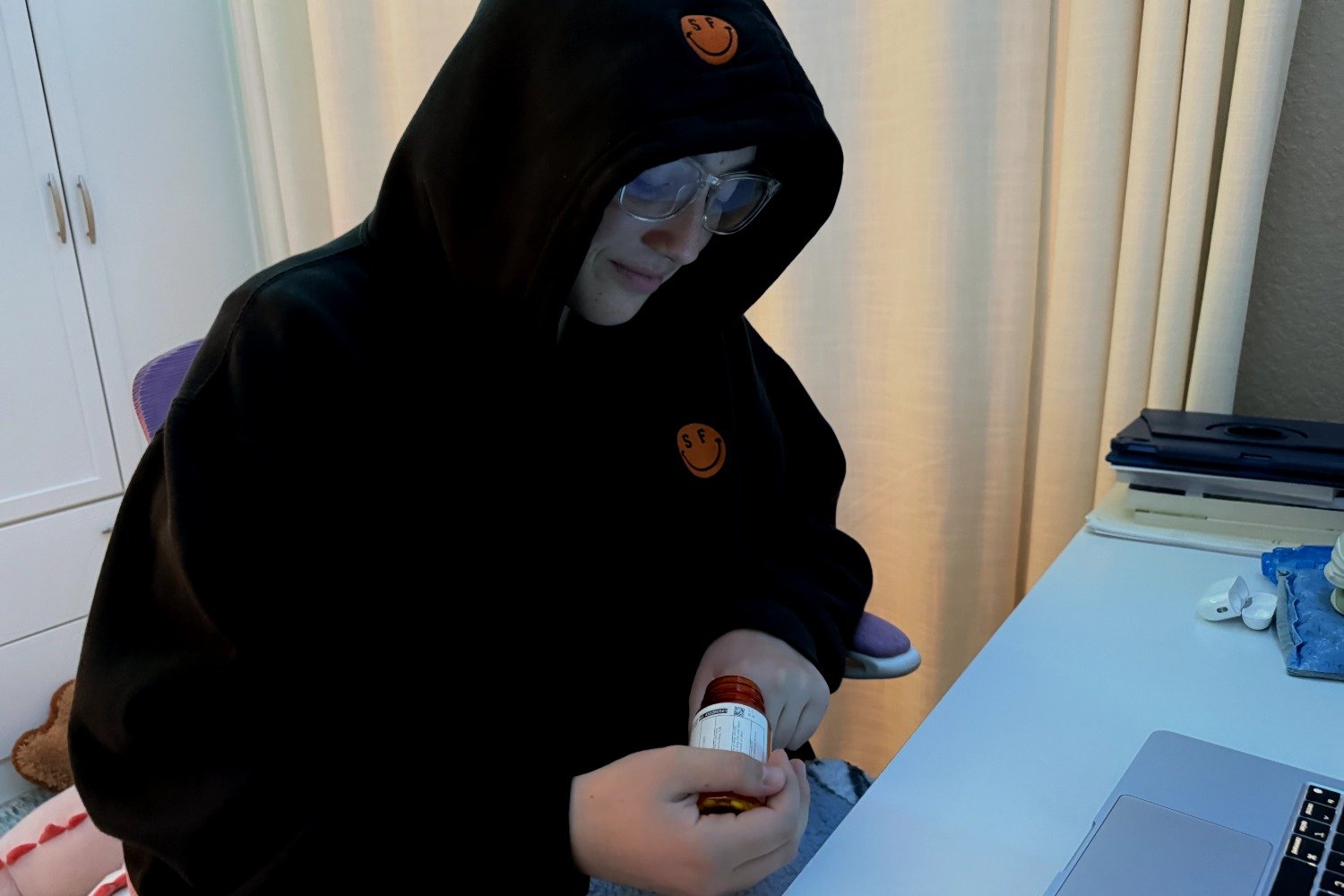
A student picks up a bottle of depression medication. “Specifically with depression, it’s really easy to feel very alone. When I watch shows and movies where people also struggle with that, it makes me feel like I am not alone. I’ve always struggled with wanting to feel more normal,” said Ellie Fischer, a sophomore at Carlmont High School.
Depression, anxiety, attention-deficit/hyperactivity disorder (ADHD) and other mental health disorders are considered invisible disabilities: conditions that affect people severely, but aren’t noticeable to others at a glance.
Because of this, invisible disabilities often get overlooked. However, representation in popular media, such as movies and television, can help people feel understood by seeing characters going through experiences similar to theirs.
“I love ‘The Perks of Being a Wallflower.’ It focuses on teenagers navigating friendships, identity, and not being sad. The main character feels like an outsider. It showed isolation and how he feels dissociated, and I’ve struggled with that before,” said Ellie Fischer, a sophomore at Carlmont High School.
According to Everyday Health, people who have invisible disabilities often encounter peers, friends or loved ones who don’t believe that they are going through something, just because their ailment isn’t obvious. This can lead to skepticism and even delay the provision of proper medication.
For many, an escape from this place of isolation and misunderstanding can be finding characters in shows and movies who have similar stories.
“
It’s important for people to see others who do the same things as you or act the same or look the same. Finding my own media types, like TV shows and movies, where it’s represented well, makes me feel like I’m not crazy or weird, and that it’s normal to feel this way.
— Ellie Fischer
“It’s important for people to see others who do the same things as you or act the same or look the same. Finding my own media types, like TV shows and movies, where it’s represented well, makes me feel like I’m not crazy or weird, and that it’s normal to feel this way,” Fischer said.
In addition to helping those who go through these experiences, representation in the media can also help those who don’t understand them better.
“The show ‘Alexa & Katie’ portrays anxiety very well, because she keeps her issues to herself, and towards the end, Katie learns that it’s okay to talk about it. This showed me that there are so many things that can happen as a teenager, and it prepared me for that,” said Lauren McLinden, a sophomore at Carlmont.
The show that McLinden describes offers a good representation of invisible disabilities, which helped her become better educated about anxiety. However, this isn’t always the case. Often, if these invisible disabilities are poorly represented in the media, it will lead to misconceptions.
“Sometimes these struggles get portrayed in exaggerated ways. People have this skewed perception of what mental disorders look like, and gain awareness to the point where they think they know what these things are,” said Vanessa Krause, a licensed therapist who specializes in helping children and young adults navigate mental health.
These exaggerations are not only harmful to those who want to learn more about these disorders, but they can also be harmful because they portray distorted ideas of what mental disorders actually look like.
“If you’re calling someone mentally ill and portraying them as wild, dangerous and out of control, you’re dehumanizing them to bulk it up for entertainment value. They aren’t showing that there are actually humans behind these things, and they have a story and are going through pain,” Krause said.
Instead of presenting characters with complex stories, many portrayals rely on these exaggerated stereotypes, which can reinforce misconceptions about mental health. This can lead to fear and stigma surrounding the topic. According to the National Library of Medicine, negative perceptions of mental health create a stigma that patients have described as worse than the illness itself.
Because of this, it is extremely important that popular media move beyond harmful stereotypes and present hopeful, realistic perspectives.
“I do think it should be represented a lot more in TV shows and movies, and when it is shown, it’s important to include how they got through it and what helped them achieve that,” McLinden said.
