


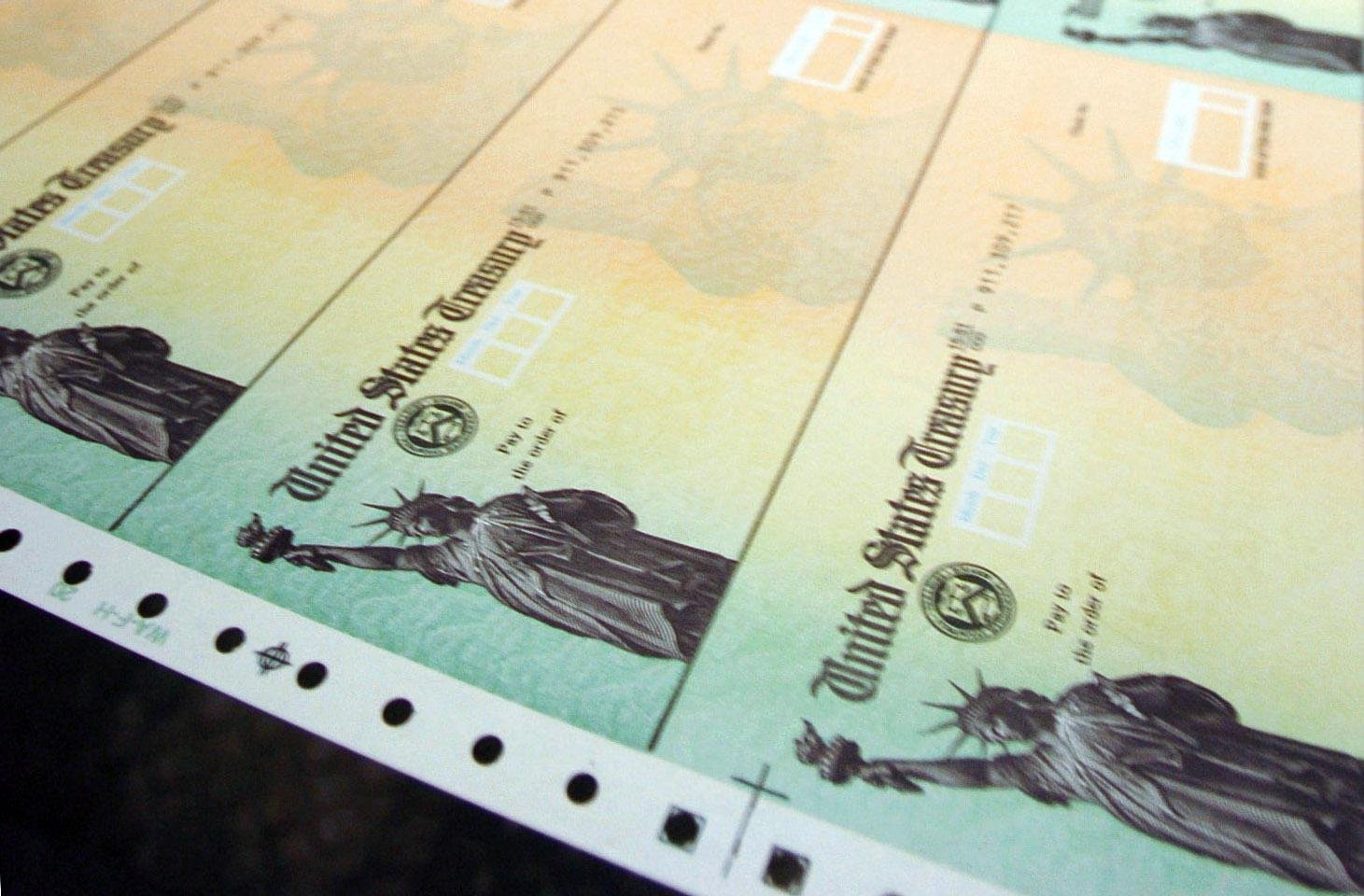
File photo of Social Security checks
Bradley C Bower / Associated Press
As the last of the August Social Security payments go out this week, here’s a look at who is able to collect benefits even while they’re still working.
Connecticut residents can work while collecting Social Security retirement benefits, but people who have not yet reached full retirement age could see some of their benefits withheld if they earn too much.
Article continues below this ad
In 2026, Social Security recipients who are under full retirement age for the entire year can earn up to $24,480 before their benefits are affected, according to the Social Security Administration.
For earnings above that amount, Social Security withholds $1 in benefits for every $2 earned over the limit.
That means someone who is under full retirement age all year and earns $30,000 in 2026 would be $5,520 over the limit. Social Security could withhold $2,760 in benefits as a result.
The rules are different for people who reach full retirement age in 2026. In that case, a recipient can earn up to $65,160 during the months before reaching full retirement age. Social Security withholds $1 in benefits for every $3 earned above that amount. Only earnings before the month in which the recipient reaches full retirement age are counted toward the limit.
Article continues below this ad
Once a person reaches full retirement age, there is no earnings limit. A recipient can continue working and earn any amount without having Social Security retirement benefits withheld.
What is full retirement age?
Full retirement age depends on the year a person was born. For people born from 1943 through 1954, full retirement age is 66. It then increases by two months for each birth year from 1955 through 1959, reaching 67 for anyone born in 1960 or later.
That is different from the earliest age workers can claim retirement benefits, which is 62, though which month you become eligible in that year and how much you receive depend on the day you were born.
Article continues below this ad
People who claim Social Security before reaching full retirement age generally receive a permanently smaller monthly benefit than they would if they waited.
Are benefits withheld because of work lost forever?
Not exactly. When a recipient reaches full retirement age, Social Security recalculates the monthly benefit to account for months in which benefits were reduced or withheld because the person earned more than the limit.
In other words, the earnings test can reduce or temporarily eliminate checks before full retirement age, but Social Security later adjusts the benefit to give the recipient credit for those months.
Article continues below this ad
What income counts toward the limit?
Not all income is included. Social Security generally counts wages from a job and net earnings from self-employment. Bonuses, commissions and vacation pay are also included.
Pensions, annuities, investment income, interest, veterans benefits and other government or military retirement benefits do not count toward the earnings limit.
There is also a special rule for some people who retire partway through the year.
Article continues below this ad
Someone under full retirement age for all of 2026 can generally receive a full Social Security payment for a month in which they earn $2,040 or less, even if their total earnings for the year exceed the $24,480 annual limit. For people reaching full retirement age this year, that monthly amount is $5,430. Other rules apply to self-employment.
The earnings limits increased this year. In 2025, the limit was $23,400 for recipients below full retirement age and $62,160 for people reaching full retirement age during the year.
