


Bromberg says even before the war, Israel’s restrictions on what is allowed into Gaza meant the territory’s sewage plants were out of date.
“One of the reasons why modern sewer stream plants weren’t completed in Gaza was because in order to build and run [them] you needed equipment that the Israeli military has defined as dual use – that could be used by Hamas as a weapon,” he says, giving the example of cement.
Edo Bar-Zeev, a professor at the Zuckerberg Institute for Water Research at Ben-Gurion University, called what has happened an “unexpected mega event”.
“I’ve been in the field of sampling ocean water for around 20 years or so and it’s definitely unusual,” he said. “In most cases it comes and goes in a few days, maybe a week… and here it’s held on for a while.”
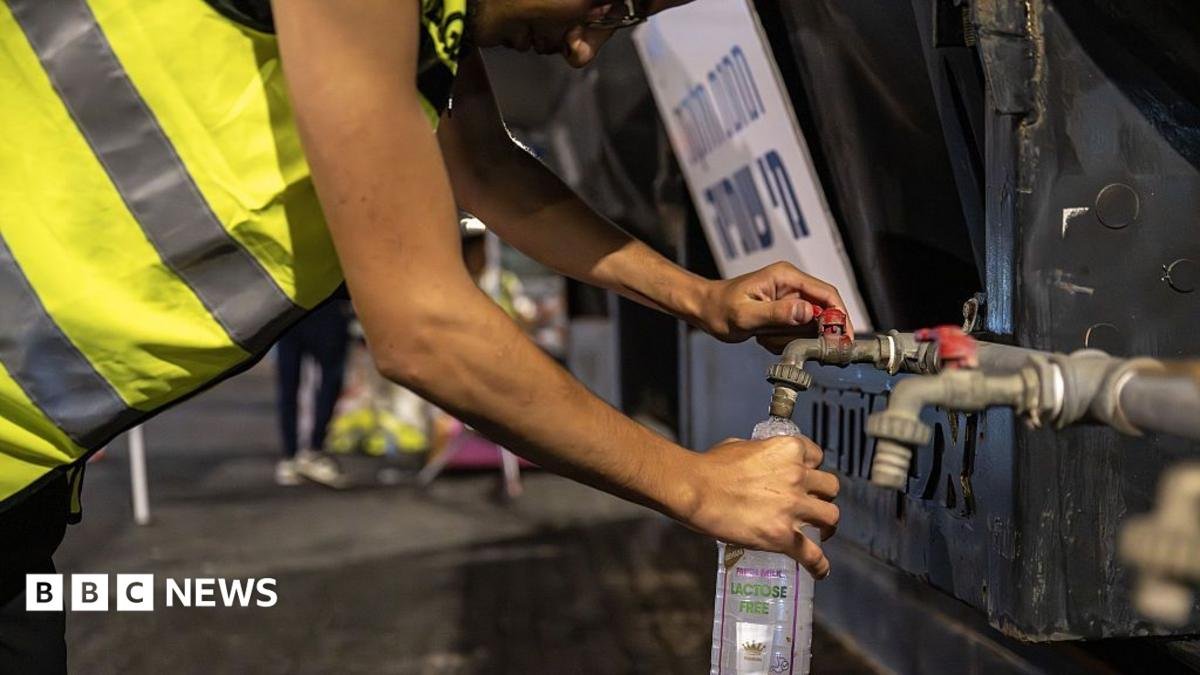
The six plants, which generate more than 60% of Israel’s drinking water, were hit by what Lior Gutman, spokesman for Mekorot, Israel’s national water company, called a “huge carpet of microorganisms”.
Some farmers were affected, although the majority of those who use recycled water for irrigation did not face any shortages. Neither did 99% of households, Gutman said.
