


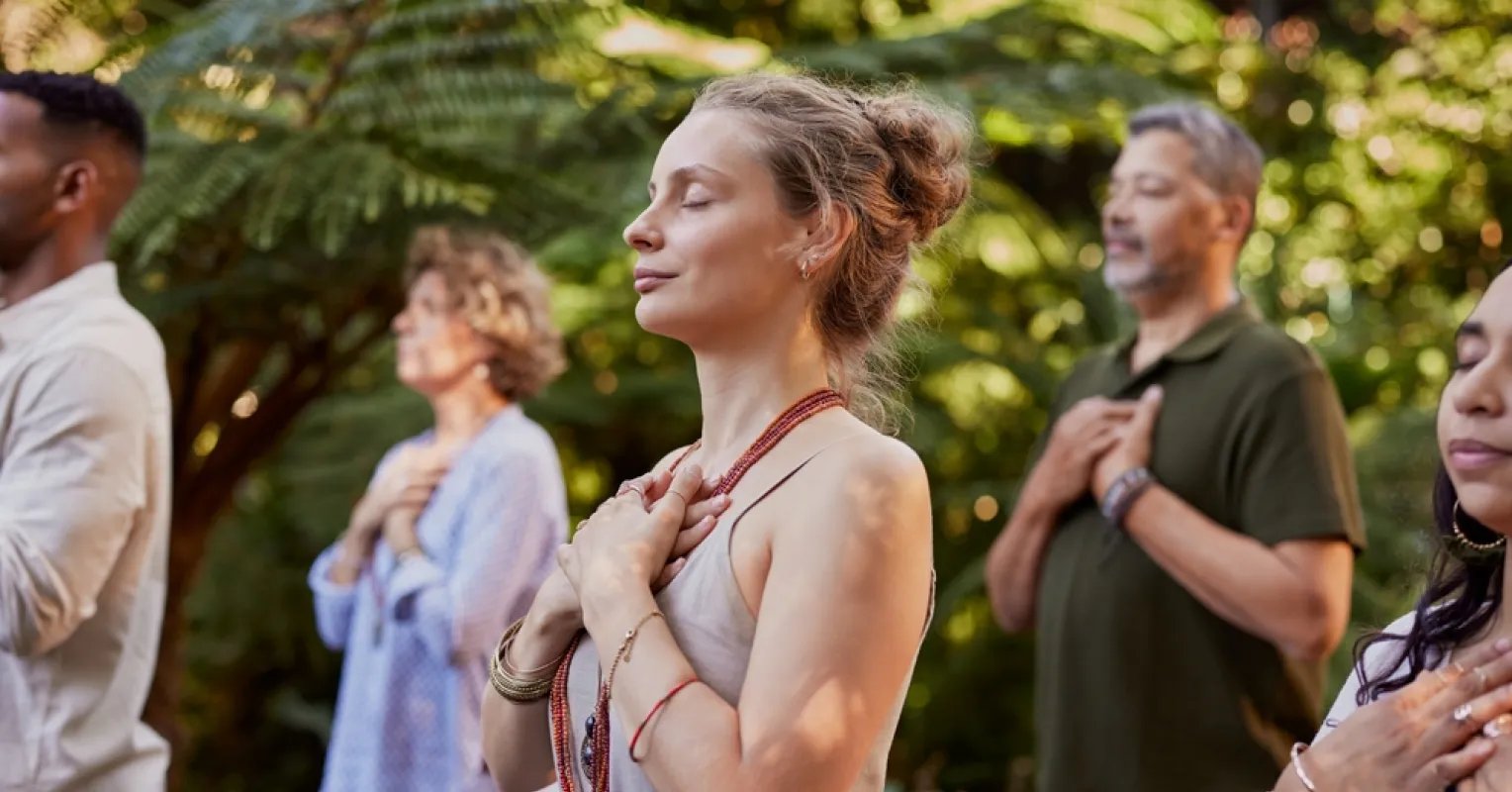
A new global study on meditation and well-being arrives at a moment of rising stress, loneliness, declining mental health, and workplace burnout. If used well, it could do what the best public-opinion surveys have done before: transform a largely private practice into a measurable public-health issue—and turn private suffering into public action.
For years, meditation has occupied an ambiguous place in public life. To some, it is an ancient discipline rooted in spiritual traditions. To others, it is a wellness trend, a workplace perk, a phone app, or a quiet practice squeezed into the margins of an overburdened day. But a new global study from Gallup and The Art of Living could move meditation into a different category altogether: a measurable, comparable, public-health-relevant behavior that societies can understand, track, and act on.
The meditation study is timely because distress is measurable, widespread, and increasingly normalized. Recent global emotional health data show that negative emotions remain elevated worldwide, with 39 percent of adults reporting worry and more than one-third reporting stress for much of the previous day. In the United States, the picture is similarly sobering: Only 29 percent of adults now describe their mental health as “excellent,” down 14 percentage points from 2019 and the first reading below 30 percent in the polling trend. Daily loneliness affects about one in five Americans, according to recent well-being data.
The initiative will add meditation questions to the Gallup World Poll, creating the first global dataset linking meditation practices with measures of well-being. By comparing countries, cultures, and demographic groups, researchers will be able to examine who meditates, how they practice, and how meditation relates to emotional health. The first findings are expected on World Meditation Day in December 2026.
That may sound modest: add questions to a poll, gather responses, publish findings. But polling at its best does something more powerful than describe public opinion. It changes what societies can see.
For many problems, the first barrier to action is invisibility. By measuring meditation at global scale, this initiative can help answer basic questions we have never answered adequately: Who meditates? How often? In what forms (e.g. mindfulness, breath work, mantra-based)? In which cultures and communities? Is meditation primarily a privilege of the affluent, or is it woven into daily life across socioeconomic lines? Does it correlate with lower stress, greater resilience, better life evaluation, or stronger social connection? Where are the gaps in access, awareness, and practice?
Meditation is too often discussed in extremes. Its advocates can present it as a cure-all. Its skeptics can dismiss it as soft, individualistic, or insufficient in the face of structural problems. A global dataset offers a better way forward: not hype, not dismissal, but evidence.
The history of public-opinion polling shows that measurement can provide momentum for change. Consider smoking. National surveys have tracked tobacco use and public attitudes toward smoking for decades. In 2011, Gallup documented a major shift in public attitudes when, for the first time, a majority of Americans—59 percent—supported a ban on smoking in all public places. Polls did not single-handedly create smoke-free laws. Science, advocacy, litigation, regulation, taxation, and cultural change all mattered. But polling helped reveal that public norms had shifted.
Alcohol offers another example. Long-running survey data now shows that the share of U.S. adults who say they drink alcohol has fallen to 54 percent, the lowest level in nearly 90 years of continuous tracking. At the same time, a majority of Americans now say moderate drinking—one or two drinks a day—is bad for health.
Again, polling does not write alcohol guidelines or warning labels. But it can change the public conversation. It can show that what once seemed culturally settled is now open to reconsideration. It can give health agencies, clinicians, parents, employers, and policymakers permission to talk more honestly about risk.
Meditation now needs that same seriousness.
A large body of research already suggests that meditation can improve psychological well-being. This study’s contribution is different. Rather than testing whether meditation works under controlled conditions, it can show how meditation is practiced in everyday life across populations—and whether communities with higher rates of practice also differ in stress, resilience, or life evaluation. That kind of evidence can shape public conversation and institutional priorities.
Meditation Essential Reads
If meditation is associated with better wellbeing at the population level, the conversation should shift from encouraging individuals to meditate toward building environments that make contemplative practices accessible. Schools could introduce age-appropriate attention training. Employers could redesign work to allow genuine recovery rather than offering symbolic wellness benefits. Health systems could incorporate meditation into preventive care. Libraries, community centers, and faith organizations could expand access beyond affluent wellness markets.
There is also a democratic value in asking people about their inner lives. Modern societies measure many things relentlessly: prices, productivity, votes, clicks, test scores, body mass index, unemployment, consumer confidence. But we are less consistent in measuring whether people are calm, connected, purposeful, lonely, worried, or emotionally depleted. Global wellbeing research has helped challenge that imbalance by treating subjective experience as a legitimate social indicator. The meditation study can extend that shift.
The goal should not be to turn meditation into another metric to optimize, another corporate dashboard, or another burden placed on individuals already carrying too much. The goal should be to use measurement to widen moral imagination. If millions of people are worried, stressed, lonely, and disengaged, that is not merely a collection of private problems. It is a public condition. And public conditions require public responses.
This meditation initiative can help move meditation from anecdote to evidence, from lifestyle accessory to wellbeing indicator, from private coping mechanism to part of a larger conversation about how societies support human flourishing.
Meditation alone will not solve rising stress, loneliness, or burnout. But understanding who practices it, who benefits from it, and who lacks access could help policymakers, educators, employers, and health systems treat inner wellbeing as a matter of public health rather than private responsibility.
The world does not need another survey that generates headlines and disappears. It needs data that reshape priorities. If this meditation initiative succeeds, it will be remembered not simply for measuring meditation, but for making wellbeing something societies choose to build.
That would be more than a poll. It would be the beginning of a new public conversation.
Disclosure: Dr. Chhatwal has practiced meditation and breathwork techniques, including SKY (Sudarshan Kriya Yoga), for over 20 years and volunteers as a teacher of these techniques with the Art of Living Foundation. He has no financial relationship or official affiliation with the foundation.
