


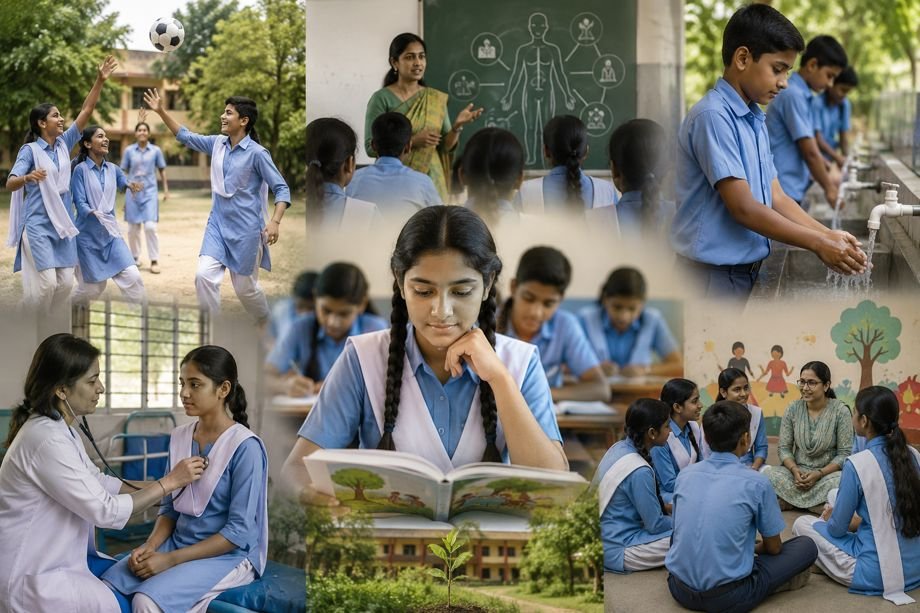
Secondary school students across Bangladesh are practising many healthy habits at home and in school, yet the systems meant to support their physical and emotional well-being still need significant strengthening, according to a new national study published by the Directorate of Secondary and Higher Education (DSHE) with support from UNESCO. The Situation Analysis Report on the Health Promoting Schools Programme in Bangladesh, released in July 2026, examines how health education, teacher preparation, school facilities, services and government coordination shape the everyday experiences of students.
The study covered 48 secondary schools across all eight administrative divisions, collecting responses from 458 students and 206 teachers while also drawing on 24 focus-group discussions, 12 interviews with officials and specialists, and a review of policies, textbooks and curricula. Many students already follow positive health practices, but their formal understanding of health remains limited, suggesting that good habits are not always supported by structured knowledge about nutrition, hygiene, mental well-being and other health concerns.
Healthy Behaviour Is Stronger Than Health Knowledge
The study’s important finding is the gap between what students do and what they understand. Children reported healthy behaviours that may have been learned through families, teachers, public campaigns and daily routines, while assessments showed comparatively poor overall health knowledge. Without deeper understanding, students may find it harder to make informed choices when they encounter unfamiliar or more complicated health situations.
Nearly 93 per cent of surveyed students said their parents encouraged healthy practices at home, while teachers frequently brought subjects such as handwashing, balanced diets and peaceful conflict resolution into regular lessons. The curriculum also contains health and well-being content across several subjects, though the report identified areas needing greater attention, including road safety, drug-use prevention, suicide prevention, emergency response, environmental health, and menstrual and reproductive health.
Teachers and Schools Need Better Resources
Teacher preparation emerged as a major concern. Although the surveyed teaching workforce was generally academically qualified, only about three in ten teachers reported receiving training related to health education or student well-being. Training was even less common among government and rural-school teachers, and programmes that were available were often short, leaving educators with limited specialist preparation for conversations about physical, mental and emotional health.
Health and hygiene can also struggle for classroom attention because these subjects carry relatively little weight in final examinations. Many teachers were unfamiliar with national school-health policies, creating another gap between guidance developed at the policy level and what happens inside classrooms.
School services showed similar differences. Students in non-government schools were more likely to report clean and usable toilets, safe drinking water, anti-bullying measures and access to a separate health worker than students attending government schools. These responses reflect student perceptions rather than direct facility inspections, yet they raise important questions about unequal access to basic health support. Regular health examinations were not routine for many students, while arrangements for handling accidents were also reported inconsistently.
National Action Could Make Health Part of Everyday Learning
The findings were shared at a national dissemination meeting in Dhaka attended by around 120 representatives from government agencies, schools, universities, civil society and development organizations. Participants came from sectors including education, health, youth and sports, women and children affairs and planning, reflecting the report’s central argument that healthier schools cannot be created by the education sector working alone.
Dr Susan Vize, Head of Office and UNESCO Representative to Bangladesh, stressed that students need good physical and mental health to learn effectively, while teachers also require healthy environments to provide quality education. DSHE Director General Prof. Dr Khan Moinuddin Al Mahmud Sohel called for areas requiring immediate attention to be identified and addressed through priority measures.
The report recommends stronger coordination among government ministries, better health and first-aid training for teachers, closer referral links between schools and nearby health facilities, improved sanitation and nutrition, stronger physical and socio-emotional health services, qualified physical-education teachers and regular opportunities for students to be active. Dedicated financing is also identified as an important part of making these measures sustainable.
Bangladesh already has students, families and teachers practising many of the behaviours needed for healthier school communities. The next challenge is giving those efforts stronger institutional support so that health becomes part of the learning environment itself, supported by trained people, reliable services, suitable facilities and knowledge students can carry into adult life.
