


Leonard (not his real name) is 18. Last year, he graduated from a special education (SPED) school. Seven months later, despite applying to several day activity centres (DACs), he is still waiting for a place.
His single mother works long hours as a dishwasher. She is the sole breadwinner for the family, which includes his sister who is still in school. To keep her employed, Leonard’s grandmother travelled from China to care for him.
Confined to home without meaningful daily activities, Leonard has become increasingly bored. His repetitive behaviours, including frequent showering and compulsive handwashing, have intensified, causing distress to his family.
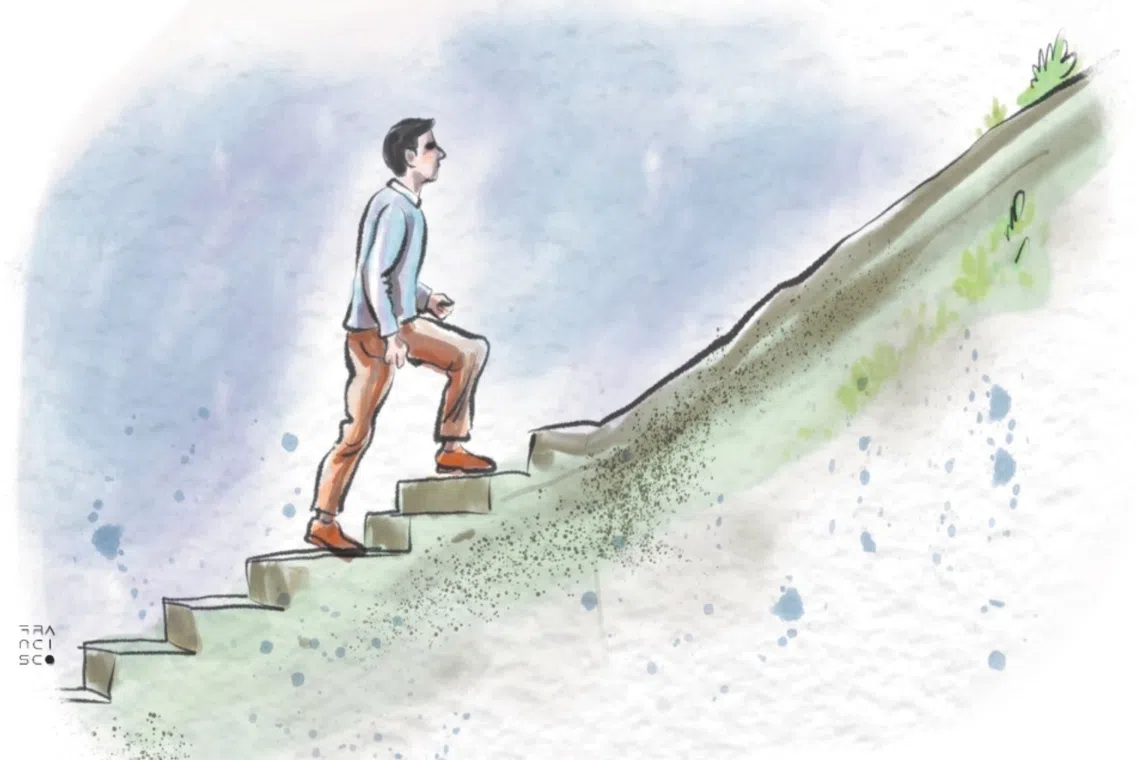
Leonard’s story is not unique. For hundreds of autistic young adults each year, turning 18 means reaching what many families call the “post-18 cliff” – the abrupt loss of the structured support that has sustained them throughout childhood.
Up until graduation, autistic students benefit from trained educators, therapists, structured routines, peer interaction and clear developmental goals. Families know where their child will be during the day, and who will support them.
Then school ends. But autism does not.
For many autistic adults, the need for support continues, not just for a few years after school ends, but for life.
For many, graduation is not independence
Some adults with autism, with the support of trained staff and inclusive institutions and employers, go on to higher education, employment and independent living. Their relative independence and success deserve to be celebrated.
But this is not everyone’s reality.
Those with intellectual disabilities will continue to need support throughout adulthood, whether with daily living, maintaining structured routines, or simply being safe. For them, graduation is not a step into independence, but a transition from one support system to another. When that support is missing, the consequences can be severe.
Without meaningful engagement, adults with autism can lose skills painstakingly acquired over years of education. Social isolation and boredom may increase anxiety and contribute to behaviours of concern, such as aggression, self-injury or compulsive behaviours.
Even those with lower support needs often find challenges securing, or retaining, a job. They would benefit from job coaching, workplace accommodations, social networks and mental health support.
For families, the transition into adulthood often comes with long waiting lists, fewer service options and significantly higher out-of-pocket costs. Many parents who have spent years preparing for adulthood discover that support becomes harder – not easier – to access after school ends.
Singapore has made tremendous progress in early intervention, special education and disability inclusion over the past two decades. These investments have transformed the lives of many children and families.
Adult disability services, however, remain the weakest link in the lifespan support ecosystem.
Building a system for lifelong dignity
Dignity should not be measured by how little support a person needs to receive, or as often framed, the person’s level of independence. It should be measured instead by whether they experience acceptance, belonging and opportunities to contribute.
Hence, when considering how to better support persons with autism for life, the conversation should not be framed as a choice between independence and dependence.
The better question is whether society provides the supports that enable every person to participate meaningfully in society, according to their abilities.
Singapore has expanded its range of adult disability services over the years, and the Government’s recent formation of the inter-agency Taskforce on Assurance for Families with Persons with Disabilities is an encouraging step. Plans to increase capacity and improve affordability are very welcome.
But major challenges remain.
In the near term, demand continues to outstrip supply. Waiting lists are long, especially for those with autism. With means testing, adult services can cost families hundreds or even thousands of dollars each month for decades. Service quality also varies considerably, particularly for adults with higher support needs.
Funding constraints make it difficult for many social service agencies to scale services without compromising quality of service. Other difficulties lie in recruiting and retaining experienced professionals, investing in staff training, and supporting individuals with the most complex needs. Those who require specialised care may therefore find it hardest to access services.
Improving quality of services requires investing in people. Supporting adults with severe autism or intellectual disabilities demands advanced skills and ongoing specialist training in evidence-based approaches. Without them, burnout rises, turnover increases and those with the highest support needs receive poorer care.
Why investment in adult disability matters
Adult disability services differ from early intervention because they require support over decades rather than years. That long-term commitment can make funding decisions more difficult. Yet adult disability services are not optional welfare programmes; they are essential social infrastructure for a lifelong condition.
The need is also less visible. Children naturally attract public attention and sympathy. Their milestones are easy to celebrate. The realities of adulthood with autism are more unseen: ageing parents worrying about who will care for their son after they die; middle-aged caregivers juggling employment with lifelong caregiving responsibilities; adults with autism spending years at home because suitable services are unavailable.
Inadequate funding for adult disability services has consequences that extend far beyond the individual. Caregivers face burnout after years, even decades, of filling gaps left by formal services, often sacrificing careers, finances and their own health. I have experienced some of this myself, as the father of two children on the autism spectrum.
Adults with autism can lose hard-won skills through isolation and lack of structure. In some cases, these individuals and their families increasingly isolate themselves, because engaging with the rest of society becomes too onerous.
These stories rarely make headlines, but they affect thousands of Singaporean families. In the long run, inadequate community support often leads to more expensive crisis interventions, residential care or psychiatric admissions. Delaying investment does not eliminate costs – it simply shifts them onto families or into the future.
What needs to change
The Government’s formation of the inter-agency task force is a clear acknowledgement that a coordinated response is needed to close the gaps in the adult disability sector.
Its intensive engagement in the last few months (which I have been a part of) as well as tangible plans to resolve longstanding issues of wait lists and affordability of services are encouraging. When the promise of significantly more places in DACs and sheltered workshops materialises in the near future, the most pressing needs may be addressed.
The more recent introduction of new service models such as the Enabling Services Hub, Enabling Skills for Life Programmes and Enabled Living Programmes to complement existing service models does help to diversify the breadth of service models available.
But beyond more funding support, ramping up capacity and cautious pilots of new models, Singapore should continue reviewing whether existing adult disability services, including the new pilot models, remain fit for purpose.
Around the world, disability support has shifted away from large-scale, custodial models towards person-centred planning, supported employment, supported living in the community and greater community participation.
In particular, for those with more severe needs, residential homes need to be smaller and offer more person-centred care. While these models cannot simply be transplanted into Singapore whole-scale, they provide useful ideas that deserve careful adaptation.
To ensure policies and service models serve real needs, we also need a deeper understanding of the changing needs of adults with autism across the lifespan. Policymakers, researchers, service providers, autistic persons and caregivers should work together to shape services that reflect lived experience and the best available evidence.
Building an inclusive society also requires participation beyond government.
Employers can create more inclusive workplaces. Social enterprises can be supported to scale inclusive business ventures. Social service agencies can continue engaging communities through advocacy, volunteerism and public education, even through fund-raising (or friend-raising, as some fund-raisers like to term it). Businesses and public spaces can become more autism-friendly through staff training and thoughtful environmental design.
Every Singaporean has a role to play in making autistic individuals and their families feel accepted and included.
A lifelong commitment for a lifelong condition
The conversation going forward should not be about maintaining minimum standards. It should be about building systems that reflect the aspirations of a mature and inclusive society.
Singapore has never been satisfied with doing the minimum. We aspire to world-class education, healthcare and public services. We should bring the same ambition to supporting adults with autism and persons with disabilities.
As more children with autism transition to adulthood, the question before us is simple.
Will we continue to treat adulthood as the point where support tapers off? Or will we recognise that lifelong conditions require lifelong commitment?
I often wonder what adulthood will look like for my two children on the autism spectrum – not just at 18, but at 28, 48 and beyond.
Leonard’s story is not unusual. It is a glimpse of a future that more Singaporean families will soon face as today’s children become tomorrow’s adults.
Autism does not end at 18. Neither should our commitment to supporting people with autism and those who care for them.
Bernard Chew is chief executive of St Andrew’s Autism Centre and a caregiver to two children on the autism spectrum.
The Spectrum is an Opinion series that examines the issues and challenges people with autism and their caregivers face across the different stages of their lives.
