


During Mental Health Awareness Month, we often focus on recognizing symptoms, expanding access to care, and reducing stigma, all of which are critical conversations. However, when it comes to young children, mental health begins long before any type of diagnosis, with the everyday interactions that shape how they experience safety, connection and the world around them.
For some, the term “infant mental health” may feel unfamiliar or even confusing, but, as physicians, we know that mental health can be nurtured and supported just like physical health. It is important to remember that healthy brain development and emotional well-being thrive in the context of safe, stable, nurturing environments. Mental health flourishes in the daily activities and encounters that caregivers and children share, allowing children to feel emotionally connected to their caregivers and secure enough to explore, learn, and grow.
In pediatric exam rooms, in addition to promoting good mental and emotional health, we listen for subtle shifts that may suggest a disconnect between a child and caregivers. A parent might mention that their child isn’t sleeping as well, has become more clingy, or is having bigger reactions to small frustrations. Others describe changes in behavior that feel sudden or confusing. These are often important signals.
Even when children are too young to understand the specifics of what’s happening around them, they are deeply attuned to the emotional tone of their environment. They notice when routines change, when caregivers are stressed, or when something feels “off.” Without the language to explain it, those feelings are often expressed through behavior. This is also a reason why pediatricians try to support the behavioral and emotional health of caregivers. When caregivers experience postpartum depression or behavioral health challenges, it can make navigating the demands of caring for a young child more difficult, highlighting why supporting caregiver well-being is also an important part of supporting children’s healthy development.
When caregivers are healthy and supported, they have the capacity to tune in to subtle changes in their child’s behavior. So the question many are really asking is not just “What is my child feeling?” but “How can I help them make sense of it?” And one of the most effective tools is also one of the most accessible: reading together.
A Moment That Signals Safety
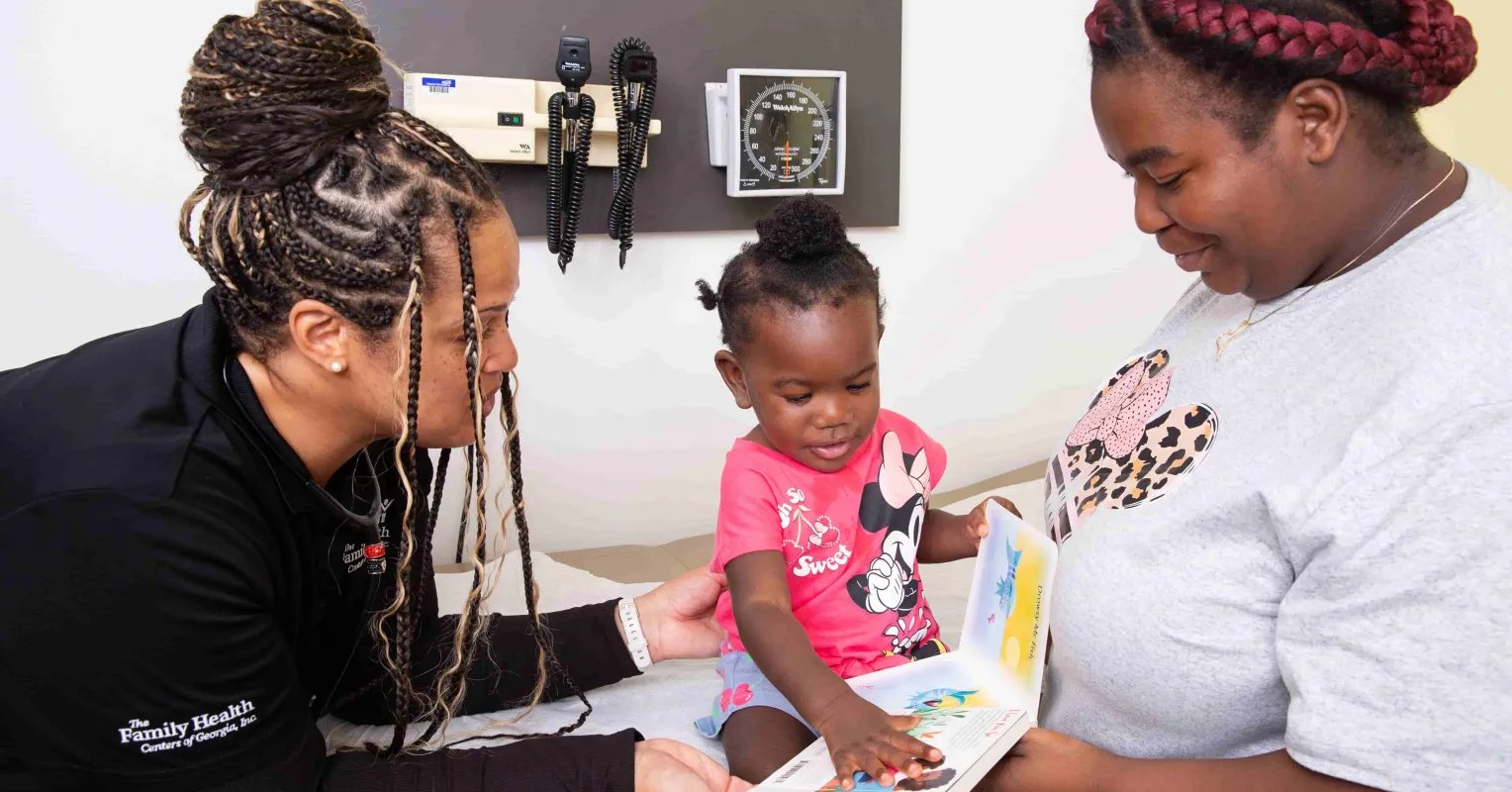
Sitting down to read together, even for just a few minutes, creates something children need more than we often realize: a consistent moment of calm. Young children rely on relationships to help regulate their emotions, and when a caregiver is steady and present, it communicates to the child that they are safe and supported.
In pediatrics, we refer to this as co-regulation. It starts with the adult making a conscious shift, slowing down, focusing their attention, and creating a sense of steadiness. From there, that calm begins to extend to the child. Over time, these repeated experiences do more than soothe in the moment. They help children gradually develop their own ability to manage stress and respond to the world around them with greater confidence.
There are measurable benefits as well. Storytelling has been associated with increased oxytocin, the hormone linked to bonding, and decreased cortisol, the body’s primary stress hormone. Even a brief reading session can help shift both children and caregivers into a more relaxed state.
Helping Children Understand What They Feel
Children don’t always say, “I’m anxious” or “I feel overwhelmed.” More often, they show us.
Books offer a way to bridge that gap. Through stories, children encounter characters navigating fear, uncertainty, or frustration. Seeing those experiences on the page helps them begin to recognize similar feelings in themselves, without the pressure of having to name them directly.
These moments also create natural opportunities for connection. A simple comment like, “That part seemed a little scary,” can open the door to a meaningful conversation. Over time, this helps children build emotional awareness, a skill closely tied to long-term mental health and resilience.
The Power of Consistency
Caregivers often worry about whether they’re doing enough or doing things “right.” However, when it comes to shared reading, consistency matters far more than perfection. A few minutes spent with a book before bed, during snacktime, or after daycare or school creates a predictable rhythm that children come to rely on.
And reading the same book over and over again serves a purpose and stability. Familiarity provides reassurance and a sense of control, both of which are especially important during times of stress or transition.
Supporting the Whole Family
One of the most overlooked aspects of shared reading is that it supports caregivers, too. Taking a moment to sit together and focus on a story without screens, devices, or other distractions can help even adults reset after a stressful day. When caregivers feel more grounded, children feel that sense of calm as well.
In that way, shared reading becomes more than a tool for children’s development. It becomes a shared experience of regulation, connection, and support.
A Different Way to Think About Mental Health
Mental Health Awareness Month invites us to think more broadly about what support looks like. For young children, it begins in everyday moments that are easily overlooked, but deeply impactful. Reading together is one of those moments.
It creates a sense of safety, strengthens the relationships that help children adapt and grow, and gives them space to begin making sense of their emotions in a way that feels manageable.
In a society that can feel increasingly complex, that kind of steady, reliable connection becomes a foundation that children can build on as they learn to understand themselves and the world around them.
