

Close Menu

    Subscribe to Updates

    Get the latest creative news from FooBar about art, design and business.

    What's Hot

    The best books & documentaries about national parks

    May 25, 2026

    Here’s How Much the Average Spousal Social Security Beneficiary Takes Home After Paying for Medicare

    May 25, 2026

    Britain’s Largest Iron Age Hoard on Display for the First Time Includes Evidence of First 4-Horse Carriage

    May 25, 2026
    Facebook X (Twitter) Instagram
    Trending
    • The best books & documentaries about national parks
    • Here’s How Much the Average Spousal Social Security Beneficiary Takes Home After Paying for Medicare
    • Britain’s Largest Iron Age Hoard on Display for the First Time Includes Evidence of First 4-Horse Carriage
    • How to Use the 5-4-3-2-1 Grounding Technique to Reduce Your Anxiety
    • This Common Social Security Assumption Could Backfire in Retirement
    • The 2027 Social Security Cost-of-Living Adjustment (COLA) Is Still 7 Months Away. Here’s What to Do if You’re Struggling in the Meantime.
    • At this NYC garden, all the plants are gay
    • How to tell the difference and why an expert diagnosis is critical for treatment
    Moving MountainsMoving Mountains
    Facebook X (Twitter) Instagram
    Monday, May 25
    • Home
    • Mental Health
    • Life Skills
    • Self-Care
    • Well-Being
    • Awareness
    • Inspiration
    • Workers Comp
    • Social Security
      • Injuries
      • Disability Support
      • Community
    Moving MountainsMoving Mountains
    Home » Marsupials Previously Thought Extinct for 6,000 Years Discovered: ‘A once-in-a-lifetime discovery’
    Inspiration

    Marsupials Previously Thought Extinct for 6,000 Years Discovered: ‘A once-in-a-lifetime discovery’

    TECHBy TECHMarch 9, 2026No Comments4 Mins Read
    Facebook Twitter Pinterest LinkedIn Tumblr Reddit WhatsApp Email
    Marsupials Previously Thought Extinct for 6,000 Years Discovered: ‘A once-in-a-lifetime discovery’
    Share
    Facebook Twitter LinkedIn Pinterest WhatsApp Email

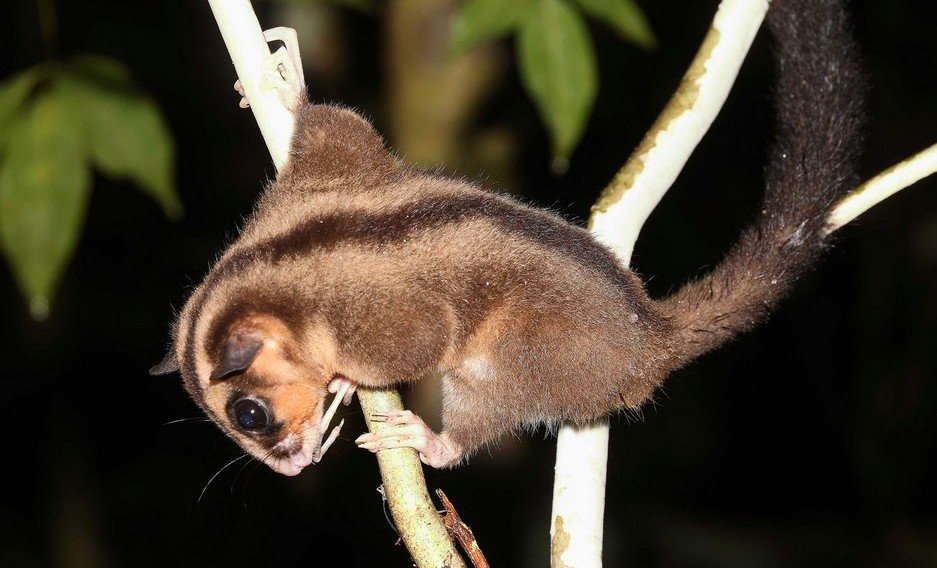
    Photograph Carlos Bocos, licensed CC 4.0. Int. via inclusion in Flannery et al., 2026. Rec. Aust. Mus. 78(1): 17–34

    GNN has reported a-plenty on animals that were last seen in the 20th century and believed extinct that were then rediscovered, but a story from the island of New Guinea now stretches that pattern to its absolute limits.

    Known only from fossilized bones that date back 6,000-plus years, two species of arboreal marsupials have been confirmed to still exist, begging the use of the often-exploited descriptor “living fossils.”

    The pygmy long-fingered possum (Dactylonax kambuayai) and the ring-tailed glider (Tous ayamaruensis) are the two newest members of a very exclusive group of animals.

    “A relatively small number of animal species hold the distinction of having been described initially from fossil remains, then subsequently discovered as a living animal,” the authors of a paper describing this incredible discovery, wrote in their introduction. “In paleontology, lineages that drop out of the fossil record and then re-emerge after long periods are termed ‘Lazarus taxa.’”

    On the Bird’s Head, or Vogelkop peninsula of West Papua—the Indonesian-controlled portion of the island of New Guinea—late 20th-century archaeological excavations on Stone Age sites found skull and teeth evidence of an animal that didn’t exist previously in the fossil record. However, one researcher in 2007 suggested that very animal probably still existed based on its similarities to known marsupials on the island.

    New Guinea is famously underexplored and its more secretive life-forms famously undocumented, and the researcher felt greater surveys would eventually reveal the animal’s continued existence.

    A photographer named Carlos Bocos, on a visit to Vogelkop organized by mammalwatching.org, recently photographed a long-fingered possum in a tree, but that alone wasn’t enough evidence since there are two other species of long-fingered possums.

    These animals have freakishly-elongated third digits which they use to feel around for and extract wood boring insects that make up their diet.

    Fortunately for 70-year-old Tim Flannery, lead author of the paper on the rediscovery, two museum specimens had been wrongly-identified as a closely related species and stored at the University of New Guinea for teaching purposes.

    A ring-tailed glider subadult photographed in 2015 credit – Arman Muharmansyah in Flannery et al. CC 4.0. Int.

    “We’ve been able to finalize two pieces of work that are incredibly important from a biological and a conservation perspective, documenting the existence of rare marsupials in an area under threat,” Flannery told the Guardian. “It’s sort of a crowning glory in my career as a biologist.”

    MORE STORIES LIKES THIS: Japanese Team Saves Nearly-Extinct Herons by Hand-Rearing Chicks

    Flannery et al’s research, documenting Bocos’ photographs, the fossil record, and museum specimens helped him determine that the animal isn’t only a separate species, but a separate genus as well. It’s the first new genus of New Guinean mammal documented since 1937.

    Fortunately for differentiating this possum over others, its enormous finger is a dead giveaway.

    The other species that Flannery and his team described, which included members of the indigenous community of Vogelkop, who consider the animals to be sacred incarnations of past ancestors, is the ring-tailed glider.

    Yet again this species was only known from fossilized skulls with teeth found in archaeological digs, but was actually photographed alive in 2015. Here too, Flannery and his team separated the animal into a new genus: Tous. 

    FROM THE JUNGLES OF NEW GUINEA: Long-Beaked Creature Is Proven Not Extinct in First Ever Photos: ‘Blows My Mind’ After 60 Years

    “This newly described genus is present in the Australian Pliocene and Pleistocene fossil record, and its living relatives are the Greater gliders (Petauroides spp.) and the Lemuroid ringtail (Hemibelideus lemuroides) of eastern Australia,” the introduction to the study describing this glider reads.

    It proves that Australia and Vogelkop were once connected before the latter became part of New Guinea, suggesting its forests act as a potential haven of other archaic wildlife from Australia’s past.

    SHARE This Truly Once In A Lifetime Achievement With Your Friends… 

    Discovered discovery Extinct Marsupials onceinalifetime Previously Thought Years
    TECH
    • Website

    Related Posts

    Owl Found in Concrete Gets Feather Transplant So it Can Fly Silently Again into the Wild (Watch)

    May 24, 2026

    Drug Used to Treat Asthma and Allergies May Also Help Fight Aggressive Cancers

    May 24, 2026

    The One Brutal Mistake That Keeps Most Entrepreneurs Stuck at Six Figures (And the Fix That Unlocks Seven)

    May 24, 2026
    Leave A Reply Cancel Reply

    Don't Miss
    Community

    The best books & documentaries about national parks

    By TECHMay 25, 20260

    While national parks don’t need too much PR to assemble a fanbase — the National…

    Here’s How Much the Average Spousal Social Security Beneficiary Takes Home After Paying for Medicare

    May 25, 2026

    Britain’s Largest Iron Age Hoard on Display for the First Time Includes Evidence of First 4-Horse Carriage

    May 25, 2026

    How to Use the 5-4-3-2-1 Grounding Technique to Reduce Your Anxiety

    May 24, 2026
    Stay In Touch
    • Facebook
    • Twitter
    • Pinterest
    • Instagram
    • YouTube
    • Vimeo
    Our Picks

    The best books & documentaries about national parks

    May 25, 2026

    Here’s How Much the Average Spousal Social Security Beneficiary Takes Home After Paying for Medicare

    May 25, 2026

    Britain’s Largest Iron Age Hoard on Display for the First Time Includes Evidence of First 4-Horse Carriage

    May 25, 2026

    How to Use the 5-4-3-2-1 Grounding Technique to Reduce Your Anxiety

    May 24, 2026

    Subscribe to Updates

    Get the latest creative news from SmartMag about art & design.

    About Us

    At Moving Mountains, we believe that every individual has strength, value, and purpose—regardless of mental health challenges or physical disabilities. This platform was created to inspire hope, promote understanding, and empower people to live meaningful and confident lives beyond limitations.

    Latest Post

    The best books & documentaries about national parks

    May 25, 2026

    Here’s How Much the Average Spousal Social Security Beneficiary Takes Home After Paying for Medicare

    May 25, 2026

    Britain’s Largest Iron Age Hoard on Display for the First Time Includes Evidence of First 4-Horse Carriage

    May 25, 2026
    Recent Posts
    • The best books & documentaries about national parks
    • Here’s How Much the Average Spousal Social Security Beneficiary Takes Home After Paying for Medicare
    • Britain’s Largest Iron Age Hoard on Display for the First Time Includes Evidence of First 4-Horse Carriage
    • How to Use the 5-4-3-2-1 Grounding Technique to Reduce Your Anxiety
    • This Common Social Security Assumption Could Backfire in Retirement
    Facebook X (Twitter) Instagram Pinterest
    • About Us
    • Contact Us
    • Privacy Policy
    • Terms & Conditions
    • Disclaimer
    © 2026 movingmountains. Designed by Pro.

    Type above and press Enter to search. Press Esc to cancel.