


FEBRUARY 9 — The announcement of free education for students with disabilities in the Higher Education Plan 2026–2035 should be welcomed as a bold and principled move. It signifies a clear recognition that higher education is no longer a limited privilege, but a right that must be enjoyed by all citizens regardless of physical, sensory, learning, or mental health conditions. However, as we celebrate this policy, a more strategic question must be addressed: how can free education be translated into a meaningful learning experience and ultimately generate a tangible return on investment (ROI) for the nation?
International experience shows that the removal of tuition fees does indeed increase the enrolment of students with disabilities in post-secondary institutions. Nevertheless, numerous studies also demonstrate that financial access alone does not guarantee academic success or student retention. Students with physical disabilities, visual impairments, and hearing impairments who enter universities or post-secondary institutions without adequate academic, communication, and social support face a significantly higher risk of attrition. In many cases, failure does not stem from students’ lack of ability, but from a mismatch between their needs and institutional structures. Free education, if not accompanied by systemic support, risks becoming a policy that looks good on paper but delivers weak real-world impact.
More importantly, international evidence consistently highlights that the quality of student engagement is the most critical factor in determining success in higher education for students with disabilities. Students who are actively involved in classroom discussions, collaborative learning, campus activities, and social networks demonstrate stronger academic achievement and more stable emotional well-being. This applies to deaf students with appropriate communication access, blind students supported by alternative learning materials, and students with physical disabilities who benefit from mobility-friendly campus environments. Conversely, students with disabilities who are physically present but lack meaningful engagement often experience social isolation, emotional distress, and eventual withdrawal from their studies. This reality requires us to view higher education not merely as a site of instruction, but as a space for living and social participation.
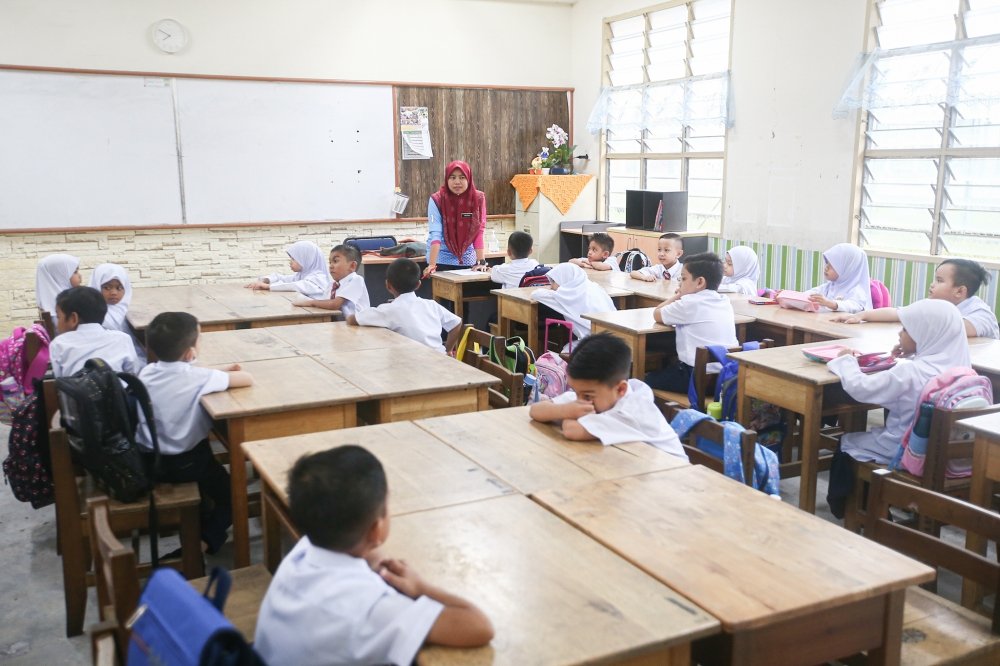
International experience shows that the removal of tuition fees does indeed increase the enrolment of students with disabilities in post-secondary institutions. — Picture by Farhan Najib
From a policy perspective, the International Classification of Functioning, Disability and Health (ICF) developed by the World Health Organization offers a highly relevant framework. The ICF emphasises that disability is not determined solely by individual conditions, but by the interaction between individuals and their environments, attitudes, and policies. In the context of higher education, this means that students with disabilities across categories—physical, sensory, learning, or mental health—are capable of achieving outcomes comparable to their peers when learning environments are designed inclusively. In many cases, failure lies not with the student, but with the system’s inability to adapt.
The implications of these findings become even more pronounced when free education is assessed from the perspective of national ROI. Higher education requires substantial public investment, not only in tuition fees, but also in infrastructure, human resources, and institutional support. Returns to the nation materialise only when students with disabilities move from access to participation, and from participation to social and economic contribution. International studies show that students with disabilities who receive comprehensive support during post-secondary education exhibit higher employability rates, greater independence, and reduced reliance on social assistance in the long term. This includes all categories of disability—physical, visual, and hearing impairments—where individuals, when given appropriate opportunities and support, are able to contribute actively to the workforce and societal development.
Within the national education ecosystem, the post-secondary level—encompassing Community Colleges, Polytechnics, and Public Universities—plays a decisive role in determining whether free education generates positive ROI or otherwise. For some students with disabilities, skills-based pathways in Community Colleges and Polytechnics offer more immediate returns through faster employability and more cost-efficient training. For academically inclined students with disabilities, Public Universities contribute to long-term ROI through leadership development, professional expertise, and participation in high-knowledge sectors. These pathways should not be viewed hierarchically, but as a complementary ecosystem that collectively supports an inclusive national economy.
It is within this context that the role of research and advocacy institutions becomes increasingly critical. The Centre for Inclusive Research on Community and Disability (CIRCLE), introduced and strengthened through the support of the University Board of Directors (LPU) of Universiti Pendidikan Sultan Idris (UPSI), stands as a clear manifestation of the university’s inclusive agenda that extends beyond policy rhetoric. CIRCLE serves as a strategic bridge between post-secondary education, evidence-based research, and national policy development, particularly in ensuring that free education for students with disabilities is translated into quality engagement, graduate employability, and stronger social and economic returns on investment. In line with UPSI’s aspiration as the national education university, this inclusive agenda affirms that education for persons with disabilities is not merely a matter of welfare or access, but a human capital development strategy that directly contributes to societal well-being and national competitiveness.
Free education for students with disabilities, when implemented through the right approach, should not be viewed as an additional cost to the nation. It is a strategic investment in human capital, with the potential to reduce long-term social costs and enhance national productivity. However, this investment will only yield results when the policy is supported by inclusive learning environments, meaningful engagement, and clear post-secondary pathways. Measuring the success of free education should therefore go beyond enrolment figures or the amount of waived fees, and instead focus on the extent to which graduates with disabilities are able to contribute as functional, independent, and dignified adults.
If Malaysia truly intends to capitalise on the opportunities presented by the Higher Education Plan 2026–2035, free education for students with disabilities must be viewed not merely as a symbol of compassion, but as a foundation for building an inclusive, productive, and competitive nation. Ultimately, the success of this policy will be determined not by enrolment statistics, but by the quality of engagement, post-graduation contributions, and the return on investment delivered to the country.
*Hasrul Hosshan is director of UPSI’s Centre for Inclusive Research on Community and Disability (CIRCLE),
Faculty of Human Development.
**This is the personal opinion of the writer or publication and does not necessarily represent the views of Malay Mail.
