


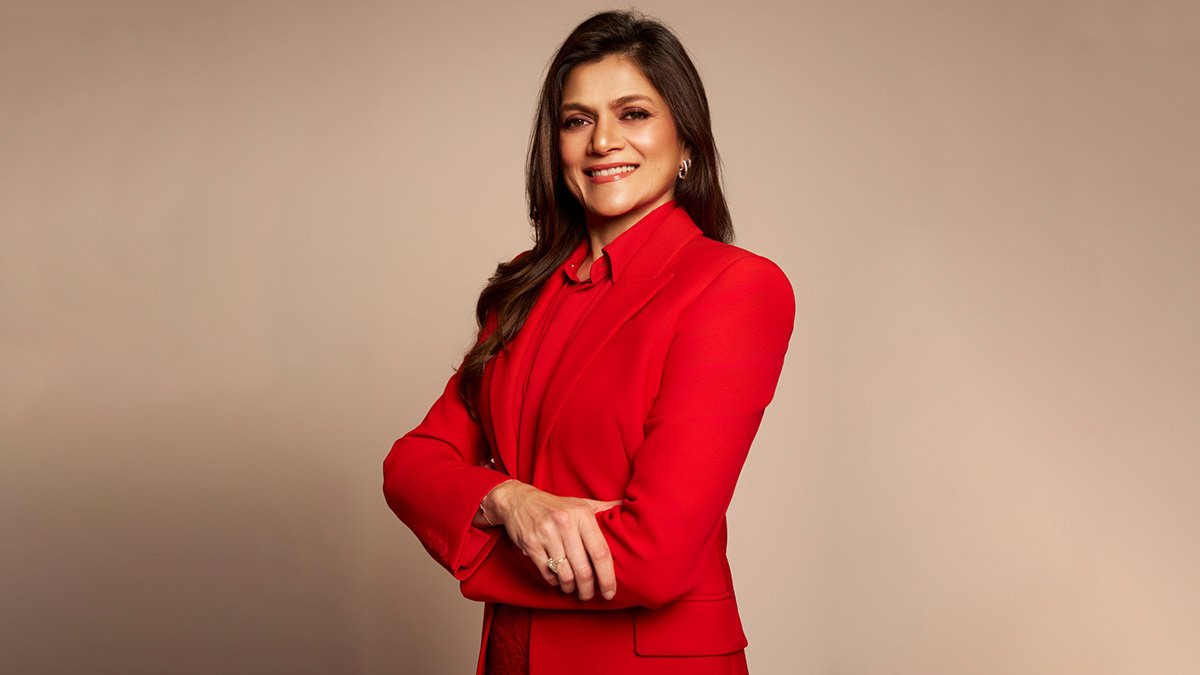
Interview/ Neerja Birla, founder & chairperson, Aditya Birla Education Trust
THE MIND MATTERS, so too its wellbeing. And yet, mental health issues are usually treated with silence or shame. Neerja Birla, founder and chairperson, Aditya Birla Education Trust, wanted to change that. Her journey into the mental health space began with a simple yet profound realisation that despite the existence of mental health policies, the reality on ground was different. With Mpower, an initiative of the Aditya Birla Education Trust, she aims to not just create awareness but also build pathways to care, ensuring every mind is seen, heard and supported. And, at the Mpowering Minds Summit 2026, in Bengaluru on February 27, the focus will be on women, their resilience and the deep strength found in shared healing.
The most important lesson is this: people do not avoid care because they lack awareness, they avoid it because systems feel unsafe.
In an interview with THE WEEK, Birla reflects on the stigma that still surrounds mental health issues, the unique barriers women face and the urgent need for systemic changes. Excerpts:
Q/ In your early years, what resistance—social, institutional or cultural—did you encounter most frequently?
When we began Mpower in 2016, the resistance was not loud; it was structural. Mental health existed in policy documents, but not in lived reality. The National Mental Health Survey had already shown an 85 per cent treatment gap, yet systems behaved as if the problem was marginal. Corporates treated mental health as a personal weakness, not a workplace responsibility. Hospitals were built to treat episodic physical illness, not long-term emotional distress. Schools had no way to respond to student anxiety without labelling it as failure.
Culturally, the most damaging barrier was shame. Seeking help was seen as weakness, moral failure or a threat to family honour. What we were really fighting was inertia—a system where intent existed, but infrastructure, language and accountability did not. The absence was not just of services, but of trust, pathways and permission. Our work began by building those missing bridges between distress and care.
Q/ How has the language around mental health changed in India over the last 10 years?
The language has changed dramatically. Words like anxiety, burnout and therapy are now part of everyday conversation in workplace, schools, campuses and families. Post pandemic, the silence has broken. Awareness has come, but acceptance is still far. Language alone does not heal. While awareness has expanded, access has not kept pace. Millions can now name their distress, but still don’t know where to go or can’t reach care even if they do. Rural India, women, older adults and frontline workers remain largely excluded. Awareness without access is performative. The real work now is to provide local, affordable and quality care.
Q/ Which demographic group has shown the most visible change in openness, and which remains the hardest to reach?
At Mpower, adolescents and young adults have shown the most visible shift in openness. Our helpline and on-ground programmes show that younger callers are more willing to articulate emotional distress, particularly around relationships, academic pressure, identity and early career stress. Over the past five years, Mpower’s helpline has witnessed an increase in relationship-related concerns, indicating a growing comfort in seeking support and naming emotional challenges.
The hardest group to reach continues to be older adults, especially women. Their concerns often centre on loneliness, isolation, long-term stress and health-related anxiety, suggesting delayed help-seeking shaped by stigma, caregiving roles and limited access to support. This reinforces the need for community-based, trust-led interventions to engage those who are least likely to seek formal help.
This unevenness is why our work increasingly focuses on women’s mental health and life transitions that society ignores, such as caregiving, perimenopause, motherhood and leadership fatigue. When women’s mental health is supported, the impact multiplies across families and communities.
Q/ India faces an acute shortage of mental health professionals. How has Mpower tried to bridge this gap?
India’s shortage of mental health professionals means we cannot rely only on specialist-led models. At Mpower, we have focused on bridging this gap by strengthening mental health literacy, early identification and community-based support systems.
Using insights from our helpline data and on-ground programmes, we design interventions that help non-specialists such as teachers, caregivers, frontline workers and community leaders recognise distress early and respond appropriately. This reduces the burden on clinical services while ensuring people receive timely support.
Our nationwide awareness and community programmes, particularly in rural and underserved areas, have reached over 5 million people, leading to a 26 per cent improvement in mental health awareness and coping strategies and a 31 per cent increase in individuals seeking treatment when needed.
Q/ What lessons have you learned about reaching groups that traditionally avoid support, like men or older adults?
The most important lesson is this: people do not avoid care because they lack awareness, they avoid it because systems feel unsafe.
Men respond when care is anonymous, practical and framed around resilience rather than weakness. Older adults respond when mental health is integrated into routine family and medical care, not isolated as a “psychiatric issue”. Adolescents respond when teachers and schools are trained to recognise distress without judgement.
To give an example, our work with uniformed forces, through initiatives like Project Mann, has shown that when mental health is embedded within existing systems and not treated as an external add-on the outcomes change—suicide reduction by 40 per cent, and early identification and sustained engagement become possible.
Q/ How do you measure success in mental health work when outcomes are not always visible?
Mental health had long been underfunded because its impact was considered invisible. We challenge that. The deepest measure of success is preventive. The day mental health education becomes a non-negotiable part of schooling, that is when we will know we have truly succeeded.
Q/ If you had to identify India’s next big mental health crisis, what would it be?
India is facing a silent emergency driven by three forces: deteriorating youth mental health, untreated women’s psychological distress and the mental health impact of climate stress and displacement. This is no longer just a health issue. It is an economic, social and developmental crisis.
The question is not whether India can afford to invest in mental health; it is whether we can afford not to. We need to create a connected national system that guides a person from early distress to sustained recovery.
A second critical gap is gender responsiveness. Women’s mental health is treated through male-normative clinical frameworks that ignore biological transitions and social realities, caregiving burden, mobility restrictions, economic dependence and patriarchal control.
Q/ What systemic changes are most urgently required for India to move to a sustainable, integrated care model?
India needs three decisive shifts: Mandatory mental health education in schools, sustained public investment with accountability and large-scale public-private partnerships that strengthen public systems without privatising access. Alongside this, we need workforce reform, real-time mental health data and gender-responsive service design.
