

Close Menu

    Subscribe to Updates

    Get the latest creative news from FooBar about art, design and business.

    What's Hot

    Study maps how exercise, sleep, diet, and mood connect in daily life

    July 3, 2026

    Some Social Security recipients could face dramatic cuts

    July 3, 2026

    61 Encouraging Memes to Motivate Your Life

    July 3, 2026
    Facebook X (Twitter) Instagram
    Trending
    • Study maps how exercise, sleep, diet, and mood connect in daily life
    • Some Social Security recipients could face dramatic cuts
    • 61 Encouraging Memes to Motivate Your Life
    • Good News in History, July 3
    • Ilene Beth Miller, M.S. Announces Expanded Holistic Coaching Practice Focused on Personalized Mind, Body, and Wellness Support
    • Business News: Stock and Share Market News, Economy and Finance News, Sensex, Nifty, Global Market, NSE, BSE Live IPO News
    • NASCAR Announces Race to Stop Suicide as Entitlement Partner for NASCAR CRAFTSMAN Truck Series Playoff Race at Kansas Speedway
    • Stress management for Men in India: Practical Steps to Reduce Burnout and Improve Well Being
    Moving MountainsMoving Mountains
    Facebook X (Twitter) Instagram
    Friday, July 3
    • Home
    • Mental Health
    • Life Skills
    • Self-Care
    • Well-Being
    • Awareness
    • Inspiration
    • Workers Comp
    • Social Security
      • Injuries
      • Disability Support
      • Community
    Moving MountainsMoving Mountains
    Home » Sleep deprivation tips for phone users
    Self-Care

    Sleep deprivation tips for phone users

    TECHBy TECHJuly 1, 2026No Comments4 Mins Read
    Facebook Twitter Pinterest LinkedIn Tumblr Reddit WhatsApp Email
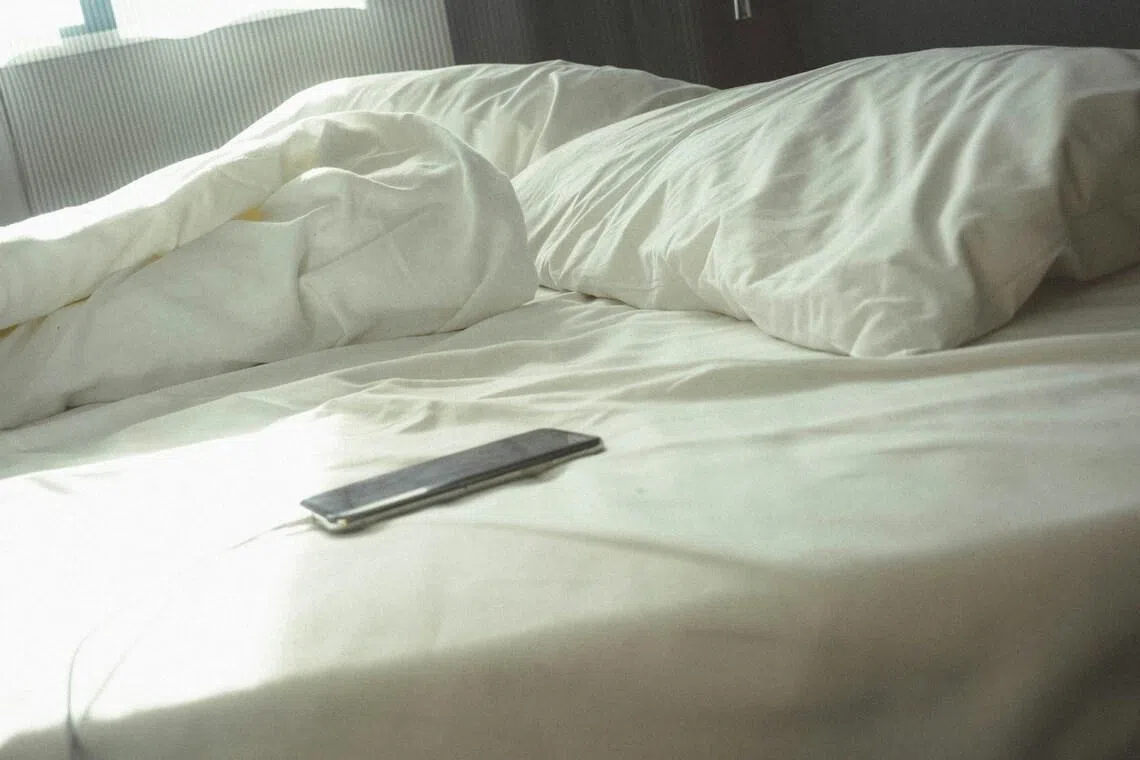
    Using phones during bedtime can make it harder to fall asleep, studies have found.
    Share
    Facebook Twitter LinkedIn Pinterest WhatsApp Email

    SINGAPORE – Singaporeans are among the most sleep-deprived worldwide, with more than half of the population clocking fewer than seven hours of shut-eye a day.

    The main culprit – the glowing rectangle in our hands.

    Numerous global studies have linked device use at bedtime with the longer time taken to fall asleep. These reports also show that youth who use devices at night often do not get adequate high-quality sleep, and are more likely to feel tired the next day.

    Sleep debt is an issue many adults grapple with as well.

    According to Leonard Eng, a doctor and consultant at Singapore General Hospital’s department of psychiatry, scrolling in bed becomes a habit that “rewires your brain” to view the bed as a place for entertainment, not just for sleep.

    The Straits Times spoke to two sleep experts, Stijn Massar and Lo Chi Yan, assistant professors from the National University of Singapore, who recommend tips to ensure phones do not get in the way of sleep.

    The most ideal way to avoid using phones before sleeping is to keep them out of the way.

    Try charging your phone outside the bedroom while sleeping, so notifications do not disturb you.

    If you depend on the phone to wake you up in the morning, use an old-school alarm clock in the bedroom instead.

    This is also a good habit for parents to inculcate in their children.

    Keeping the phone at the bedside creates a tendency to check it during the night or be woken by notifications. This increases disruptions and fragments sleep.

    If you really need to keep the phone near you while you sleep, switch it to the “Do Not Disturb” mode.

    This setting helps by muting calls, alerts and notifications. It stops buzzing, beeping, or screen flashes, allowing the brain to reach deeper stages of rest through uninterrupted sleep.

    Messaging, gaming or scrolling through engaging content makes it harder for the brain to wind down and drift off to sleep.

    While the light emitted by screens can affect sleep, research suggests that the duration of phone use close to bedtime and how emotionally stimulating the content is play a bigger role in delaying sleep.

    Not everyone gets hooked on the same things.

    For instance, a quick game of Sudoku may seem like a relaxing way to wind down. But for someone with a competitive streak, trying to solve a difficult puzzle could keep the mind alert, making it harder to fall asleep.

    Likewise, watching a Netflix show may be part of a nightly wind-down routine. But the temptation to find out what happens next can easily turn one episode into binge-watching for several hours, pushing bedtime later than planned.

    Recognise what type of content keeps your mind engaged rather than relaxed, and avoid it in the hour or two before bed. What helps one person unwind may keep another wide awake.

    Swop screens for other wind-down activities, such as taking a warm shower, writing in a journal or engaging in a skincare routine. Try deep breathing, meditating or light stretching.

    When setting limits for children’s phone use, explain why boundaries are necessary.

    Have open conversations about sleep and explain the research behind the rules. Children who are still learning to manage their device use are more likely to cooperate when they understand the reasons for the restrictions.

    Tell them how many hours – between eight and 10 daily – they need for adequate sleep, and explain how using their devices at night can make it harder for them to feel tired and fall asleep easily.

    Such conversations can go a long way towards building not just compliance, but also understanding. Over time, children may be more likely to develop healthier habits that persist into adulthood.

    Deprivation phone sleep Tips Users
    TECH
    • Website

    Related Posts

    How to use tennis ball for massage

    July 2, 2026

    Healthy Lifestyle Habits for Men: Diet, Exercise, Sleep, and Stress Management

    July 2, 2026

    How to improve sleep quality

    July 1, 2026
    Leave A Reply Cancel Reply

    Don't Miss

    Study maps how exercise, sleep, diet, and mood connect in daily life

    By TECHJuly 3, 20260

    A 70-day diary study reveals why activity, sleep, socializing, nature, diet, and mood may not…

    Some Social Security recipients could face dramatic cuts

    July 3, 2026

    61 Encouraging Memes to Motivate Your Life

    July 3, 2026

    Good News in History, July 3

    July 3, 2026
    Stay In Touch
    • Facebook
    • Twitter
    • Pinterest
    • Instagram
    • YouTube
    • Vimeo
    Our Picks

    Study maps how exercise, sleep, diet, and mood connect in daily life

    July 3, 2026

    Some Social Security recipients could face dramatic cuts

    July 3, 2026

    61 Encouraging Memes to Motivate Your Life

    July 3, 2026

    Good News in History, July 3

    July 3, 2026

    Subscribe to Updates

    Get the latest creative news from SmartMag about art & design.

    About Us

    At Moving Mountains, we believe that every individual has strength, value, and purpose—regardless of mental health challenges or physical disabilities. This platform was created to inspire hope, promote understanding, and empower people to live meaningful and confident lives beyond limitations.

    Latest Post

    Study maps how exercise, sleep, diet, and mood connect in daily life

    July 3, 2026

    Some Social Security recipients could face dramatic cuts

    July 3, 2026

    61 Encouraging Memes to Motivate Your Life

    July 3, 2026
    Recent Posts
    • Study maps how exercise, sleep, diet, and mood connect in daily life
    • Some Social Security recipients could face dramatic cuts
    • 61 Encouraging Memes to Motivate Your Life
    • Good News in History, July 3
    • Ilene Beth Miller, M.S. Announces Expanded Holistic Coaching Practice Focused on Personalized Mind, Body, and Wellness Support
    Facebook X (Twitter) Instagram Pinterest
    • About Us
    • Contact Us
    • Privacy Policy
    • Terms & Conditions
    • Disclaimer
    © 2026 movingmountains. Designed by Pro.

    Type above and press Enter to search. Press Esc to cancel.