


Lifestyle
-Oneindia Staff
Updated: Thursday, July 2, 2026, 7:21 [IST]
Healthy lifestyle habits for men support energy, strength, and long-term health. Small daily choices can lower the risk of heart disease, diabetes, and high blood pressure. Focus on food, movement, sleep, and stress control. Add regular health checks and safer habits around alcohol and tobacco. These steps fit most budgets and routines in India.
A healthy diet for men starts with regular, balanced meals. Fill half your plate with vegetables and fruit. Add whole grains like roti made from whole wheat, brown rice, or millets. Include protein such as dal, eggs, fish, chicken, curd, or paneer. Use less fried food, sweets, and packaged snacks.
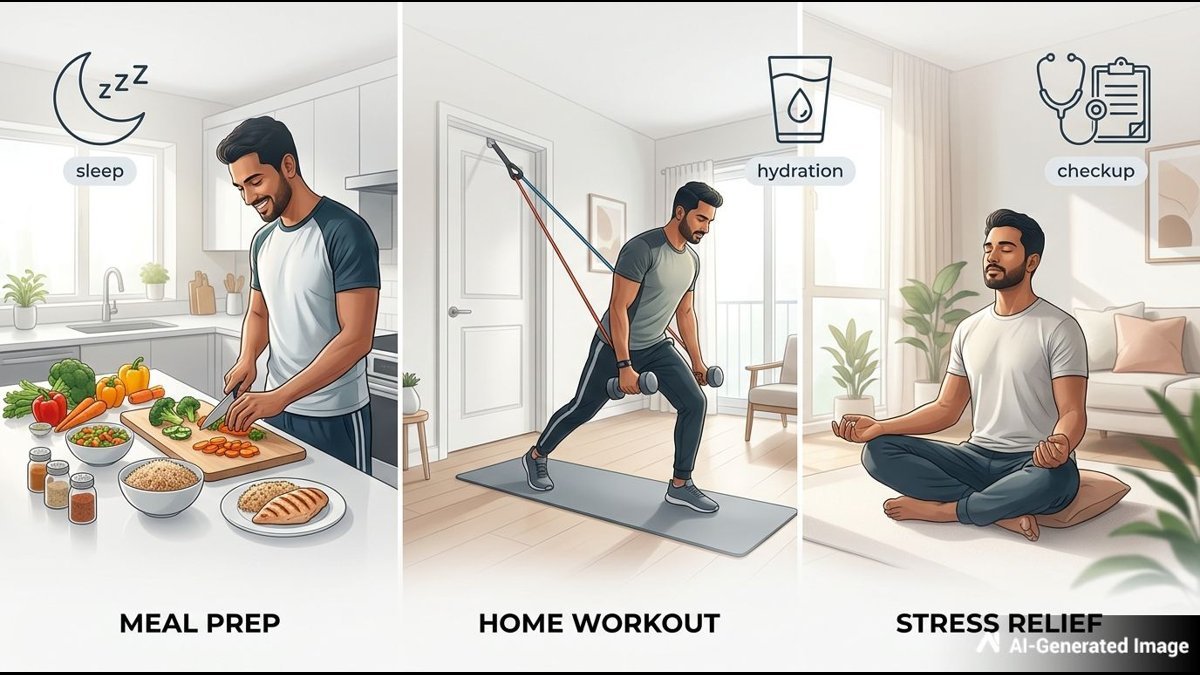
Men’s healthy lifestyle choices promote energy, strength, and long-term health through a balanced diet, regular exercise, adequate sleep, stress management, avoiding tobacco, limiting alcohol, and regular health checks to reduce disease risks.
Watch portion size and meal timing. Eat slowly and stop when you feel satisfied. Choose healthy fats in small amounts, like nuts and seeds. Use less ghee, butter, and vanaspati. Limit foods high in salt, since they raise blood pressure. If you often eat outside, pick grilled, steamed, or home-style options.
Regular exercise for men helps heart health, weight control, and mood. Aim for at least 150 minutes of brisk walking each week. Split it into 30 minutes on five days. If you sit a lot, take short movement breaks each hour. Use stairs when you can and walk for small errands.
Add strength training two or more days a week. Bodyweight moves work well at home. Try squats, lunges, push-ups, and planks. Start with low reps and good form. Increase slowly to avoid injury. Flexibility also matters, so include light stretching after walks or workouts.
Sleep well to support recovery
Sleep is a key healthy habit for men. Most adults need 7 to 9 hours each night. Poor sleep can raise hunger, stress, and blood sugar. Keep a fixed sleep and wake time, even on weekends. Make your room dark and quiet. Avoid heavy meals close to bedtime.
Reduce screen time before bed. Bright light can delay sleep. Try reading, calm music, or a warm bath instead. Limit late caffeine from tea, coffee, and energy drinks. If loud noise is common, use earplugs. If you snore loudly or feel tired daily, talk to a doctor.
Manage stress in practical ways
Stress affects blood pressure, sleep, and digestion. It can also lead to smoking, alcohol use, or overeating. Start with simple stress control habits. Take 10 minutes for slow breathing each day. Short walks, sunlight, and regular breaks help. Keep realistic work goals and plan tasks in small steps.
Social support matters for mental health in men. Speak with a trusted friend or family member. Share concerns early, not after they build up. If stress feels constant or leads to anger or sadness, seek counselling. Professional help is a normal health choice, like seeing a doctor for pain.
Limit alcohol and avoid tobacco
Smoking and chewing tobacco raise the risk of cancer, heart disease, and stroke. Quitting is one of the best healthy lifestyle habits for men. If you use tobacco, set a quit date and remove triggers. Ask a doctor about nicotine replacement or medicines. Avoid second-hand smoke at home.
Alcohol adds empty calories and can harm the liver. It can also disturb sleep and raise blood pressure. If you drink, keep it limited and avoid binge drinking. Have alcohol-free days each week. Do not drink and drive. If you find it hard to cut down, seek support early.
Get regular health checks and track key numbers
Preventive care helps find problems early. Check blood pressure at least once a year. If it is high, check more often as advised. Ask your doctor about blood sugar tests, cholesterol tests, and weight goals. Family history of diabetes or heart disease may mean earlier and more frequent checks.
Men should also watch waist size, since belly fat links to higher risk. Track your weight at home once a week. If you are over 40, ask about heart risk and kidney health checks. Keep vaccines up to date, including tetanus boosters. Follow medical advice for any long-term illness.
Build daily habits that protect health
Hydration supports digestion, skin, and focus. Drink water through the day, more in hot weather. Choose water over sugary drinks. Good hygiene lowers infection risk. Wash hands before meals and after travel. Brush teeth twice daily and see a dentist when needed. Use sunscreen during strong sun to protect skin.
Safety habits also support long-term fitness. Wear a helmet on two-wheelers and use seat belts. Keep a simple first-aid kit at home. If you work at a desk, adjust chair height and screen level. Stretch your neck and back. These small steps reduce pain and help you stay active.
