


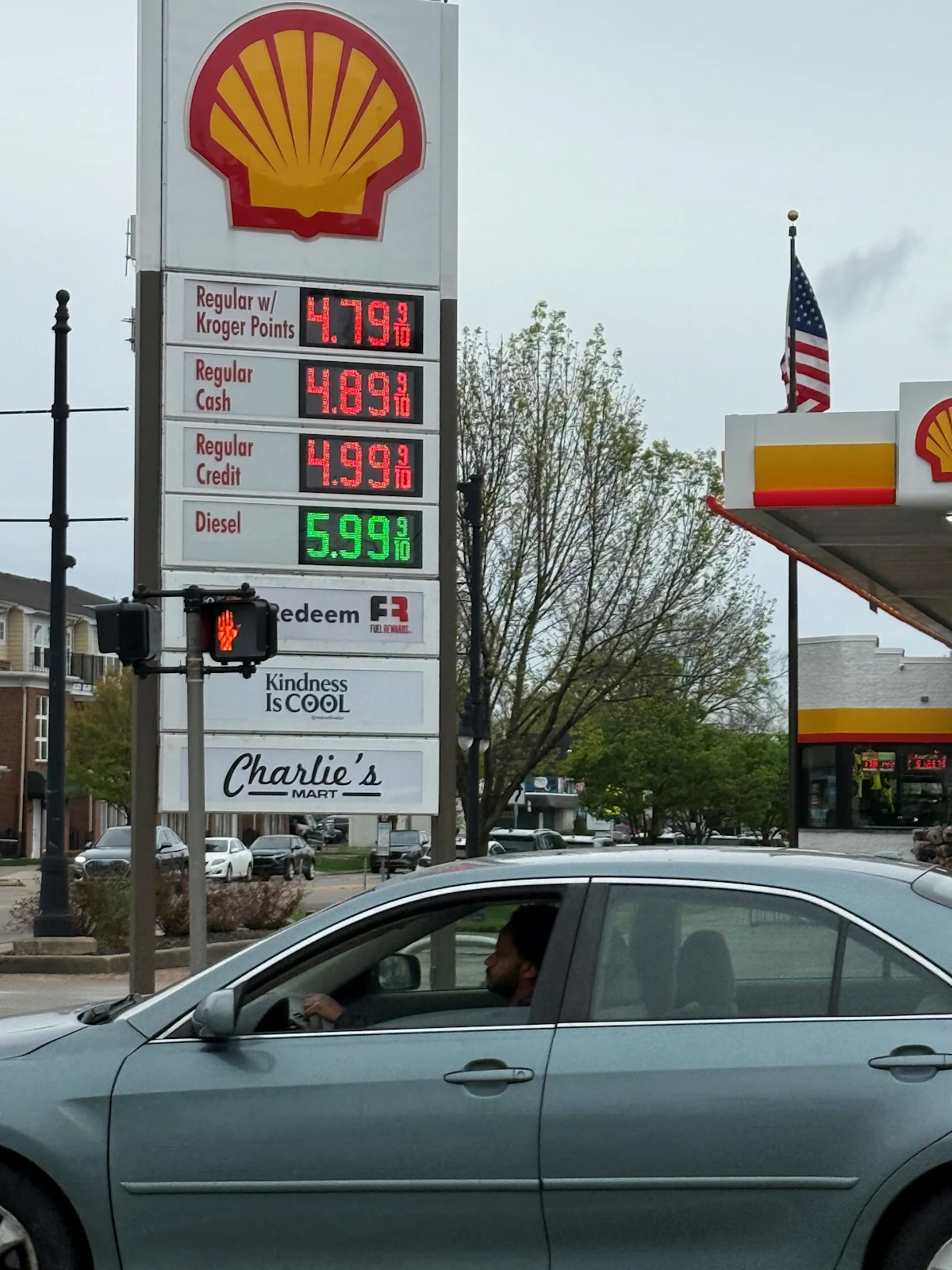
Crazy high prices, especially at the pump, are at least giving Social Security beneficiaries reason to hope for a bigger cost of living adjustment in in 2027.
Let’s be clear: We’re talking about forecasts based on the inflation numbers we’re seeing now — and mind you much could change in the months ahead. We will not know for certain how much of a COLA jolt retirees and others receiving Social Security benefits might see next year until the official number is released in October.
The annual cost-of-living adjustment for Social Security benefits is based on how inflation is running in the third quarter. The formula reflects monthly changes for July, August and September for the Consumer Price Index for Urban Wage Earners and Clerical Workers.
Yet, as we said, some hot inflation numbers now make for some promising forecasts.
The Senior Citizens League, a large nonpartisan group representing the older adults, issued a prediction on Wednesday, June 10, that Social Security’s 2027 Cost of Living Adjustment will be 3.8% in 2027.
Gas prices at a Shell station in Ferndale at Hilton, near Interstate 696, near $5 a gallon on Wednesday, April 27, 2026.
If so, that would be a full percentage point higher than this year’s COLA of 2.8%. The prediction rolled out after the U.S. Bureau of Labor Statistics released new CPI data for May.
The Consumer Price Index for All Urban Consumers increased 0.5% month-to-month in May, after rising 0.6% in April.
Over the last 12 months, the all items index increased 4.2% before seasonal adjustment. It was the third consecutive year-over-year increase since the start of the Iran war in late February.
The COLA forecast relating to Social Security benefits reflects the CPI-W — or the Consumer Price Index for Urban Wage Earners and Clerical Workers — that is used to calculate the COLA, which currently sits at 4.4%.
According to the senior advocacy group, the average Social Security benefit for retirees would increase by $77 if the 3.8% inflation adjustment forecast proved to be a reality.
By my calculations, we’re talking maybe about an extra fill-up or so for your tank, based on an average price of $4.28 a gallon for regular in Michigan as of June 10.
Social Security currently pays the average retiree $2,026.41 per month, the group noted. With the predicted COLA, average payments would increase to $2,103.41 a month.
It would be a pretty big bump in benefits but not the largest of late. The highest COLA increase during COVID-era bout of inflation was an 8.7% jump in 2023. That was the highest inflation adjustment since 1981 when the COLA boost was 11.2%. In 1980, a COLA record for Social Security benefits was set at 14.3%.
Story Continues
We’ve got a few months to go to see how inflation plays out and how things land for Social Security benefits.
Many consumers, younger and older, are dealing with sticker shock now. And we’re increasingly unlikely to see the Federal Reserve cut interest rates in the weeks ahead.
Gasoline rose 7% month-to month in May; airline fares rose 2.7% month-to-month; tobacco and smoking products rose 1%; medical services rose 0.5% and cereal and bakery products rose 0.4%, based on the latest CPI data.
“If inflation cools later this year, most seniors won’t be surprised or relieved,” said Shannon Benton, executive director of the Senior Citizens League, which was established in 1992.
“They know prices aren’t going to come back down; they’ll just stop rising as quickly.”
She noted that a slower rate of inflation would not undo the financial strain that may older adults live with each day. Housing costs, healthcare expenses, groceries, utilities, transportation, and insurance continue to consume a growing share of fixed incomes for seniors, she said.
“After years of paying more for groceries, housing, healthcare, and other essentials, the damage has already been done,” Benton said.
“Whether it’s rising rent, higher property taxes and insurance premiums, expensive prescriptions, or the cost of putting food on the table, older Americans are being forced to stretch every dollar just to cover the basics,” she said.
The inflation shock in 2026 has been particularly steep for many households.
The three-month annualized inflation rate, which better tracks momentum, climbed to 8.2% in May from 7.3% in April. “That is the hottest three-month pace since September 2022,” according to Diane Swonk, KPMG chief economist.
In a report issued June 10, Swonk noted that prices at the gas pump soared more than 40% from a year ago — the fastest annual increase since July 2022, when the effects of Russia’s invasion of Ukraine were still buoying prices.
“The good news is that prices at the gas pump receded in recent weeks and should not contribute as much to inflation in June,” Swonk said.
Even so, she said, inflation continues to move up, with gains spreading more than they had earlier in the year. Inflation, she said, is likely to linger in the wake of resilient demand.
Still looking for interest rates to fall from here? Not likely. Swonk’s report indicated that she’s expecting the Federal Reserve to raise short term interest rates two times in late 2026.
Contact personal finance columnist Susan Tompor: stompor@freepress.com. Follow her on X @tompor.
This article originally appeared on Detroit Free Press: 2027 Social Security COLA forecast hits 3.8% after inflation jump
