


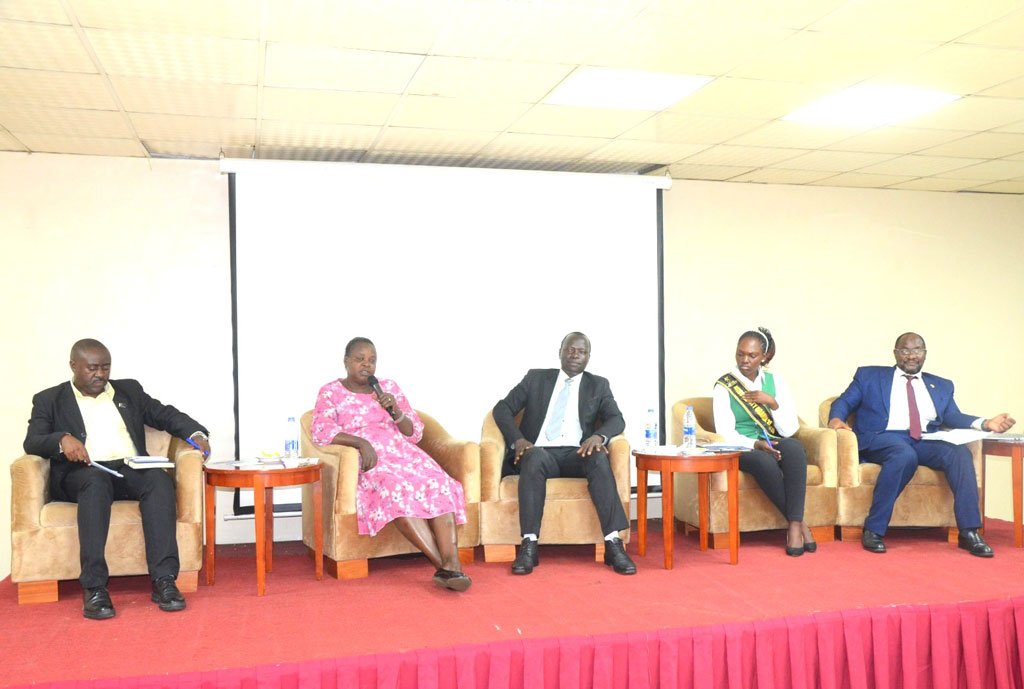
Government, through the Ministry of Health, is planning to roll out a comprehensive five-year initiative dubbed ABILITY+, under which refugees living with disabilities and members of their host communities will access free assistive devices.
While presenting details of the initiative, which is still under development, at the Rehabilitation and Assistive Technology Symposium in Kampala on Thursday, November 12, Dr Isaac Okiring, the Health Systems and Disability Inclusion Specialist at the Ministry of Health, said the programme would be rolled out in all refugee settlements and their host districts across the country.
“As the ministry, we already have a stock of wheelchairs, reading glasses and walking canes. We also have national trainers of trainers, training materials and reporting tools, and thus we now need support on training, assessment, and monitoring and evaluation,” he said.
The initiative, which will run between 2026 and 2031, will recruit community teams tasked with identifying the needs of refugees with disabilities and other persons with disabilities in host communities, and linking them to outreach services or health facilities.
Last year, the Ministry of Health launched the National Rehabilitation and Assistive Technology Strategic Plan 2025–2030, under the theme: Advancing Equitable Access to Quality Rehabilitation and Assistive Technology Services for All in Uganda.
The strategy aims to ensure that no one is left behind by integrating rehabilitation and assistive technology (AT) more deeply into primary healthcare and public health systems. It also seeks to shift care away from a traditional charity-based model towards active participation, dignity, independence and inclusion for persons with disabilities.
Dr Okiring said the government, in addition to developing guidelines and training materials across different categories, was also finalising a list of priority assistive products.
“The priority assistive products list has 50 items across the different disability domains, and upon completion, we shall work on integrating these devices into the essential medicines and health supplies list. Our task now will be to push facilities to plan for them. More than 1,500 primary healthcare workers have also been trained in providing comprehensive rehabilitation services,” he said.
He added: “Despite this progress, significant gaps remain, particularly in service delivery outside the capital city, Kampala. Access to rehabilitation and assistive technology services remains limited in many rural communities. There is therefore a need to strengthen and equip health facilities at the grassroots level so they can effectively provide rehabilitation services and respond to the needs of persons with disabilities.”
The symposium was organised by the National Union of Disabled Persons of Uganda (NUDIPU), an umbrella organisation of persons with disabilities that advocates for their rights in Uganda, under the theme: Rehabilitation and Assistive Technology for All: Breaking Barriers, Opening Possibilities.
Representing NUDIPU Chief Executive Officer, Programme Manager Martin Ssennoga emphasised that without rehabilitation, the dignity, independence and quality of life of many persons with disabilities would remain compromised.
He noted that rehabilitation plays a critical role in breaking barriers, restoring dignity and enabling persons with disabilities to participate fully in society.
Sharing their lived experiences, representatives of various organisations advocating for the rights of persons with disabilities urged the government to waive taxes on essential assistive products and commodities, including diapers, which persons with disabilities depend on in their daily lives.
