


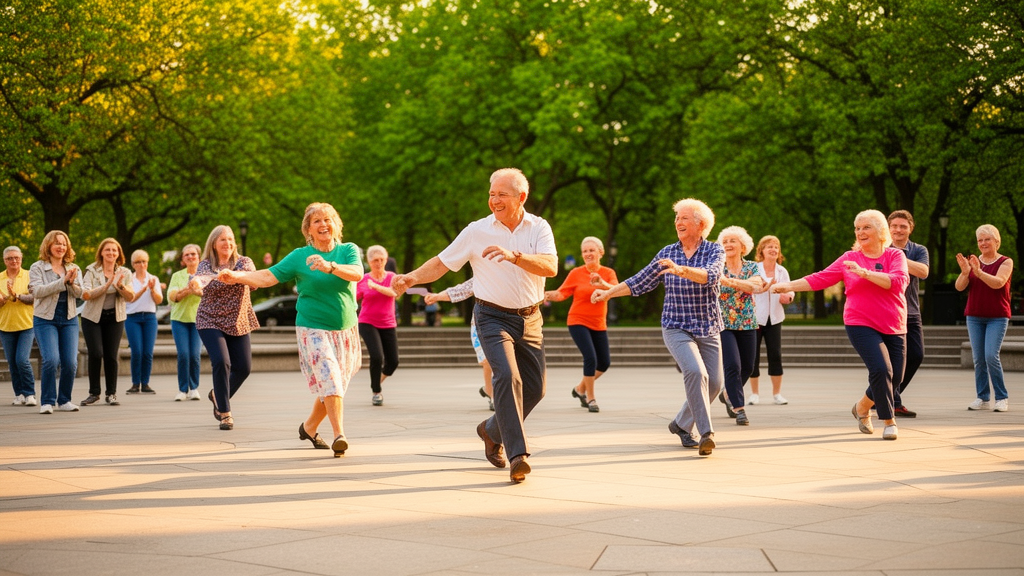
A large-scale cross-sectional investigation of 4,073 adults across mainland China has revealed that participation in community square dancing serves as a statistically significant, partial behavioral mediator linking perceived family support to reduced symptoms of depression and anxiety, while showing no significant mediating effect on perceived stress. Published in Frontiers in Public Health by researchers from Beijing Sport University, the study applied structural equation modeling to disentangle the direct psychological benefits of family relationships from the indirect behavioral contributions made by collective exercise. Across the evaluated cohort, perceived family support exerted robust, direct negative predictive effects across all three examined psychological distress dimensions, registering standardized direct path coefficients of -0.219 for stress, -0.283 for depression, and -0.214 for anxiety. Meanwhile, routine engagement in square dancing exercise directly predicted lower anxiety and lower depression, but failed to demonstrate a statistically significant direct association with stress. Through bootstrap indirect effect testing, the investigators confirmed that while family backing modestly promotes active participation in square dancing, the exercise itself accounts for only a minor fraction of the total emotional relief experienced by middle-aged and older adults, underscoring that family support functions primarily as an autonomous, direct psychological safeguard rather than depending entirely on physical activity channels.
The investigation addresses a critical public health priority emerging from rapid global demographic aging, a transition that is occurring with unprecedented speed and scale throughout mainland China. Citing projections from the United Nations indicating that the global population aged 65 and older will expand from 761 million in 2021 to more than 1.6 billion by the year 2050, the study authors emphasize that expanding life spans fundamentally alter national healthcare, long-term care systems, and family caretaking structures. Within China, which contains one of the largest aging populations in the world, previous assessments highlighted by the Peking University-Lancet Commission on healthy aging indicate that prolonged life expectancy brings substantial social and psychological challenges. Epidemiological syntheses and meta-analyses referenced by the authors estimate that the pooled prevalence of depressive symptoms among older adults in mainland China reaches approximately 20.0 percent, establishing late-life emotional distress as a pervasive public health burden. In alignment with the World Health Organization framework, healthy aging is defined not merely as the absence of physical infirmity, but as the continuous development and maintenance of functional capabilities, social engagement, and psychological adaptation that facilitate holistic well-being in later life, prompting researchers to seek accessible, modifiable lifestyle interventions.
To interpret the mechanisms connecting personal social networks to emotional health, the research team grounded their inquiry in classical social support theory, incorporating both the main effect and buffering models formulated by Cohen and Wills as well as theoretical extensions by Feeney and Collins. Under these conceptual frameworks, social support acts not only as a reactive buffer that softens the acute psychological impact of stressful environmental events, but also as a universal, direct resource that systematically promotes emotional stability and subjective health across ordinary daily life. For middle-aged and older individuals facing age-related functional decline, chronic illness burdens, retirement transitions, and shrinking social circles, the family unit represents the most fundamental, enduring, and stable foundation of interpersonal backing. Within the cultural milieu of Chinese society, family support carries profound normative significance through familism and the historical tradition of filial piety, which establishes intergenerational expectations of mutual assistance, respect, and emotional responsiveness. Prior literature highlighted in the study demonstrates that subjective perceptions of filial responsiveness and emotional solidarity from spouses and adult children exert stronger protective influences against depressive symptoms than purely material or instrumental assistance, establishing family relationships as a primary psychosocial determinant of healthy aging.
Simultaneously, the authors examined square dancing, known natively as guangchangwu, as a uniquely prevalent, culturally embedded form of collective physical activity widely embraced across Chinese public spaces, particularly by middle-aged and older women. Characterized by low entry barriers, rhythmic synchronization, and accessible public square gatherings, square dancing functions as an integrated health behavior that simultaneously provides aerobic physical exercise, spontaneous community socialization, peer companionship, and structured emotional regulation. Existing exercise psychology and neurobiology literature cited by the authors suggests that sustained physical activity stimulates neurochemical adaptations, including the potential regulation of brain-derived neurotrophic factor levels, modulation of neuroendocrine stress response systems, and optimization of physiological arousal. Beyond these biological pathways, square dancing delivers powerful psychosocial rewards by creating regular opportunities for neighborhood interaction, fostering a collective identity, combating social isolation, and reducing loneliness. While previous clinical and observational inquiries had separately documented that social support fosters physical activity persistence and that square dancing correlates with enhanced subjective well-being and reduced psychological distress, empirical models testing the integrated structural pathway connecting family support through square dancing participation directly to specific negative emotional outcomes had remained scarce.
To systematically evaluate this behavioral mediation model, the researchers formulated five explicit theoretical hypotheses testing whether perceived family support would positively predict square dancing participation and emotional health, whether square dancing would independently enhance emotional well-being, whether exercise participation would formally mediate the family-to-emotion relationship, and whether these structural associations would vary across distinct chronological age brackets. Prior observational inquiries had primarily examined isolated bivariate correlations, such as the direct link between family support and depressive symptoms or the singular association between square dancing and sleep quality, leaving the structural behavioral chain unverified within a unified social-ecological framework. The research team argued that family members could conceivably facilitate square dancing engagement through verbal encouragement, schedule coordination, shared accompaniment, and instrumental assistance, thereby lowering personal barriers to regular physical activity. By integrating square dancing into the behavioral pathway through which relational support mitigates psychological distress, the authors aimed to generate rigorous empirical evidence clarifying whether community exercise acts as an essential functional vehicle or merely as an auxiliary behavioral pathway within active aging frameworks.
The study protocol utilized a cross-sectional survey administered in March 2025 across multiple provinces, autonomous regions, and municipalities throughout mainland China, achieving broad national representation across diverse urban and regional environments, including Beijing and Jiangsu. A total of 6,037 individuals were initially recruited; following the rigorous removal of incomplete submissions and questionnaires demonstrating straight-lining response patterns, the final analytical dataset comprised 4,073 participants. The sample exhibited a mean age of 59.23 years with a standard deviation of 9.02 years, spanning an overall age range from 18 to 86 years. In terms of broad age cohorts, 1,901 respondents were between 18 and 59 years old, representing 46.7 percent of the cohort, while 2,172 participants were aged 60 years or older, constituting 53.3 percent, with 19 participants omitting age records. Consistent with naturalistic demographic patterns documented among Chinese square dancers, female participants formed the vast majority of the analytical sample, totaling 3,815 women or 93.7 percent, alongside 258 male participants representing 6.3 percent, providing statistical power well in excess of established minimum thresholds for complex structural equation modeling.
Data collection relied on validated psychological and behavioral psychometric instruments adapted for the target population. Perceived family support was evaluated using the dedicated four-item Family Support subscale from the Multidimensional Scale of Perceived Social Support, scored along a seven-point Likert scale from strongly disagree to strongly agree, which achieved robust internal consistency reliability with a Cronbach’s alpha of 0.858. Negative emotional symptoms were measured via the 21-item Depression Anxiety Stress Scale-21, comprising three separate seven-item subscales capturing depressive affect, autonomic anxiety, and tension-related stress experienced during the preceding week. Responses on each four-point scale were doubled according to standard scoring protocols, yielding subscale totals ranging from 0 to 42, with subscale Cronbach’s alphas of 0.646 for depression, 0.780 for anxiety, and 0.767 for stress. Engagement in square dancing was quantified using Liang’s Chinese adaptation of the Physical Activity Rating Scale-3, which evaluates activity intensity, session duration across five ordered categories from under 30 minutes to over 90 minutes, and weekly participation frequency, multiplied together to generate an overall exercise score between 0 and 100.
Statistical evaluation commenced in SPSS version 25.0 to calculate descriptive parameters, check tolerance and variance inflation factors, and perform Harman’s single-factor test, which demonstrated that a single factor accounted for 27.60 percent of total variance, well beneath the conventional 40 percent ceiling, confirming that common method bias was not a confounding threat. Multicollinearity diagnostics confirmed safety, with all variance inflation factors remaining below 2.55 and tolerance statistics exceeding 0.39. Primary structural equation modeling was subsequently performed in Mplus version 8.3 using maximum likelihood estimation, modeling depression, anxiety, and stress as correlated dependent variables rather than collapsing them into a singular composite distress index. Global model fit statistics established an excellent correspondence with the empirical data, yielding a chi-square to degrees of freedom ratio of 4.82, a comparative fit index of 0.972, a Tucker-Lewis index of 0.965, a root mean square error of approximation of 0.032, and a standardized root mean square residual of 0.027. Indirect mediation paths were formally evaluated through non-parametric bias-corrected bootstrapping procedures executed across 5,000 resamples to generate 95 percent confidence intervals.
Within the structural model, perceived family support displayed a statistically significant, positive direct predictive effect on square dancing exercise volume, characterized by a standardized beta of 0.073 with a p-value below 0.001 and a 95 percent confidence interval spanning 0.038 to 0.108. In turn, square dancing exercise exerted statistically significant negative direct effects on depression, registering a beta of -0.043 with a p-value of 0.019, and on anxiety, registering a beta of -0.076 with a p-value below 0.001; however, its direct path to stress was non-significant, yielding a beta of -0.033 with a p-value of 0.087. Bootstrapped mediation testing confirmed significant indirect pathways from family support through square dancing to anxiety, with an indirect beta of -0.006 and a p-value of 0.003, and to depression, with an indirect beta of -0.003 and a p-value of 0.043. Conversely, the indirect pathway to stress was non-significant, showing a beta of -0.002 and a p-value of 0.113. Calculated effect proportions revealed that square dancing accounted for only 3.23 percent of the total effect of family support on anxiety and 1.26 percent of its total effect on depression, demonstrating that while square dancing provides a viable behavioral conduit for alleviating internalizing distress, direct family-based psychosocial resources fundamentally drive mental health protection.
To assess whether these structural dynamics fluctuate across adulthood, the authors conducted multigroup structural equation modeling comparing middle-aged respondents aged under 60 years against older adults aged 60 and above. Sequential multigroup testing confirmed measurement invariance across configural, metric, and scalar stages, as comparative fit index changes remained below 0.010 and root mean square error changes remained below 0.015, verifying that latent constructs were perceived identically across generations. In the subsequent structural comparison, family support significantly predicted square dancing across both middle-aged participants and older adults, while square dancing significantly predicted reduced anxiety in both groups. Although square dancing was significantly associated with lower depression among older adults but not among middle-aged adults, formal tests of group path differences revealed that all between-group difference coefficients failed to achieve statistical significance, with all p-values exceeding 0.05 and all 95 percent confidence intervals containing zero, confirming structural model invariance across age cohorts. The authors highlighted key methodological constraints, noting that the cross-sectional design precludes causal attribution, the 93.7 percent female composition limits generalizability to aging men, and self-reported exercise metrics risk recall and social desirability biases, while concluding that integrated public health strategies should blend family support interventions with community-level square dancing infrastructure.
Subject of Research: Mediation of square dancing between family support and negative emotions in Chinese adults
Article Title: Square dancing as a mediator between family support and negative emotions among Chinese middle-aged and older adults
Article References: Liu, Z., Yan, Q., Tian, M., & Wang, Y. (2026). Square dancing as a mediator between family support and negative emotions among Chinese middle-aged and older adults. Frontiers in Public Health, 14, Article 1903948. https://doi.org/10.3389/fpubh.2026.1903948
Image Credits: AI Generated
DOI: 10.3389/fpubh.2026.1903948
Keywords: square dancing, family support, negative emotions, depression, anxiety, psychological stress, structural equation modeling, multigroup analysis, measurement invariance, middle-aged adults, older adults, active aging, social support theory, physical activity, public health in China, guangchangwu, DASS-21, PSSS, PARS-3
