


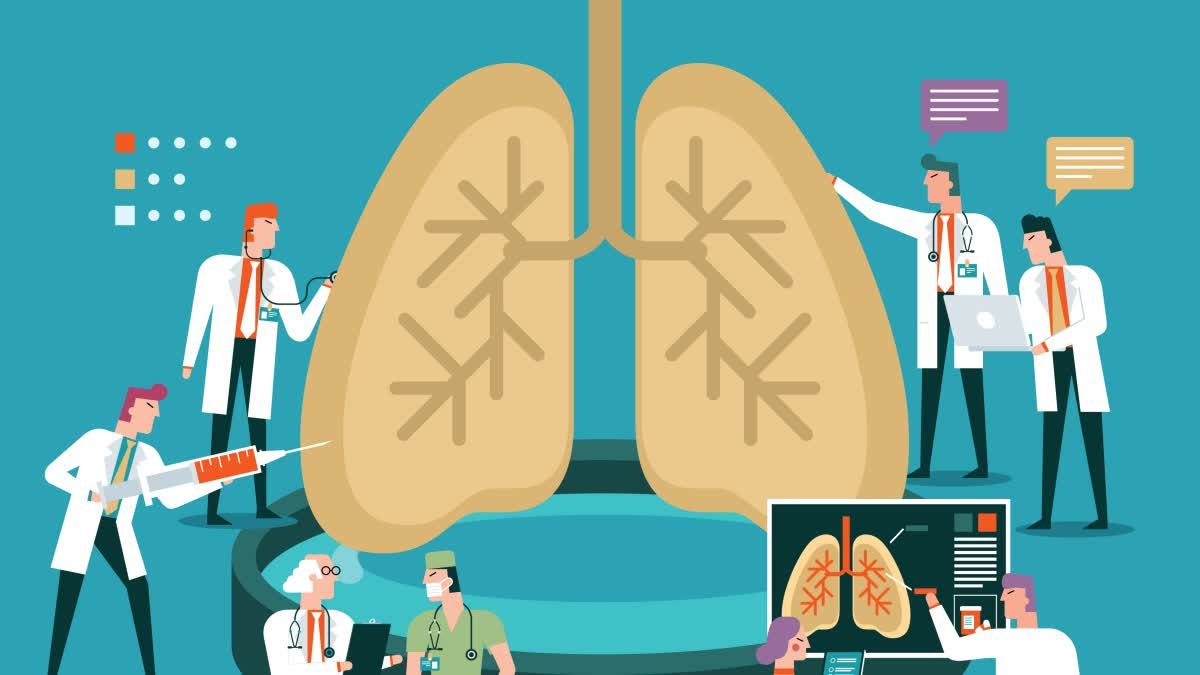
Newer radiation techniques allow doctors to target lung tumours more precisely while protecting nearby healthy tissues (Getty Images)
Two patients diagnosed with the same type of cancer may not respond to the same treatment. The reason often lies in the genetic changes within their tumours, which can influence how the disease progresses and which drugs are likely to work. The experience of 45-year-old Aman Roy from Kolkata brings this into focus.
A persistent swelling in his neck led to a diagnosis of Stage IV adenocarcinoma of the right upper lobe of the lung at Tata Medical Center, Kolkata. The cancer had already spread to his lymph nodes and bones. He initially responded to targeted therapy, which he started in December 2024. However, a PET-CT scan in June 2025 showed that the cancer was growing again. Comprehensive genomic testing helped doctors identify the genetic driver of his cancer and select a newer-generation targeted drug. He began this treatment in September 2025. Three subsequent PET-CT scans, in March, June and September 2026 showed a complete metabolic response, with no detectable metabolically active disease. He continues medication and regular medical follow-up.
Also read: Biotechnology And The AI Revolution: A New Opportunity And A New Responsibility
Lung Cancer Awareness Month 2026
November is observed as Lung Cancer Awareness Month. In India, lung cancer is often diagnosed at an advanced stage, by which time it may have spread beyond the lungs. Comprehensive genomic testing can identify genetic alterations for which targeted drugs are available, offering some patients additional treatment options. However, not every genetic alteration has a corresponding drug, and access to these treatments remains a challenge. The tumour’s genetic profile can also change as the disease progresses, making further testing relevant when an earlier treatment stops working. Aman’s journey highlights how understanding the genetic changes driving a tumour can open up treatment options when an earlier drug stops working.
Lung cancer stages (ETV Bharat)
Oncologists explain how next-generation sequencing (NGS), artificial intelligence (AI) and clinical data analytics are changing cancer diagnosis and treatment. They also discussed the potential and limitations of precision medicine, and the challenges of making these advances accessible to more patients.
Why Patients With The Same Cancer Respond Differently
Dr. Kumar Prabhash, Professor of Medical Oncology and Head of the Solid Tumour Unit, Tata Memorial Hospital, and Director, Homi Bhabha Cancer Institute, Muzaffarpur, said that variations in driver mutations are among the important reasons for the difference in response. Patients with specific driver mutations generally respond well to targeted therapies.
NGS is one of the key technologies used to identify these mutations in lung cancer. Studies have shown that patients with actionable driver mutations who receive targeted therapy generally have better treatment responses and longer overall survival than those treated with chemotherapy or other therapies.
Also read: What The Heart Attack Spike In Hassan Tells Us, And How India’s Genetic Blueprint Makes Heart Disease Hit Earlier And Harder
He said that genomic profiling should be considered at almost all stages of lung cancer. While selected mutation tests are available, comprehensive genomic testing provides a broader picture of the tumour, including co-existing mutations that can help doctors understand how patients may respond to treatment and make better-informed decisions. The cost of testing, limited availability of technology, access to adequate tumour tissue samples and challenges in interpreting genomic reports are among the biggest barriers to making comprehensive genomic testing and targeted treatments accessible, particularly in Tier II and Tier III cities. The financial burden also varies depending on the test and the laboratory. Improving affordability, tissue-testing technology, and logistics is essential to expanding access.
While several initiatives are already underway, many more are needed to reach the large number of patients who require these tests. One such initiative is the Cancer Research and Statistics Foundation’s (CRSF) ‘LuNGS Alliance’, which offers free NGS-based biomarker testing to lung cancer patients across India. Dr. Prabhash leads this initiative, which is supported by pharmaceutical companies, with 4baseCare as its laboratory partner.
Also read: From Kitchen Smoke To Traffic Fumes: Are Indians Underestimating Daily Lung Cancer Risks?
On the role of genomic profiling in advanced or metastatic lung cancer, Dr. Prabhash said Stage IV lung cancer is generally not considered curable in most patients. However, genomic testing can identify suitable targeted therapies, helping some patients achieve long-term disease control and potentially live for more than seven to eight years. Research is ongoing to improve survival further.
How Genetic Profiling Influences Radiation Treatment
Dr. Rahul Singh, Consultant Radiation Oncologist, Kailash Deepak Hospital, New Delhi, said that understanding the tumour’s type and the factors driving its growth is important when planning treatment. Genetic and molecular tests identify mutations such as EGFR and ALK, as well as biomarkers like PD-L1, helping doctors determine whether targeted therapy or immunotherapy may be suitable. However, these tests do not independently determine the radiation plan.
Treatment decisions depend mainly on the cancer stage, tumour size and location, lymph node involvement, and the patient’s overall health and lung function. Patients with early-stage non-small cell lung cancer who cannot undergo surgery may receive focused radiation, known as stereotactic body radiotherapy (SBRT) alone. Those with lymph node involvement may require radiation combined with chemotherapy, while eligible patients with locally advanced disease may receive immunotherapy after chemoradiation. In advanced stages, it can help shrink tumours and relieve symptoms such as pain, breathlessness and bleeding, thus improving the patient’s quality of life. Targeted therapy may also be considered when an actionable genetic alteration is identified. Molecular findings are assessed alongside clinical factors to guide treatment and preserve healthy lung tissue, he added.
Patients with locally advanced disease may receive immunotherapy after chemoradiation (Getty Images)
Precision Radiation
Newer radiation techniques allow doctors to target lung tumours more precisely while protecting nearby healthy tissues. Dr. Singh said that radiation planning considers not only the tumour but also nearby healthy organs. Techniques such as intensity-modulated radiotherapy (IMRT), volumetric-modulated arc therapy (VMAT) and image-guided radiotherapy help mould radiation around the tumour. Imaging and respiratory motion management also account for lung movement during breathing, improving targeting accuracy. These techniques reduce radiation exposure to the heart, spinal cord and healthy lung tissue, minimising side effects.
Also read: 6 Lung Cancer Myths That Refuse To Die, Surgical Oncologist Clears The Doubts
In India, access remains uneven due to limited radiotherapy facilities, shortages of trained specialists, high equipment and maintenance costs, and long travel distances for patients. More centres, trained personnel and affordable services are needed to make these advances accessible, he said.
Can AI Help Oncologists Make Better Treatment Decisions?
Dr. Anjali Kulkarni, Oncologist and RWE Strategy and Analytics specialist at 4baseCare, Bengaluru, said automated bioinformatics pipelines process raw genomic data, while reporting teams analyse the identified mutations and their annotations to prepare reports for doctors and patients. AI is increasingly helping make this process faster and more efficient. 4baseCare is a precision oncology company that works on genomic testing and clinical data analysis.
AI-based tools can collate medical literature, research studies and clinical trial findings related to specific mutations, giving oncologists a better understanding of available treatment options. Clinical data analytics can also identify patterns in genetic mutations across different cancers and populations. For instance, certain mutations that are less common in Western populations may be more prevalent among Indian patients. Understanding these regional differences can provide useful insights for treatment decisions. These technologies are particularly useful in complex and rare cases, where doctors may have limited information to guide treatment.
4baseCare has developed OncoTwin Insights, an AI-based tool that maps a patient’s genomic and clinical profile against real-world patient data to identify similar cases. It analyses their treatment journeys and outcomes, helping oncologists and tumour boards understand how similar patients have responded to treatment in real-world settings rather than relying solely on genomic reports, she said.
Also read: A Spot On Your Lung Scan Is Not A Death Sentence
However, translating complex genetic information into actual treatment decisions has its limitations, Dr. Kulkarni said. Not all mutations identified in a genomic report are actionable. A genetic alteration is considered actionable only when a drug is available to target it. Many mutations do not yet have corresponding targeted treatments. Even when a suitable drug exists, its availability and affordability in India remain important concerns. Doctors must also assess whether a patient can tolerate the treatment, taking into account overall health and potential side effects.
Treatment decisions cannot be based on genomic reports alone. The treating oncologist must consider the patient’s individual condition and circumstances. In complex or rare cases, molecular tumour boards can help by bringing together specialists to review available evidence and discuss treatment options. Ultimately, genomic testing and AI can provide valuable insights, but clinical judgement remains central to cancer care. The challenge is to translate these advances into affordable and accessible treatment options for more patients.
Also read:
- Working Against Your Body Clock: Can Long-Term Night Shifts Increase Cancer Risk?
- Cancer Awareness Day 2026: Oncologist Shares Everyday Habits That Can Help Lower Cancer Risk
- KIMS Hospitals Introduces Advanced Radiation Therapy Technology For Cancer Treatment
