


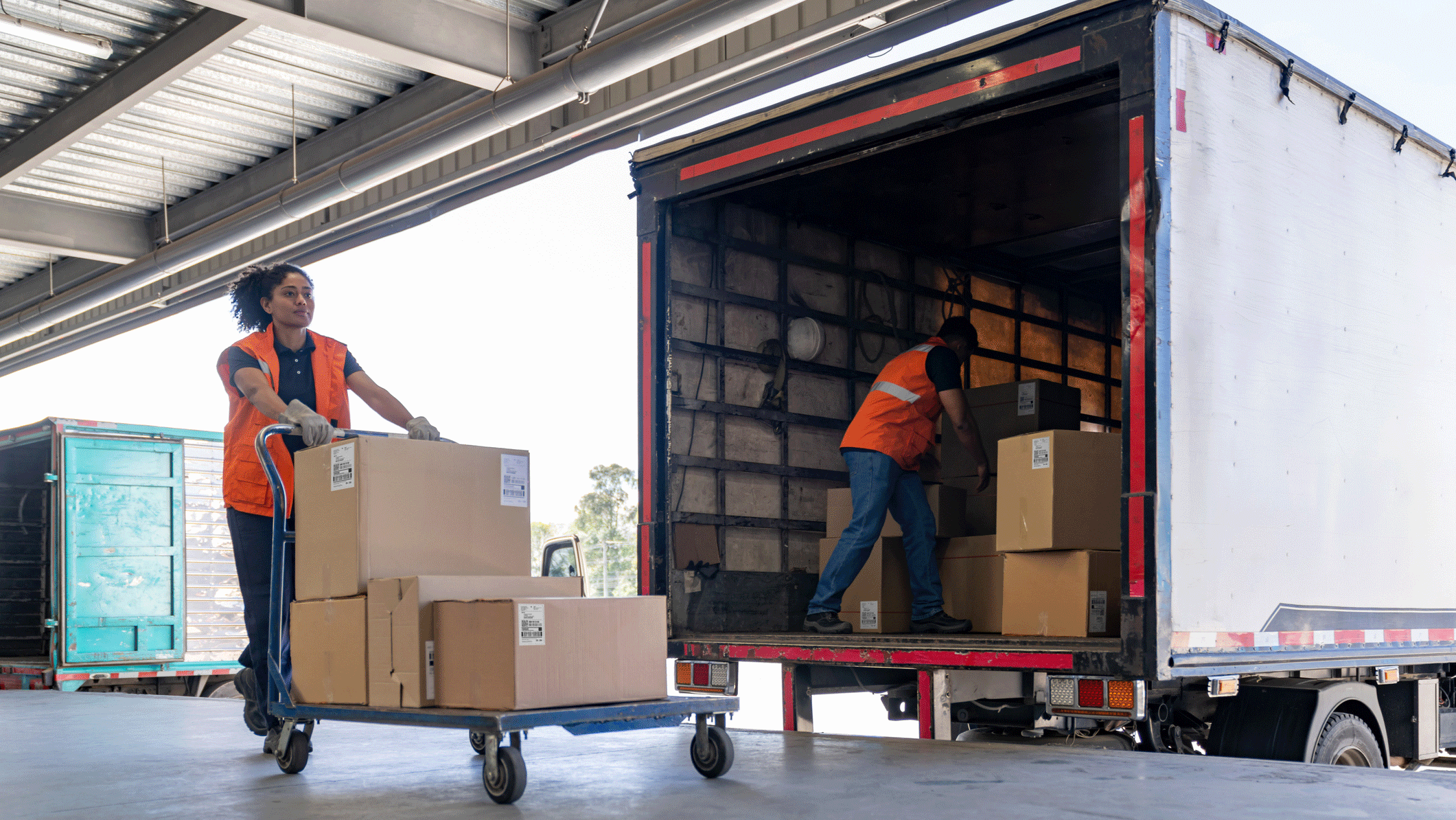
For years, companies built lean supply chains for speed, lower costs and less waste. That strategy worked well when the world felt more predictable. But tariffs, geopolitical instability, extreme weather and transportation snarls have made disruption feel less like an exception and more like a condition of doing business.
Mikaella Polyviou
Mikaella Polyviou, an associate professor in the NASPO Department of Supply Chain Management at Arizona State University’s W. P. Carey School of Business, studies how organizations prepare for shocks and recover when systems break down.
Her research points to a central tension for business leaders: how to build supply chains strong enough to absorb disruption without making them so expensive or complicated that they create new problems.
The answer, Polyviou says, is not simply to stockpile more inventory, add suppliers everywhere or move all production closer to home. Resilience depends on knowing where a company is most vulnerable, which materials or partners are hardest to replace, and which capabilities would actually help when trouble arrives.
In recognition of National Preparedness Month this September, Polyviou explains how companies can weigh the price of resilience against the far greater risk of disruption.
Note: Answers have been edited for length and clarity.
Question: For years, many companies focused on lean, highly efficient supply chains. What has changed, and why is resilience getting more attention now?
Answer: What has changed is the frequency, variety and interconnectedness of disruptions. Companies are no longer preparing for one familiar risk at a time. They may be dealing simultaneously with tariffs, geopolitical crises, supplier financial distress and extreme weather. Supply chains designed primarily for normal conditions may struggle when several things go wrong at once.
Resilience is receiving more attention because companies are beginning to ask not only, “What does this supply chain cost when everything works?” but also, “What will it cost us if the supply chain breaks down?”
Q: What are some of the main costs involved in building a more resilient supply chain?
A: Some costs are straightforward. Additional inventory ties up cash, takes up warehouse space and may become obsolete. Backup suppliers must be identified, evaluated and qualified, which may involve audits, product testing and negotiation. Companies also need to give those suppliers at least some business from time to time. Otherwise, the suppliers may not reserve capacity or be ready to respond when needed.
Working with multiple suppliers or transportation providers also means spreading purchasing volume across more companies, which can reduce volume discounts and bargaining leverage. It also creates more work. Instead of coordinating orders, forecasts, delivery schedules and quality requirements with one supplier, managers may need to coordinate with several. More options increase flexibility, but they also mean more rates, routes and service levels to manage. There may also be quality trade-offs if alternative suppliers have less experience with the product, especially when orders must be shifted quickly.
Resilience provides options, but maintaining those options requires ongoing time, money and managerial attention. There are organizational costs as well. Employees must spend time developing supplier relationships, creating response plans and coordinating across multiple partners.
Q: Is there an unavoidable trade-off between efficiency and resilience, or can companies design supply chains that achieve both?
A: I am not convinced that efficiency versus resilience is always the right trade-off to analyze, because a resilient supply chain is not necessarily inefficient. Resilience does require investment, but simply spending more on inventory, capacity or backup suppliers does not automatically make a company more resilient. Trying to prepare for every conceivable disruption could actually weaken a company’s financial resilience by tying up resources that could be used more effectively elsewhere. The more useful question is whether the company has invested in the right capabilities for its particular vulnerabilities.
Our earlier work on balanced resilience suggests that companies should compare their vulnerabilities with their existing capabilities. This can reveal areas where a company is underprepared, but it can also show where it may be investing more than necessary. The goal is not to maximize every capability in the name of resilience. The goal is to invest where the company’s exposure justifies it, without undermining the financial strength it will need to recover from a disruption.
Q: When companies invest in more resilient supply chains, how much of that cost is likely to be passed on to consumers?
A: There is no single percentage that applies across companies or industries. The answer depends on profit margins, competition, consumer demand and the type of resilience investment being made. Holding more inventory or sourcing from a more expensive location can increase costs directly, and companies may pass some of those costs on to consumers.
Other investments, such as better planning, supplier development or improved visibility, may reduce production delays, emergency transportation and lost sales. Those investments can offset at least part of their additional cost.
Q: What should consumers, policymakers and business leaders understand about the true price of being prepared for the next major disruption?
A: Preparedness is difficult to evaluate because its costs are visible, while many of its benefits are not. Inventory appears on the balance sheet, backup suppliers require ongoing attention and risk-monitoring systems require funding. If no major disruption occurs, these investments can appear unnecessary. But preparedness does not mean trying to eliminate every risk. A company may reasonably accept, avoid, transfer or mitigate a risk.
The important thing is that the choice be deliberate. Our recent research also shows that resilience changes across the life of a disruption: Companies need alignment internally and with supply-chain partners before a disruption, agility while responding to it and adaptability afterward.
Policymakers must also recognize that supply chains are complex, interconnected networks whose dependencies are not always visible. A policy intended to address one vulnerability can create new dependencies, costs or constraints elsewhere, reducing rather than improving resilience. Policymakers should therefore seek input from practitioners who operate supply chains and academic experts who study them, especially before policies are decided and unintended consequences become harder to avoid.
Preparedness is not only about inventory and backup capacity. It also requires clear responsibilities, trusted relationships, continuous learning and policies grounded in how supply chains actually operate.
