

Close Menu

    Subscribe to Updates

    Get the latest creative news from FooBar about art, design and business.

    What's Hot

    For better inclusive education that really supports students, we need to consider what we value

    November 18, 2026

    15 Best Books on Marriage to Improve Communication and Connection

    November 18, 2026

    3 Quick Morning Habits that Will Change the Rest of Your Life

    November 18, 2026
    Facebook X (Twitter) Instagram
    Trending
    • For better inclusive education that really supports students, we need to consider what we value
    • 15 Best Books on Marriage to Improve Communication and Connection
    • 3 Quick Morning Habits that Will Change the Rest of Your Life
    • Scientists ‘Cure’ Deadly Brain Tumors in Every Mouse Tested with New Cancer Therapy
    • This Blue Whale Population Grew 1,000% Since the End of Antarctic Whaling
    • The Psychology of Rewards: Why Small, Instant Recognition Beats the Annual Bonus
    • Employer-to-Adjuster Communication Checklist for Maximum Return-to-Work Outcomes
    • Burgan Bank concludes its breast cancer awareness campaign with health and community initiatives
    Moving MountainsMoving Mountains
    Facebook X (Twitter) Instagram
    Wednesday, November 18
    • Home
    • Mental Health
    • Life Skills
    • Self-Care
    • Well-Being
    • Awareness
    • Inspiration
    • Workers Comp
    • Social Security
      • Injuries
      • Disability Support
      • Community
    Moving MountainsMoving Mountains
    Home » Vineyard swaps pesticides for free-roaming ducks
    Community

    Vineyard swaps pesticides for free-roaming ducks

    TECHBy TECHSeptember 4, 2026No Comments3 Mins Read
    Facebook Twitter Pinterest LinkedIn Tumblr Reddit WhatsApp Email
    Search
    Share
    Facebook Twitter LinkedIn Pinterest WhatsApp Email

    For much of the 20th century, farmers sought to combat food insecurity caused by war and famine by maximizing their yields. 

    A majority of farmers began relying on chemicals like synthetic fertilizers, herbicides, and pesticides — unaware that that style of farming depletes the soil, inhibits plant growth, and harms pollinators. 

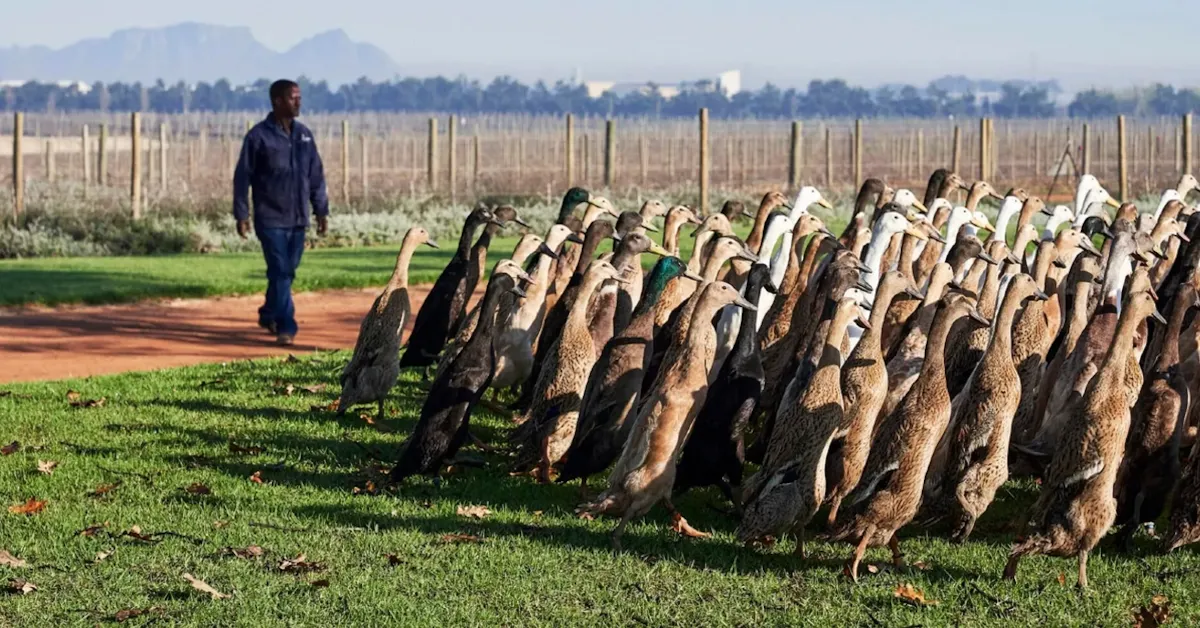
    So in 1984, the Vergenoegd Löw Wine Estate in Stellenbosch, South Africa decided to try something new. Then-owner John Faure introduced long-necked Indian Runner ducks to the farm so they could gobble up vineyard pests on the raised, trellised vines — and naturally fertilize the soil with their droppings. 

    “It became clear that by learning from and imitating nature, it was possible to cultivate more eco-sustainably,” Vergenoegd Löw Wine Estate stated on its website. 

    According to the farm’s ecology ranger, Milan Germishuizen, Indian Runner ducks were originally bred in Indonesia over 2,000 years ago to control pests in rice paddies. 

    For centuries, farmers across Indonesia have herded large flocks onto the flooded fields to eat wayward snails, slugs, and weeds. 

    “Using the ducks instead of pesticides is obviously better for the ecology,” Christiaan Cloete, the estate and farm manager, told Enca. “When you use chemicals, you sometimes kill a lot of beneficial insects. We are trying to create a more biodiverse ecology in the vineyards.”

    It also makes for better wine.

    Vergenoegd Löw Wine Estate

    “The more pesticides and artificial fertilizers you put onto your soil, eventually your soil will degenerate,” Germishuizen explained. 

    “So by using natural methods … we are really looking after our soils, which eventually does give us a much better product at the end of the day.”

    When grapes are on the vines, ducks are gently directed away and sent towards irrigation dams, where their droppings enrich the water through “fertigation.” The ducks also help break down manure from the farm’s sheep and cattle, enriching the vineyard’s soil.

    According to Cloete, the farmers now breed the ducks themselves — and even sell them to ten surrounding farms that have adopted the practice, too.

    The number of ducks has changed over the last 40 years, but the wine farm typically has around 1,000 ducks in their “fleet.”

    Vergenoegd Löw Wine Estate

    As of August 21, they had 890 ducks on the property, with 400 ducklings expected to hatch by the end of October. Vergenoegd Löw Wine Estate plans to sell half of them to local farmers and keep the rest to replace elderly ducks who are aging out of the pest-control business. 

    “A lot of our neighbors have gotten on board with regenerative farming,” said Tessa Kleynhans, the commercial manager of the estate’s on-site hotel.

    “We’re trying to set the precedent for regenerative farming,” she added. “We are trying to make a use case that, if you invest the capital in the beginning, even though it’s a long, tedious process, it is worth it in the end.”

    ‍

    You may also like: When he learned 75% of produce was crawling with pesticides, a teen invented a handheld AI chemical scanner

    ‍

    Featured Image: Vergenoegd Löw Wine Estate

    ducks freeroaming pesticides Swaps Vineyard
    TECH
    • Website

    Related Posts

    This Blue Whale Population Grew 1,000% Since the End of Antarctic Whaling

    November 18, 2026

    11 Good Old-Fashioned Relationship Habits We Should Bring Back Before the End of the Year

    November 17, 2026

    West Coast’s First Ever Sea Turtle Hatchlings Released into the Pacific (LOOK)

    November 17, 2026
    Leave A Reply Cancel Reply

    Don't Miss
    Disability Support

    For better inclusive education that really supports students, we need to consider what we value

    By TECHNovember 18, 20260

    Ontario Education Minister Paul Calandra recently discussed concerns about whether Ontario’s “inclusion model” in education…

    15 Best Books on Marriage to Improve Communication and Connection

    November 18, 2026

    3 Quick Morning Habits that Will Change the Rest of Your Life

    November 18, 2026

    Scientists ‘Cure’ Deadly Brain Tumors in Every Mouse Tested with New Cancer Therapy

    November 18, 2026
    Stay In Touch
    • Facebook
    • Twitter
    • Pinterest
    • Instagram
    • YouTube
    • Vimeo
    Our Picks

    For better inclusive education that really supports students, we need to consider what we value

    November 18, 2026

    15 Best Books on Marriage to Improve Communication and Connection

    November 18, 2026

    3 Quick Morning Habits that Will Change the Rest of Your Life

    November 18, 2026

    Scientists ‘Cure’ Deadly Brain Tumors in Every Mouse Tested with New Cancer Therapy

    November 18, 2026

    Subscribe to Updates

    Get the latest creative news from SmartMag about art & design.

    About Us

    At Moving Mountains, we believe that every individual has strength, value, and purpose—regardless of mental health challenges or physical disabilities. This platform was created to inspire hope, promote understanding, and empower people to live meaningful and confident lives beyond limitations.

    Latest Post

    For better inclusive education that really supports students, we need to consider what we value

    November 18, 2026

    15 Best Books on Marriage to Improve Communication and Connection

    November 18, 2026

    3 Quick Morning Habits that Will Change the Rest of Your Life

    November 18, 2026
    Recent Posts
    • For better inclusive education that really supports students, we need to consider what we value
    • 15 Best Books on Marriage to Improve Communication and Connection
    • 3 Quick Morning Habits that Will Change the Rest of Your Life
    • Scientists ‘Cure’ Deadly Brain Tumors in Every Mouse Tested with New Cancer Therapy
    • This Blue Whale Population Grew 1,000% Since the End of Antarctic Whaling
    Facebook X (Twitter) Instagram Pinterest
    • About Us
    • Contact Us
    • Privacy Policy
    • Terms & Conditions
    • Disclaimer
    © 2026 movingmountains. Designed by Pro.

    Type above and press Enter to search. Press Esc to cancel.