


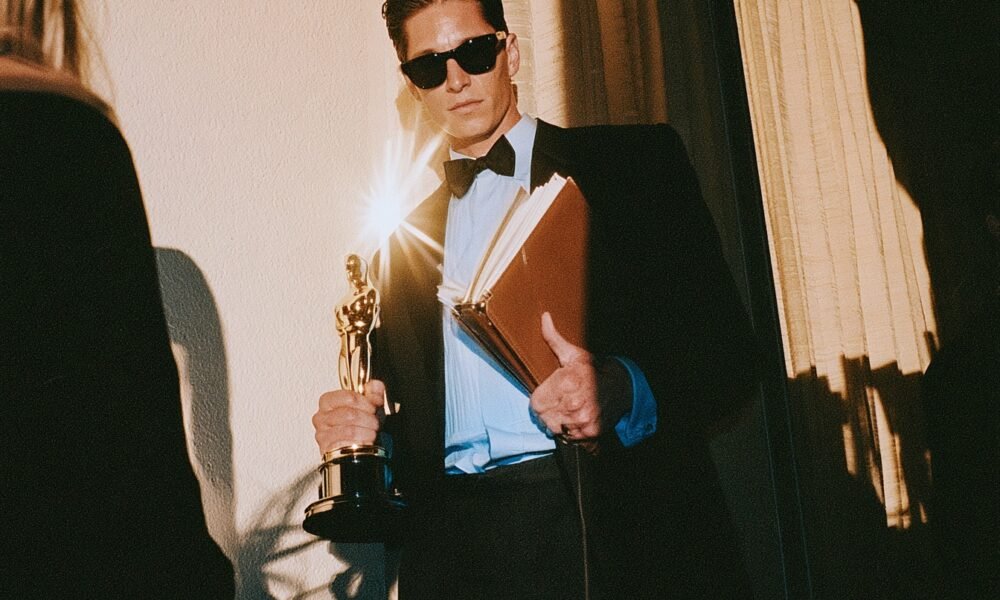
Across nearly a century of Academy Award history, roughly 69% of all Best Picture winners originated from adapted sources, such as novels, non-fiction books, plays, and short stories, rather than original screenplays.
When you compare film adaptations to original scripts, adapted stories consistently capture critical acclaim and earn roughly 53% more in global box office revenue than standalone screenplays. Hollywood’s reliance on existing intellectual property is not a random trend, but a statistically proven formula for storytelling depth and critical success.
If you ever find yourself struggling to analyze data for a film study class and wish you could ask EssayHub essay writers to do your homework, these numbers tell a fascinating story about media consumption. The historical record demonstrates that filmmakers rely heavily on pre-tested narratives to build award-winning cinematic masterpieces.
Understanding the books vs movies dynamic reveals how written narratives provide a structural foundation that original screenplays often struggle to replicate under tight production schedules.
The raw Oscar numbers: How adaptations dominate Best Picture
Film adaptations have secured 67 of the 97 Best Picture Oscars awarded in Academy history, proving that pre-existing source material dominates the industry’s highest honor.
Looking directly at books vs movies statistics, the historical data shows that fictional novels alone account for over 38% of all Best Picture winners. Non-fiction books and stage plays make up the majority of the remaining award winners, leaving original scripts with less than a third of total victories across cinema history.
Breakdown of Best Picture winners by source material type
Source material category
Total Oscar winners
Percentage of all winners
Key historical example
Fiction novels
37
38.1%
The Godfather (1972)
Non-fiction books
10
10.3%
Oppenheimer (2023)
Stage plays
15
15.5%
Amadeus (1984)
Short stories
5
5.2%
All About Eve (1950)
Original screenplays
30
30.9%
Parasite (2019)
The numbers show that studio executives and academy voters heavily favor established narratives. When directors adapt a book, they start with a fully realized universe that has already survived professional editorial scrutiny.
The overall books vs movies statistics highlight a clear trend: books supply the emotional weight and complex character arcs that movie producers need to impress award voters.
Why Hollywood relies on literary source material
Hollywood relies on literary adaptations because pre-existing books drastically reduce financial risk while providing built-in audience loyalty.
Built-in audiences and market risk reduction
Studios invest hundreds of millions of dollars into feature films, making pre-sold literary intellectual property an essential financial safety net.
When a movie studio greenlights an adaptation of a bestseller, they gain instant access to an established fanbase that acts as an initial marketing engine. Readers who loved the original story buy tickets early, generate organic social media buzz, and drive opening weekend box office totals.
Multi-layered character development and subplots
A standard novel contains between 80,000 and 150,000 words, allowing authors to spend hundreds of pages detailing internal monologues, backstories, and subtle character motivations.
Screenwriters can extract the strongest narrative threads from a dense book and condense them into a tight two-hour script. This rich background material gives actors and directors far more psychological depth to draw from during production.
Here are the main structural advantages that literary adaptations offer over original scripts:
- Pre-tested plot arcs: Publishers have already vetted the story for pacing errors, plot holes, and logical consistency before a camera rolls.
- Rich world-building: Authors spend years developing world rules, family trees, and cultural details that enrich every frame of the film.
- Established dialogue: Novelists supply authentic character voices and key lines that screenwriters can convert directly into cinematic scenes.
- Critical validation: Literary awards like the Pulitzer Prize or National Book Award signal high artistic value to film studio investors.
Transitional narrative elements from books give directors a massive head start during pre-production.
Comparative analysis: Literary depth versus cinematic spectacle
While movies excel at visual atmosphere and immediate pacing, books offer unmatched psychological depth and internal character narrative.
Analyzing books vs movies across key storytelling dimensions illustrates why each format satisfies different audience needs. Novels excel at revealing a character’s internal thoughts, while cinema communicates complex emotions in seconds through visual framing, lighting, and sound design.
Key structural comparison between literary and cinematic formats
Storytelling dimension
Book format advantages
Movie format advantages
Pacing control
Readers set their own speed and absorb details gradually
Directors enforce precise timing and dramatic tension
Character interiority
Direct access to unspoken thoughts and hidden feelings
External performance, facial expressions, and body language
World-building scope
Unlimited creative scope for descriptive prose and expansive lore
Visual realization through sets, CGI, and practical effects
Consumption time
Requires 6 to 15 hours of active reading engagement
Concise 2 to 3 hour immersive viewing experience
Many literary purists claim that the book is always better than the movie because films must inevitably cut secondary characters and subplots to fit theatrical runtimes.
However, great directors use visual language to summarize pages of prose into a single memorable shot. The best adaptations do not copy books line for line; they translate literary themes into visual art.
Box office performance: Page-to-screen financial metrics
Adapted feature films generate higher global box office returns on average than unproven original screenplays.
Statistical analyses of global box office performance confirm that literary adaptations average significantly higher gross multipliers and opening weekend revenues. Audiences gravitate toward familiar story titles, established book characters, and recognizable literary franchises when choosing movie theater tickets.
Global box office comparison by screenplay origins
Film category
Average production budget
Average global box office
Return on investment ratio
Top literary adaptations
$95 million
$485 million
5.1x
Major stage play adaptations
$60 million
$210 million
3.5x
Original studio screenplays
$55 million
$190 million
3.45x
Independent original films
$12 million
$38 million
3.16x
The financial data explains why production companies prioritize acquiring book rights years before filming begins.
Here is the sequential process studios use to transform bestselling books into box office blockbusters:
- Optioning rights: Film producers secure exclusive cinematic options on promising manuscript drafts or published bestsellers.
- Screenplay condensation: Professional screenwriters strip away secondary subplots to craft a tight 120-page shooting script.
- A-list casting: Directors hire famous actors whose physical appearances match the established literary descriptions.
- Targeted marketing: Publicists launch promotional campaigns targeting both core book readers and general moviegoers.
Looking at industry trends in 2026, streaming services and theatrical studios continue to outbid each other for literary intellectual property.
Key reasons why books are better than movies for deep storytelling
Books provide complete narrative freedom unconstrained by physical production budgets, studio interference, or strict runtime limits.
Readers frequently highlight the intimacy of experiencing a story inside their own imagination. Literature allows you to step directly into a character’s mind, sharing their private doubts, moral dilemmas, and unsaid motivations without needing external dialogue.
Here are the primary reasons why books are better than movies for audience engagement:
- Unrestricted detail: Authors can dedicate entire chapters to minor lore, historical context, and secondary character backstories without pacing penalties.
- Active imagination: Reading forces your brain to visualize settings and character faces, creating a personalized sensory experience.
- Unfiltered artistic vision: Books reflect a single author’s pure creative voice without notes from studio executives or focus groups.
- Emotional pacing: Readers can pause to digest heavy emotional moments rather than being rushed to the next action sequence.
These factors convince millions of readers that the book is always better than the movie, regardless of how impressive the film’s special effects might be.
Reading a book creates a personal connection that a two-hour theatrical film rarely replicates.
Historical breakdown: How adaptation trends evolved across eras
The types of source material winning Best Picture have shifted noticeably across different eras of cinema history.
During the early decades of the Academy Awards, Hollywood relied heavily on classic fiction novels and Broadway stage plays. Across subsequent eras, non-fiction biographies, memoirs, and true investigative accounts captured an increasingly prominent share of prestige nominations and wins.
Decade-by-decade trend of Best Picture adaptation sources
Era or decade
Dominant source type
Estimated adaptation share
Notable Best Picture winner
Pre-1960 Era
Stage plays & classic novels
82.2%
All Quiet on the Western Front (1930)
1960s–1980s
Epic fiction & stage musicals
70.0%
Out of Africa (1985)
1990s–2010s
Non-fiction biographies & memoirs
57.8%
12 Years a Slave (2013)
2020s–Present
Non-fiction memoirs & indie novels
50.5%
Oppenheimer (2023)
The data confirms that while the total proportion of adaptations has gradually decreased from early Hollywood highs, adapted scripts still win a majority of Best Picture awards.
This evolution shows how audience tastes moved toward realistic, authentic historical accounts.
Why original screenplays struggle against adapted giants
Original screenplays face unique creative and commercial hurdles that make winning Best Picture significantly harder.
Without a book as a roadmap, original screenwriters must invent world rules, character arcs, and dialogue entirely from scratch under tight production deadlines. Studio executives are also less likely to give massive budgets to unproven original scripts, limiting their promotional visibility during award season.
Here are four key challenges original screenplays face during production and award voting:
- Uncompressed pacing: Original scripts often suffer from third-act pacing issues that an edited novel would have solved years earlier.
- Lower marketing budgets: Without built-in book fanbases, original films require higher initial advertising spending to generate public awareness.
- Shorter development cycles: Novelists spend 3 to 5 years building a story universe, whereas original screenplays are often written in months.
- Voter familiarity bias: Academy voters naturally gravitate toward titles and historical figures they already recognize from literature.
These hurdles explain why original screenplays represent less than one-third of all Best Picture winners throughout cinema history.
Writing a great original script requires overcoming structural challenges that literary adaptations bypass entirely.
The role of non-fiction and biographical adaptations
Non-fiction books have become the fastest-growing category among recent Best Picture award winners and nominees.
Before 1990, non-fiction books accounted for less than 10% of all adapted screenplay nominees at the Oscars. Since 1990, that figure has jumped to over 25%, as audiences and Academy voters increasingly prefer grounded, authentic historical accounts.
Biographies provide screenwriters with true dramatic stakes, documented dialogue, and complete historical timelines. When filmmakers combine real-world history with high-budget production, the resulting movies frequently dominate critical end-of-year lists.
Streaming services and the rise of long-form TV adaptations
Prestige television and streaming platforms have reshaped how books are adapted by giving complex novels 8 to 10 hours of screen time.
For decades, screenwriters struggled to compress 500-page fantasy and mystery novels into standard two-hour feature films. Modern streaming platforms solve this limitation by adapting books into full limited series, preserving intricate subplots and secondary character arcs that movies used to cut.
This structural shift allows showrunners to maintain near-perfect fidelity to literary source material. Audiences now enjoy book adaptations that capture both visual spectacle and deep character development without compromising pacing.
Final verdict: Why adapted screenplays continue to sweep awards
Adapted screenplays dominate the Academy Awards because books provide a level of structural craftsmanship and character depth that cannot be rushed.
While original screenplays remain essential for creative innovation, literary adaptations account for nearly seven out of every ten Best Picture winners for a clear reason: authors spend years building rich worlds that filmmakers can polish into visual gold.
Ultimately, books and movies perform complementary roles in culture. The novel builds the soul of the story, while the film gives it visual life on the big screen.
