


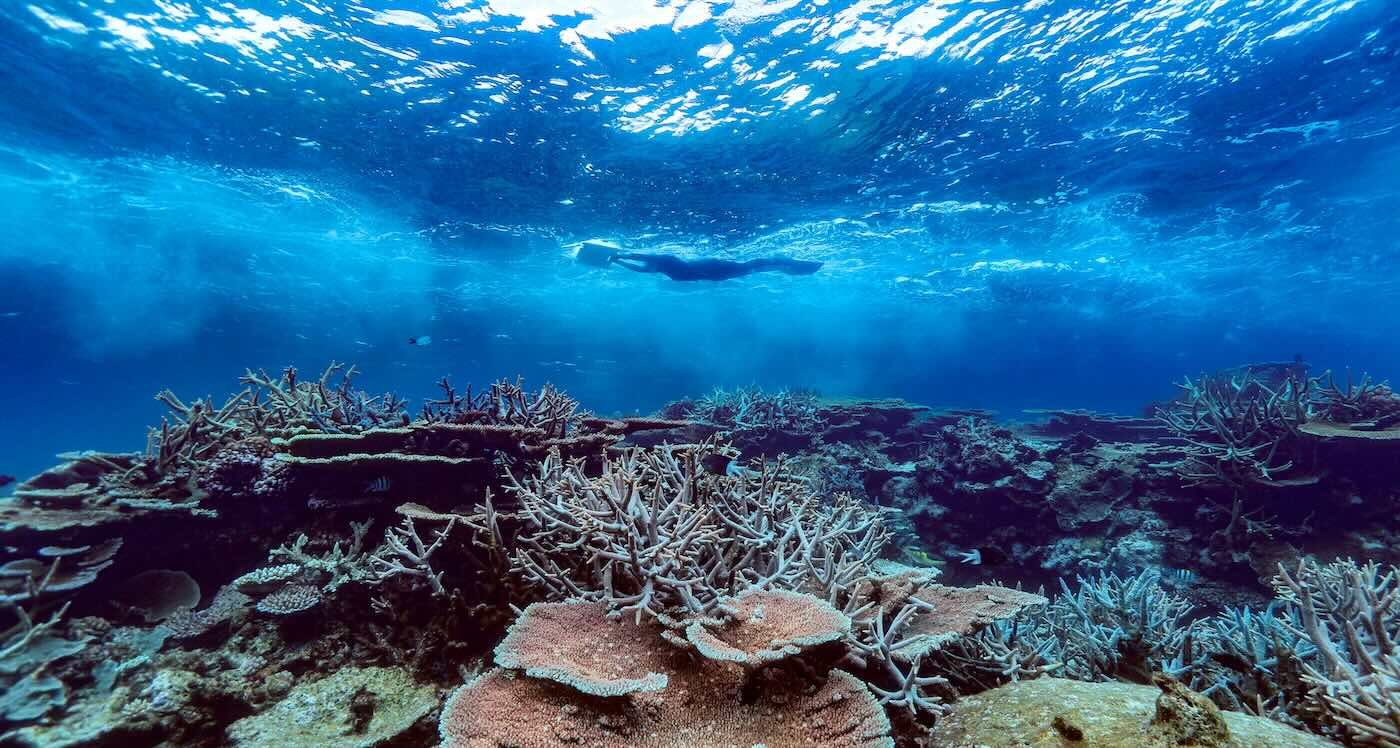
Diver surveying corals on the Great Barrier Reef – Courtesy of Australian Institute of Marine Science / SWNS
The world’s largest coral system, the Great Barrier Reef, suffered six mass ‘bleaching events’ between 2016 and 2025, due in part to warming oceans.
Before the 1990s, any bleaching events were “exceptionally rare” along the 1,400 miles of coastline in north-eastern Australia.
Now, earlier this year, a monsoon brought the Great Barrier Reef a reprieve from coral bleaching—an aid in its initial recovery from recent climate-induced effects.
The rainy season increased cloud cover and reduced sea temperatures, limiting the severity and extent of bleaching during the summer, said conservationists in a new annual report on the ecosystem by the Australian Institute of Marine Science (AIMS).
The findings indicate limited impacts from 2025’s mass bleaching event, and the regional bleaching event in the Northern and Central regions recorded earlier in 2026.
It shows coral cover had grown across two of the three regions of the Reef levels had increased by 16.7% in the Northern Region and were up 10.2% in the Central region, compared to last year.
MORE REEF RECOVERY:
• Scientists Have Found Climate-Resistant Coral Reefs Around the World Totaling the Size of Wisconsin
• Instead of Arresting Indigenous Fishermen, Australia Begins to Pay Them to Control Sea Urchin Plague
Coral cover in the third area decreased by 2% relative to 2025 levels in the Southern region, but cover levels in all three regions of the Reef continue to be above or just below the “long-term average”, according to the report.
Coral at Great Barrier Reef – Credit: Australian Institute of Marine Science / YouTube
AIMS Long-Term Monitoring Program (LTMP) leader Dr. Mike Emslie said it was “uncommon” for coral cover levels to have suffered substantial declines.
“We did not see a repeat of the 2024 and 2025 mass bleaching events, or a repeat of the significant impacts from the 2024 event.
“Bleaching events vary markedly and do not always result in coral mortality. It depends on the intensity and duration of the heat stress.”
A total of 121 coral reefs were surveyed for the 40th annual report.
Most of the reefs surveyed (106) had moderate to high coral cover—and only three had coral cover of less than 10%.
Dr. Emslie says while this year’s results provided evidence of “initial recovery” and that coral cover levels are higher than that of many coral reef ecosystems globally, the Great Barrier Reef remained a system under pressure.
BRILLIANT: Mauritius Restores Reefs with Heat-Resistant Coral and Sees 98% Survival Rates
“While the Reef is showing resilience, it is being pushed and its capacity to recover is limited.”
“We can help them survive the threats posed by climate change through reducing global emissions, good reef management, and developing evidence-based science interventions that support reef adaptation and recovery.”
LET YOUR PALS DIVE INTO SOME GOOD NEWS—>Share On Social Media…
