


- Home
- Healthcare spotlight
- Vr trial aims to make engineering more disability inclusive
Published on: 25 July 2026 5:13 pm
The University of Canterbury is using AI and VR to let engineering students experience tetraplegia, building empathy and helping them design more accessible, inclusive products for people with disabilities.
Published on: 25 July 2026 5:13 pm
VR Trial Aims To Make Engineering More Disability-Inclusive
Can artificial intelligence (AI) and virtual reality (VR) help future engineers design more accessible products for people with disabilities (PwDs)? Researchers at the University of Canterbury are seeking to answer this question through an innovative experiment. As part of the project, mechanical engineering students are being made to virtually experience life with tetraplegia—a condition caused by cervical spinal cord injuries that results in paralysis of all four limbs—to better understand the everyday challenges faced by people with disabilities and develop more inclusive designs
The immersive simulation is expected to help students better understand the everyday challenges faced by PwDs and encourage them to develop more inclusive assistive technologies and user-friendly designs.
The pilot project comes at a time when disability is emerging as a major global public health and social inclusion challenge. According to the World Health Organization (WHO), nearly 1.3 billion people, or around 16% of the world’s population, live with some form of disability.
Yet, despite growing awareness, many products, public spaces, household appliances and digital technologies continue to be designed with little consideration for people with impaired mobility or limited hand function.
The research seeks to bridge this gap—not by teaching engineering principles alone, but by cultivating empathy.
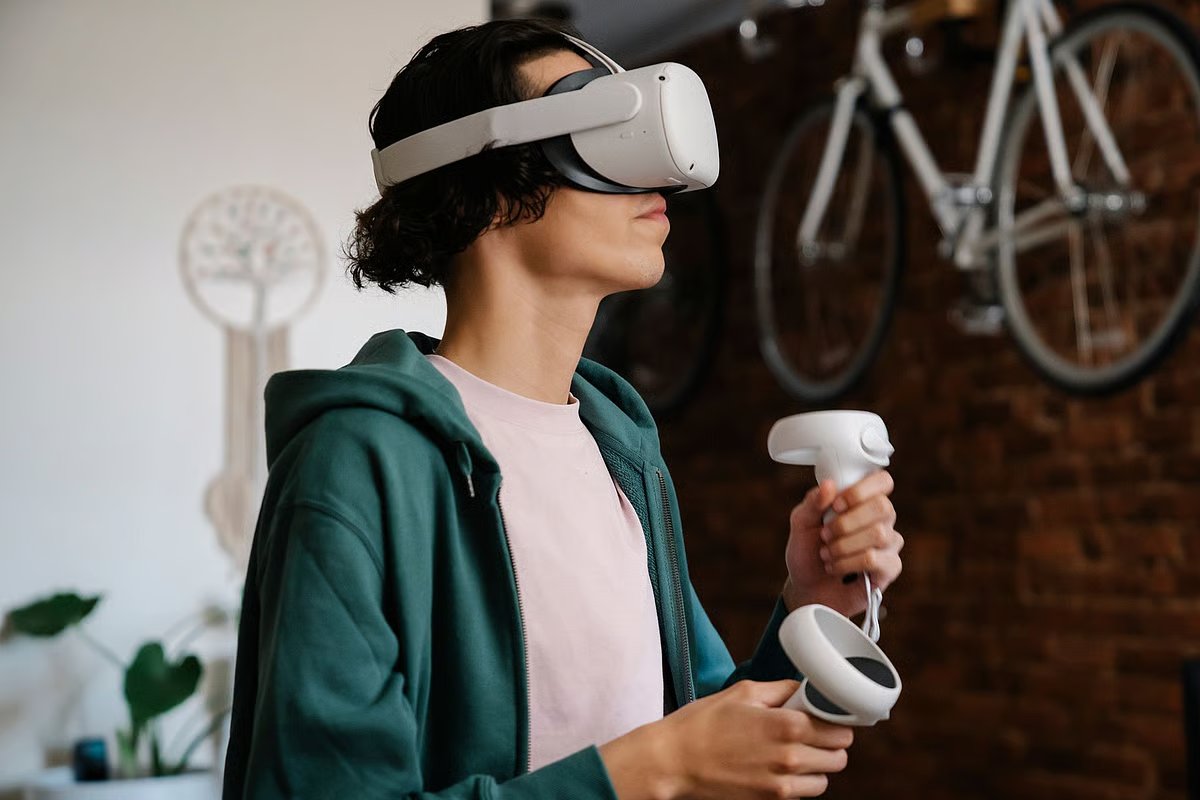
About 50 fourth-year mechanical engineering students are participating in the study, where they will be wearing virtual reality headsets that recreate the functional limitations experienced by people with tetraplegia.
Instead of merely reading about disability in textbooks, the students will be asked to perform everyday tasks inside a virtual environment while experiencing restricted arm movement, weakened grip strength and limited hand coordination.
UC Mechanical Engineering Lecturer Dr. George Stilwell came up with the idea of using VR as a tool to give students real insight into the restrictions and hurdles that people with tetraplegia face every day.
“The immersive VR allows the students to understand the physical limitations firsthand. This technology is one of the best things we can do to help them experience this condition and build their empathy.”
“It extends our teaching and bridges the gap between knowledge and experience, helping students create really inclusive, universal designs. Otherwise, it’s easy for them to overlook barriers during the design phase.”
The objective is simple but profound: help future engineers understand the practical barriers encountered by people with disabilities before they begin designing assistive devices, consumer products or public infrastructure.
The VR platform has been developed by researchers at the university’s Human Interface Technology (HIT) Lab NZ in collaboration with physiotherapists and the Faculty of Engineering.
Unlike conventional classroom teaching, the system creates an immersive experience where students confront challenges that many disabled people face every day—reaching for objects placed on shelves, opening doors, operating switches, handling utensils or interacting with household equipment.
Researchers believe such experiences reveal design flaws that are often invisible to able-bodied designers.
The technology itself combines virtual reality with AI-assisted modelling that recreates realistic movement restrictions and interaction patterns based on clinical understanding of spinal cord injuries. Rather than simply displaying a disability, the software attempts to simulate how limited muscle control affects a person’s ability to complete routine activities.
Students will be then required to identify the barriers they encounter and redesign products or environments to make them more inclusive.
The project forms part of a final-year mechanical engineering design challenge, where students develop practical solutions informed by what they experienced inside the virtual environment.
People living with spinal cord injuries frequently depend on assistive technologies ranging from customised wheelchairs and robotic arms to adaptive kitchen tools, accessible workstations and smart-home systems.
The findings could also influence the development of AI-powered assistive technologies, while the approach may also reduce costly design errors that often emerge only after products reach users.
For countries such as India, where disability affects millions and access to rehabilitation services remains uneven, the study offers important lessons.
Many public buildings, transport systems, educational institutions and digital platforms continue to present barriers for persons with disabilities.
However, researchers cautioned that virtual reality cannot fully replicate the emotional, psychological or lifelong experiences of living with a disability. The simulation is intended to complement—not replace—direct engagement with people who have disabilities.
Click/Scan to Subscribe
