


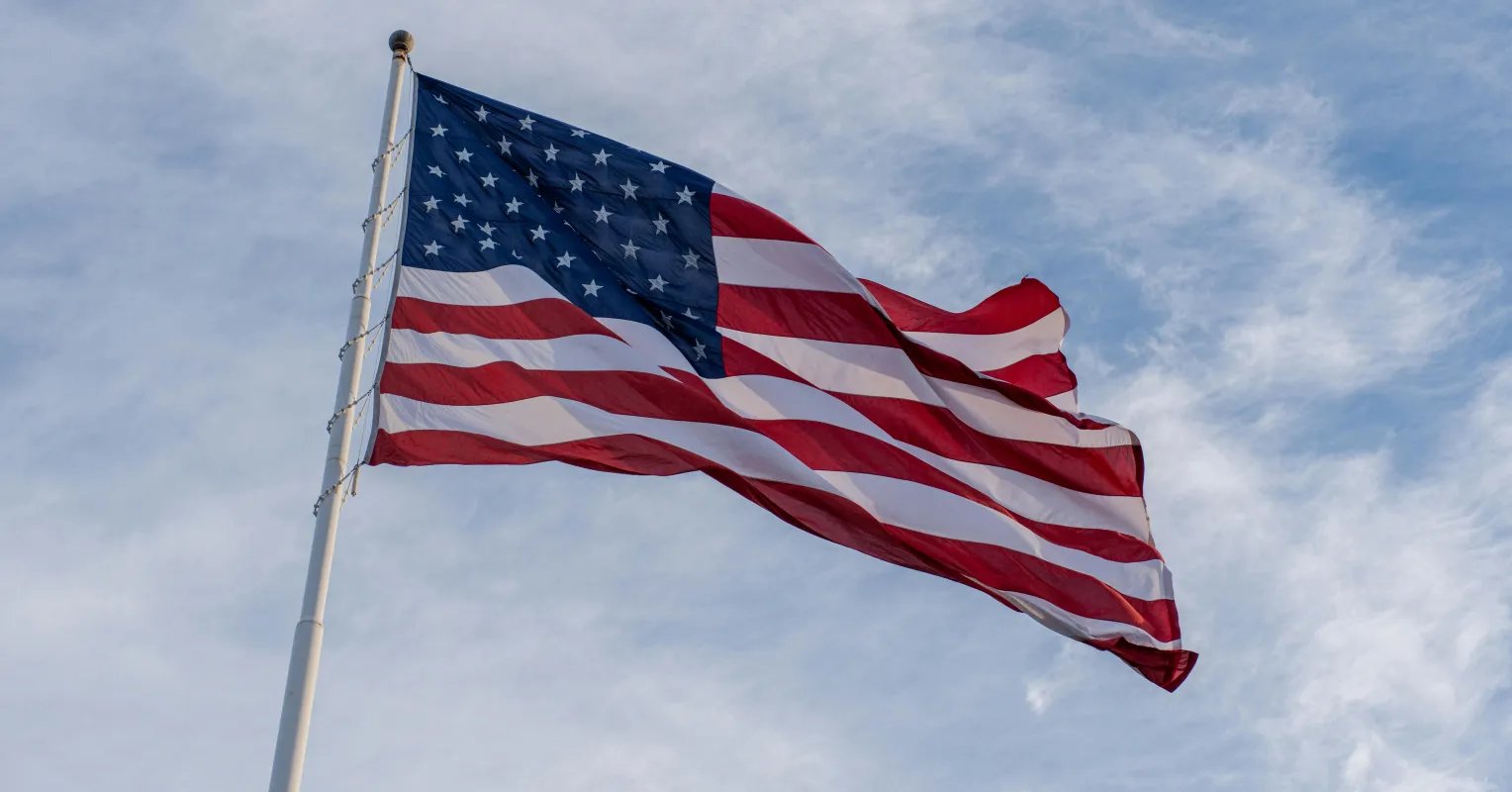
On July 4, 2026, the United States turns 250. America 250 will be the largest patriotic celebration in the nation’s history. But before the fireworks and the speeches, Flag Day arrives on June 14th. No cookouts. No day off. Just the flag. This year, that quiet Tuesday deserves more than we usually give it.
Officially, Flag Day commemorates the Continental Congress’s adoption of the Stars and Stripes on June 14, 1777—formalized by President Woodrow Wilson in 1916, codified by Congress in 1949. It never became a federal holiday, and maybe that’s okay. It doesn’t belong to the calendar, but rather to the individual. It’s a moment to pause, look up, and reckon with what the flag actually means to you. To me, Flag Day is every day.
I’ve spent my career at the intersection of law enforcement and positive psychology, thinking hard about what keeps people—especially cops—psychologically upright and front-sight focused. I keep landing on the same idea: the things we hold sacred matter greatly. They carry and represent our story. The flag represents my story.
The positive humanities ask which cultural artifacts in our lives actually feed our well-being. The American Flag is at the center of mine.
My maternal grandparents survived Nazi Germany and emigrated here to the United States. My grandmother sailed into New York Harbor and saw the Statue of Liberty ringed by American flags. My grandfather never forgot the giant flag in the grand hall at Ellis Island. To them, it wasn’t just symbolism—it was survival, freedom, and a future they weren’t guaranteed in the “Old Country.” They carried gratitude for that flag into everything they did. They made sure I understood why.
I fly it at my home. I wear a version of it every day. I stand for the anthem. Every time I see the flag, I think about life, liberty, and the pursuit of happiness—not as a slogan, but as a promise that comes with responsibility. That responsibility is part of why I took an oath and pinned on a badge. The flag reminds me who I am, the debt I owe, and what I’m always capable of.
The Science Behind the Sacred
Savoring—the deliberate appreciation of positive experience—is one of positive psychology’s most validated constructs. Bryant and Veroff (2007) tied it directly to well-being and life satisfaction. Fredrickson (2001) explains the mechanism: savoring generates positive emotions that build durable psychological resources over time—upward spirals of resilience, not just momentary relief.
Meaning is the other engine. Seligman’s PERMA model centers flourishing on belonging to something larger than yourself (2011). Frankl (1959) made the same argument from a far harder vantage point—he survived the Holocaust, insisting that connection beyond the self is the primary driver of human endurance. Exactly how my grandparents saw that flag in the harbor. Exactly how I see it today.
Emmons and McCullough (2003) showed that gratitude chosen deliberately produces measurable gains in well-being. When I salute that flag, I’m not going through the motions. I’m choosing gratitude—for my grandparents’ new beginning, for the country that gave it to them, for every community I was trusted to protect only two generations later.
Find Your Flag
Csikszentmihalyi and Rochberg-Halton (1981) documented what the humanities have long understood: meaningful objects are repositories of identity, relationship, and personal narrative. The worn photograph, the military dog tag, the religious text, the jersey from a season that changed everything. These aren’t clutter. They’re psychological infrastructure.
Positive Psychology Essential Reads
For law enforcement officers, this isn’t a wellness suggestion. It’s a survival strategy. The badge carries weight that compounds—trauma, moral injury, the grind of institutional frustration, the moments you can’t unsee. The mission blurs. The why gets buried under the how. I’ve watched good cops lose the thread, not because they stopped caring, but because they stopped deliberately reconnecting to why they cared in the first place.
A sacred artifact changes that. The flag you swore your oath beneath. The coin from a partner you lost. The photo of the kid whose parents called to say you made a difference. These objects pull you back to purpose when the job is pulling you under. They keep the cause greater than yourself visible when the view from the front seat goes dark. That’s not poetry. That’s what the research predicts—and what I’ve seen hold officers together when nothing else did.
The same applies to veterans, firefighters, paramedics, teachers, and anyone else who chose service and now carries its weight. The artifact may be different, but the psychology is the same.
Here’s the intervention: Find one sacred object that ties you to meaning, gratitude, or something larger than your own story. A few minutes per day, savor it deliberately. Hold it. Study it. Let the stories surface. Ask what it says about who you are and what you still want to stand for. Then write about it—Pennebaker and Seagal (1999) demonstrated that expressive writing about meaningful experience produces measurable gains in well-being. Putting it into words deepens the impact.
For the officer who’s seen too much lately. For the firefighter or paramedic running on fumes. For the citizen who’s lost the thread on what they believe America is supposed to mean. Find your flag. Not metaphorically—literally. Give it five deliberate minutes. Let it work for you.
250 Years. One Flag. One Question.
America is about to turn 250. The flag flying this June 14th has outlasted every argument about what this country is and isn’t—moments of profound failure and hard-won redemption alike. It’s not a symbol of perfection. Its endurance is the meaning. And in positive psychology terms, persisting through contradiction is exactly what resilience looks like. Grit!
For me, the flag is a living PERMA framework: Positive emotion as pride, gratitude, and awe; Engagement as service; Relationships as community and family history; Meaning as oath and mission; and a daily reminder that Achievement is possible for anyone willing to pursue it with courageous optimism.
This Flag Day, the last one before America’s 250th, find your flag. Savor it. Honor it. Let it remind you of the best of who you are, and who you still have the freedom to become.
