


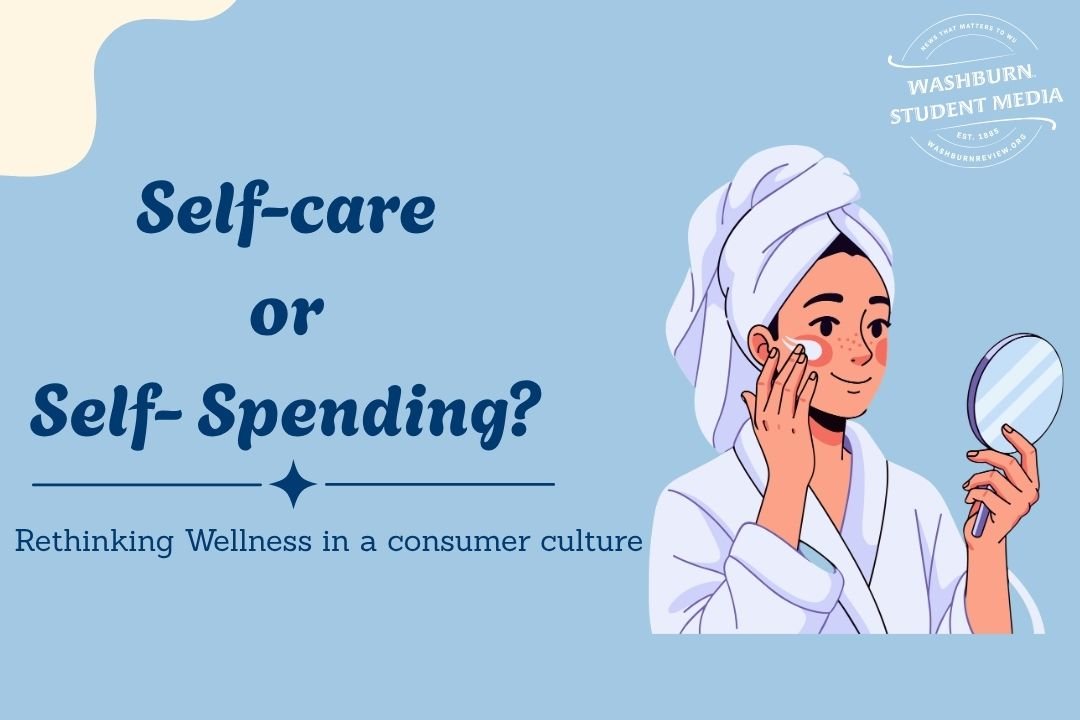
Self-care used to mean something simple, taking care of one’s body and mind in the ways that help you feel better. It could be getting sleep, eating on time, taking proper rest, or spending time with people you care about.
For students especially, self-care can be as basic as finishing meals regularly, managing stress during exams or getting sleep after long days. These are just some small things but are very essential. Sometimes self-care is not a $30 candle, it is just finally going to the bed.
However in today’s world, self-care is totally different from that. It is usually presented through a ritual involving costly products, complete sets and stylish actions. The million-dollar question that comes to mind is, does self-care have less to do with caring for oneself and more to do with buying things?
The role played by social media cannot be ignored there. Individuals regularly come across advertisements made by various companies regarding their wellness products and skincare regimes. These posts look perfect and calming, which give individuals the notion that self-care needs to be done in a specific way, it needs to look perfect before it even feels like it.
This can be a problem especially for students. Many students already deal with busy schedules, academic pressure and limited budgets. For them, self-care should mean eating meals on time, taking breaks from studying, sleeping properly and maintaining a healthy routine. But when self-care is shown as expensive and aesthetic, it can feel unrealistic and even discouraging. Not everyone has time for a 10-step routine when there is an assignment due at midnight.
Another issue is the pressure it creates. When people constantly see perfect routines online, they may start to compare themselves. It can feel like they are not doing enough or not doing it the right way. At some point, self-care starts to feel like another task on a to-do list right next to deadlines, meetings and everything else. This can lead to more stress which is the opposite of what self-care is supposed to do.
Also, it’s important to understand that not all self-care products are bad. Many people enjoy using them and they can help someone feel relaxed or confident. There is nothing wrong with buying something that makes you feel good. A good face mask or candle can be nice but it should not feel like a requirement.
In reality, some of the most effective forms of self-care do not cost anything. Eating regularly, getting enough sleep, staying hydrated, taking a walk, or simply taking time to rest can make a big difference. These actions may seem small, but they are often more meaningful than following a perfect routine. Drinking water and getting 7-8 hours of sleep may not trend online, but they work.
Self-care should not be about trends, appearance, or how much money is spent. It should be personal and based on what truly helps each individual. Everyone has different needs and there is no “correct” way to practice self-care.
In the end, self-care is becoming more commercialized, but that does not mean people have to follow that version of it. It is important to remember what self-care really means. It is not something that needs to be bought, it is something that should support real well-being.
Edited by Arohi Rai and Anushma Dahal
