


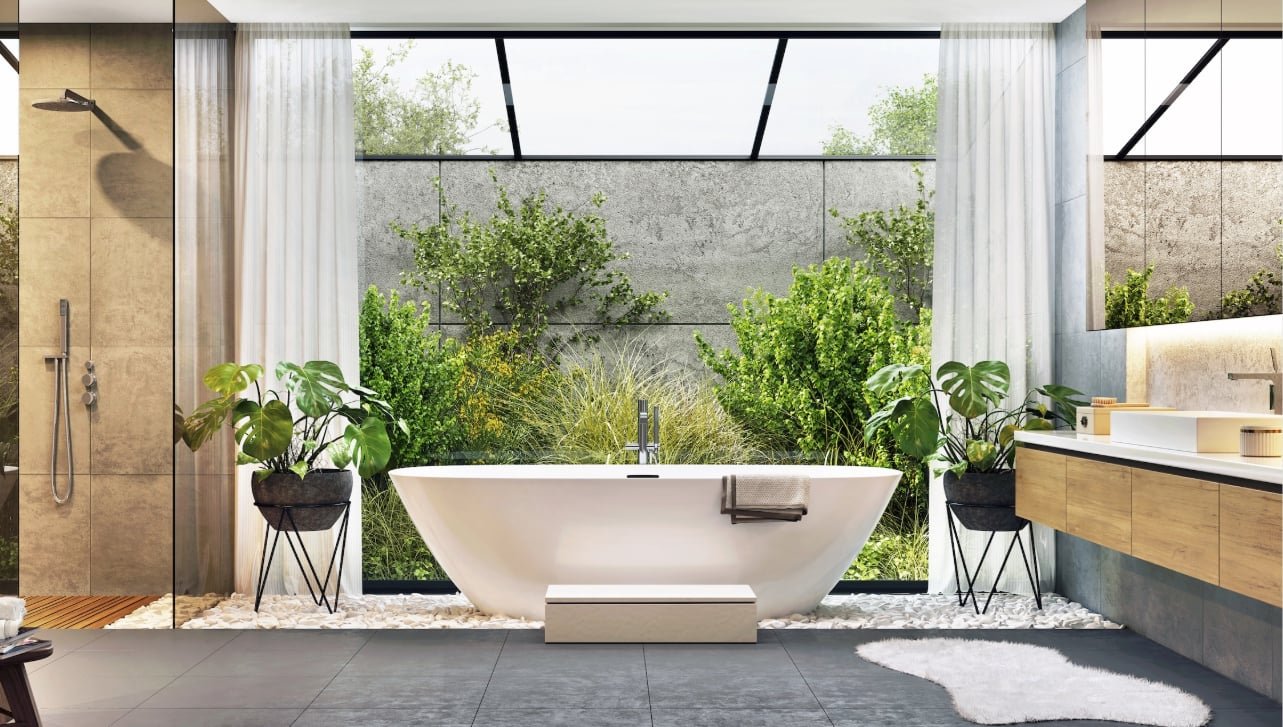
After a long day at work, sometimes all we want to do is get back to the comfort of our own home, relax and let go. And how our space is set up matters.
Design isn’t just about function and aesthetics. Surroundings—specifically interiors and architecture—can have a huge impact on mental health and mood. Wellness is increasingly being considered in interior design, and in 2026, it’s proving to be one of the year’s most popular design trends.
What does wellness in interior design mean?
Photo courtesy of Engel & Völkers
Rather than being a category, like minimalism or mid-century modern, wellness in design can fit into any style.
“It’s things that support our mental well-being in the home,” says Jennifer Adams, a lifestyle and design expert with Engel & Völkers. She’s also the author of the company’s home design trend guide, which highlighted wellness as an important element in design for 2026. “It’s driving colour palettes, texture and even the types of things that you’re bringing into your home.”
These elements could be adding more indoor plants, maximizing natural light or systems to purify the air and water. At the same time, wellness in design can also include built-in saunas and cold plunges or a designated workout space.
“You pay attention to all the different elements that your body takes in as a whole, and it feels a lot more calming,” says Adams, referring to the body’s senses. Touch (textures) and smell (fragrances), for example, can play a big role in wellness-driven design beyond what you might simply see with aesthetics.
What are some wellness-forward designs that are trending in 2026?
Today, wellness is less of an upgrade and more of a foundational design element, supporting both physical and mental well-being every day.
It’s built into the flow of the space, with natural light influencing layouts and multi-use spaces integrated throughout. For physical well-being, yoga and stretch zones, cold plunges, steam rooms, red light corners and quiet recovery spaces are popular.
“You don’t have to have something that’s built in,” notes Adams. There are more options to purchase free-standing, portable saunas, inflatable cold plunges or red light therapy masks to integrate into their at-home routine without needing to renovate.
Photo courtesy of Engel & Völkers
Trending wellness-forward colour palettes focus on warm neutrals: calming blues, grounding browns and revitalizing greens, “bringing the colour of nature,” notes Adams. She adds that the colour scheme should ultimately be an expression of your own individuality and preference. Textures are also key, meant to maximize comfort, like woven throws.
Elements like aromatherapy are an equally intentional trend to support emotional well-being. When it comes to fragrance, Adams emphasizes that it’s “personal preference all the way.”
“Our homes always have a scent,” she says. For calming scents ideas, eucalyptus, lavender, sage, sandalwood and cedar are popular, along with citrus and even vanilla for a sweeter fragrance.
How can people integrate wellness into their home design?
Here, Adams reiterates that it comes down to personal preference. After all, the space must make you feel comforted and grounded, rather than just following trends. “You can use any colour in your design if it’s what you want,” says Adams. “Your home is a reflection of you.”
Photo by Spacejoy on Unsplash
For Adams, her wellness-forward design preference is what she calls “modern organic.”
“It’s a combining of natural elements in a more minimal look,” she explains. This leans on natural wood tones, subdued but warm colour palettes and accessorizing with live plants. “Some plants actually help filter the air,” she says. “Plus, it’s visually so calming and so pretty.”
Decluttering is also conducive to improved mental well-being. Clutter can feel chaotic and catch a lot of dust. Adams also notes that there is a general trend to buying less.
Read More: Detox Your Space: How to Clear Clutter for Mental Wellness
Adams emphasizes that people shouldn’t underestimate transforming their home now, no matter their budget or where they are, whether it’s adding more plants, clearing a corner for a yoga mat or adding comforting fragrances.
“A lot of times, people will put off their own decor design, thinking, well, someday I’m going to own a home, or someday I’m going to have a bigger space,” she says. “But your best life has the opportunity to begin at home.”
