


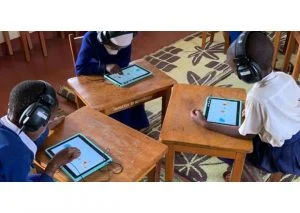
Image by Modern Ghana
Across Nigeria’s classrooms, a quiet transformation is unfolding. For years, students living with disabilities have faced barriers that go beyond physical limitations, from inaccessible learning materials to limited institutional support. Today, assistive technology is beginning to reshape that experience, offering new pathways to inclusion, independence, and academic success.
Assistive technology refers to tools, devices, and software designed to help individuals overcome challenges linked to disabilities. These range from simple solutions like magnifiers and adapted writing tools to more advanced innovations such as screen readers, speech-to-text software, and AI-powered learning platforms. At its core, the goal remains the same: to improve functional abilities and ensure no learner is left behind.
In Nigeria, where millions of people live with one form of disability or another, the role of assistive technology in education is becoming increasingly important. Yet, access remains uneven, and the journey towards fully inclusive education is still a work in progress.
Image by inABLE
Bridging Learning Gaps Through Technology
For many Nigerian students with disabilities, the traditional classroom can feel restrictive. Printed textbooks may not be accessible to visually impaired learners. Fast-paced lectures can exclude those with hearing challenges. Writing tasks may be difficult for students with motor impairments. Assistive technology is helping to close these gaps in practical and meaningful ways.
Screen readers and text-to-speech tools now allow visually impaired students to listen to digital content instead of relying solely on printed materials. Devices like smart reading pens can scan text and convert it into audio instantly, helping students with dyslexia or other learning difficulties keep up with their peers.
Speech recognition software is also proving valuable. Students who struggle with writing can dictate their thoughts, turning spoken words into text in real time. This not only improves academic performance but also boosts confidence, allowing students to express themselves without frustration.
In classrooms where such tools are available, the difference is noticeable. Research shows that assistive technology does not remove a disability but enables learners to use their strengths to overcome challenges, leading to better engagement and improved outcomes.
Beyond academics, these technologies promote independence. A student who once depended heavily on peers or teachers can now complete assignments, read materials, and participate in class activities with minimal assistance. This shift has both educational and psychological benefits.
The Nigerian Reality: Progress and Persistent Barriers
Despite the promise of assistive technology, adoption across Nigeria remains limited. Studies conducted in institutions across states such as Ondo and Ekiti reveal a consistent pattern: while some assistive tools are available, their usage is far from widespread.
Several factors contribute to this gap. Cost is a major barrier. Many assistive devices and specialised software are expensive, placing them out of reach for most students and even some schools. Globally, only a small fraction of those who need assistive technology actually have access to it, and Nigeria reflects this wider trend.
Infrastructure also plays a role. Reliable electricity, internet access, and digital literacy are essential for many assistive technologies to function effectively. In regions where these are inconsistent, even the best tools can become unusable.
There is also the issue of awareness. Some educators and school administrators are not fully trained in using assistive technology or integrating it into teaching methods. As a result, available tools may remain underutilised, sitting in labs or libraries without making real impact.
Social factors cannot be ignored either. Stigma around disability still exists in parts of Nigerian society, affecting how students are treated and whether they feel comfortable using assistive devices openly. This can discourage adoption, especially among younger learners who fear standing out.
Image by Modern Ghana
Policy, Innovation and the Road Ahead
Nigeria has made some progress in promoting inclusive education, particularly with policies aimed at protecting the rights of persons with disabilities. However, policy alone is not enough. Implementation remains the real challenge.
Experts and educators are increasingly calling for a more coordinated approach. This includes increased government funding for assistive technology in schools, partnerships with private tech companies, and targeted training for teachers. When educators understand how to use these tools effectively, the benefits multiply across the classroom.
Innovation is also playing a key role. Locally developed solutions are beginning to emerge, designed with Nigeria’s unique context in mind. These include low-cost learning apps, offline-compatible tools, and adaptable devices that do not rely heavily on constant internet access.
Artificial intelligence is another area to watch. Globally, AI-powered tools are already helping students with disabilities read, write, and communicate more effectively. While still in early stages in Nigeria, such technologies have the potential to leapfrog existing limitations and expand access rapidly.
The future of assistive technology in Nigeria will depend on collaboration. Government agencies, schools, non-profits, and tech innovators all have a role to play. Most importantly, the voices of students with disabilities must be included in designing solutions that truly meet their needs.
As classrooms evolve, the question is no longer whether assistive technology should be part of education, but how quickly and effectively it can be scaled. For many Nigerian students, the answer could define not just their academic journey, but their entire future.
Join Our Social Media Channels:
WhatsApp: NaijaEyes
Facebook: NaijaEyes
Twitter: NaijaEyes
Instagram: NaijaEyes
TikTok: NaijaEyes
READ THE LATEST TECH
