


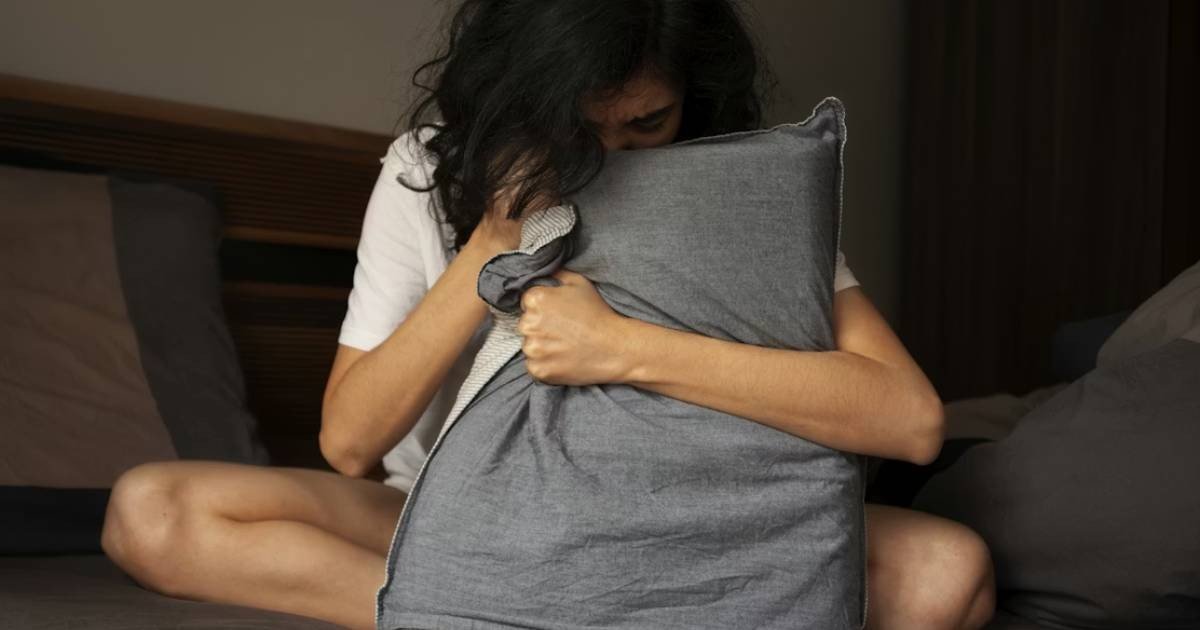
In conjunction with World Sleep Day on March 13, AsiaOne finds out how well people in Singapore are sleeping.
It is often said that sleep is for the weak.
And in a fast-paced society like Singapore, where people are afraid of falling behind others, sleep has become even less of a priority.
One marketing associate told AsiaOne she has been getting an average of 4.5 hours of sleep on weekdays, clocking at most six hours of sleep on a work night.
The 29-year-old, who wished to only be known as Bernice, often wakes up at odd hours and has trouble falling back asleep.
“There was once I woke up at around 3am and couldn’t fall asleep till 6.30am,” she said, adding that she usually is unable to sleep for extended periods of time.
Bernice’s story is not unfamiliar to many. In fact, nine in 10 people in Singapore have experienced disrupted sleep, an AsiaOne survey found.
Disrupted sleep refers to waking up from sleep one or more times during the course of the night.
AsiaOne’s survey — which polled 1,200 people aged 21 and above on their sleep habits — was conducted from May 23, 2025, to June 2, 2025.
During the survey, respondents were also asked to classify themselves as one of three types of sleepers: light, moderate, or heavy.
About half of them identified as moderate sleepers, while 38 and 14 per cent said they were light and heavy sleepers respectively.
On average, respondents got an average of 6.6 hours of sleep on weekends and 5.9 hours of sleep on weekdays, which are lower than the Health Promotion Board’s recommended seven to nine hours per day.
The survey found that 96 per cent of respondents got less than eight hours or less of sleep on weekdays, while 84 per cent did so on weekends.
Light sleepers have the least amount of shuteye among all respondents, the survey results showed, with 66 per cent of them getting less than seven hours of sleep on weekdays and 45 per cent getting less than seven hours of sleep on weekends.
Among heavy sleepers, 89 per cent got eight hours or less of rest on weekdays, and a much lower proportion (65 per cent) got the same amount of rest during the weekend.
https://www.instagram.com/p/DVzcD-AE1do/?img_index=1
The differences between the proportion of heavy and light sleepers in getting sufficient sleep on weekends but not on weekdays suggest that lifestyle and work both play a role in sleep disruption experienced by Singaporeans.
Singapore houses one of the most sleep-deprived populations in the world, said Assistant Professor June Lo, principal investigator at the NUS Yong Loo Lin School of Medicine’s Sleep and Health Laboratory.
“Short sleep — sleeping less than the age-appropriate durations — is prevalent starting from infancy,” she told AsiaOne.
Top sleep disruptors
Sleep insufficiency peaks during adolescence, with 85 per cent of teenage students in Singapore getting less than eight hours of sleep — the minimum amount recommended for this age group — on school nights, Asst Prof June added.
While AsiaOne’s survey only polled people aged 21 and above, results showed that sleep deprivation is most common amongst young adults aged 21 to 24, of whom 55 per cent feel sleep deprived at least once a week.
It is likely that sleep deprivation continues from adolescence into young adulthood for many in Singapore.
For Bernice, sleep has not come easily for a long time.
“When I was in school, I would stay up late to finish my homework or to study for exams. Even when I was done, I had trouble switching my brain off and falling asleep,” she told us.
“Now, even if I clock out on time, I keep thinking about work and what I need to do the next day. My mind is always running.”
“Until recently, I would scroll through TikTok or Instagram until I felt sleepy. But I’ve been trying to do it less because I know it’s bad for me,” she said.
It appears that many people in Singapore have a similar experience to Bernice.
According to AsiaOne’s survey, the top physical and psychological sleep disruptors were work-related stress (30 per cent), browsing online content (28 per cent) and working late (21 per cent).
42 per cent of all respondents selected at least one lifestyle and behavioural habit, such as working late (22 per cent), consuming caffeinated beverages (18 per cent) and night or evening commitments (14 per cent).
Tips for better sleep
A lack of sleep can have adverse effects on one’s physical and mental health, said Asst Prof June.
It is associated with higher risks for death, obesity, type two diabetes, hypertension, cardiovascular diseases, coronary heart diseases, and stroke.
Insufficient sleep can also contribute to depression and anxiety in addition to impairing one’s ability to sustain attention, store and manipulate information, as well as process cognitive information, she added.
So how can we ensure we get sufficient and quality sleep?
Asst Prof June recommends having a consistent bedtime and waking up at the same time every day of the week, including weekends.
This helps people ensure they get the recommended amount of sleep.
And they may also want to rethink repaying their “sleep debt” over the weekend.
“When you do not get sufficient sleep on weekdays, catch up with your sleep ASAP, and do not wait until the weekend,” she said.
Creating a relaxing bedtime routine such as reading a physical book, listening to calming music, or taking a warm bath, may help one sleep better.
People should also refrain from using electronic devices and exposing themselves to bright light one to two hours before bedtime.
“When you go to bed, leave your phone outside of your bedroom, or at least, switch it to silent mode,” she said.
Environmental factors also play a part in achieving quality sleep, so a dark and quiet room — which is not too hot or cold — as well as a comfortable, supportive mattress and pillow are a must.
Other tips include not consuming caffeinated beverages or food starting from late afternoon, and ensuring that one takes their last meal for the day at least two to three hours before bedtime.
People should also refrain from drinking alcohol and smoking before they hit the sack and also engage in regular physical exercise to improve their quality of sleep, she said.
[[nid:720082]]
No part of this article can be reproduced without permission from AsiaOne.
bhavya.rawat@asiaone.com
