


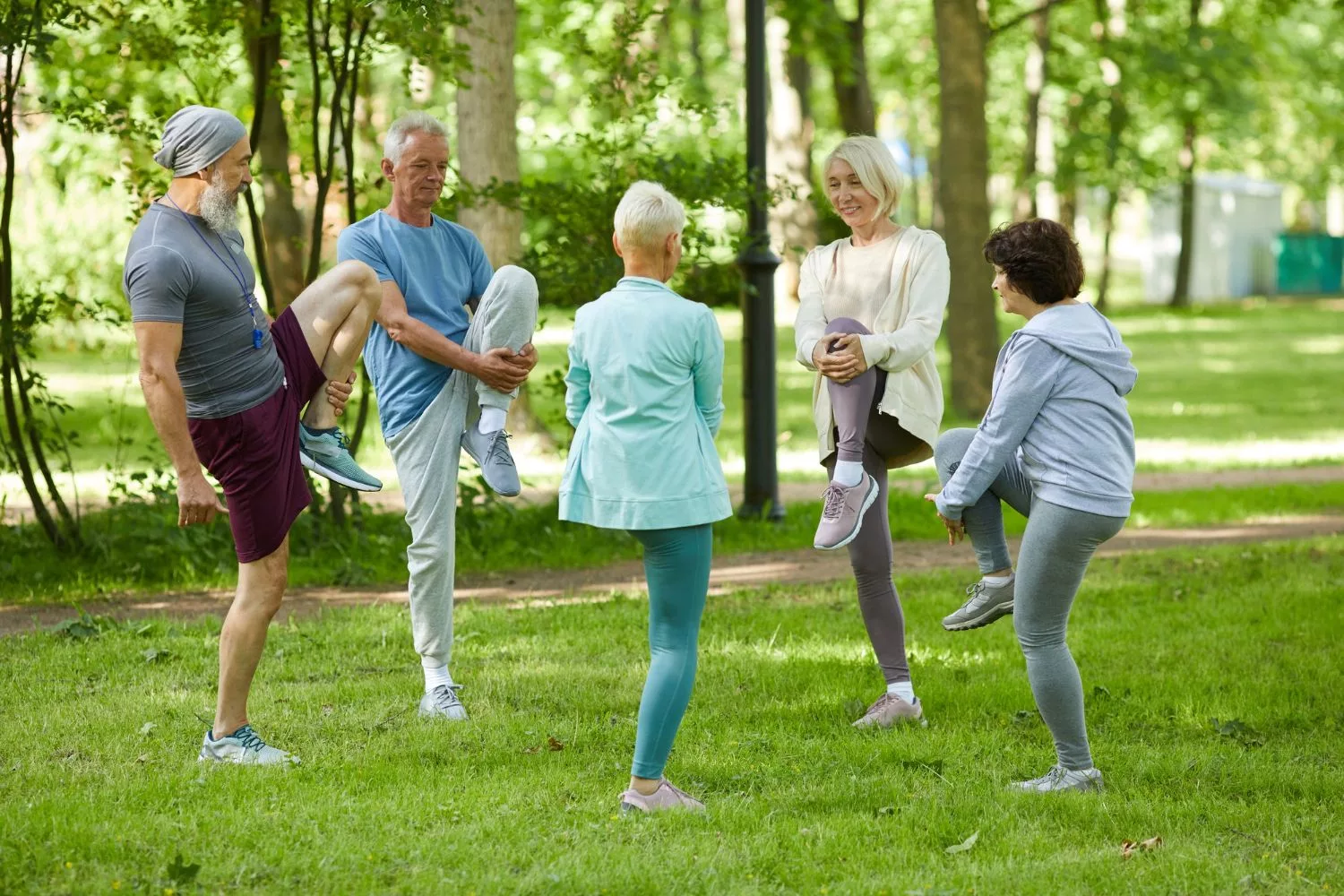
Experts have long known that strong social ties and regular physical activity help older adults stay healthy. What has been less clear is how these two factors work together. A new literature review by health behavior specialists at Texas A&M University School of Public Health explores this connection, examining how social networks, support, interaction, loneliness, and environmental factors influence physical activity in older adults.
The key message is that strong social networks and physical activity go hand in hand, and efforts should focus on reducing loneliness and social isolation.
Regular physical activity has many health benefits, including lowering the risk of chronic disease, boosting mental health, and improving overall quality of life. Older adults who stay active and spend less time sitting enjoy better well‑being and lower medical costs. Yet many people over 65 still do not get enough exercise to achieve these benefits.
Health behavior experts stress the importance of looking at social factors, like networks, support, environment, and norms, to understand better how social connections shape behavior. These social and interpersonal elements are strong predictors of physical activity, especially for older adults.
Marriage boosts health and well-being in aging men
Social interaction and support motivate them to stay active, helping them stick to exercise routines. In turn, leisure‑time activity strengthens social bonds and adds extra benefits in later life. Physical activity also encourages participation in social events, such as lunch clubs or visits to community centers, which boost health and happiness.
Social activities boost the link between physical activity and well‑being in older adults. They not only encourage healthier behavior but are also associated with lower mortality and greater stress relief than other leisure pursuits. Past reviews on this topic have either focused narrowly on factors like social support or social norms, or taken a broader view of influences on physical activity across all age groups.
The lead author of Jeong-Hui Park’s paper stated, “Overall, those studies found that a strong social life and supportive relationships are key motivators for people to stay active.”
She further highlighted how this study differs from previous studies, stating that, “We did a comprehensive review of many social factors, social networks, social support, social interaction, loneliness and social environment, to find out how they associate with physical activity specifically for this group.”
Walkable neighborhoods promote community and adult socialization
Researchers searched databases such as PsycINFO, MEDLINE, Scopus, and Web of Science for studies on physical activity, social factors, and older adults. The review included both randomized controlled trials and cross-sectional studies to explore connections between physical activity and social variables in this age group. Out of 1,560 articles initially identified, 34 met the criteria for final analysis.
The review confirms that social factors strongly influence physical activity in older adults. Key associations include:
- Social networks: Larger, more supportive networks are linked to higher levels of activity.
- Social support: Encouragement from family, friends, or peers increases motivation and adherence to exercise.
- Social interaction: Regular contact with others promotes participation in group or leisure activities that involve movement.
- Social influence: One study found that what others say and do strongly affects whether older adults stay active.
Variety in your social circle may help you live longer
- Social cohesion: Research on how connected people feel to their neighborhoods shows mixed results, sometimes positive, sometimes negative, suggesting the impact depends on the community and setting.
- Social norms: A study on unspoken rules about exercise (like cycling for transport) revealed that social pressure can actually discourage activity. High expectations from loved ones don’t always increase participation.
- Research shows that physical activity is closely tied to reduced loneliness in older adults, even if not every study finds a direct link. Group or coached programs are especially effective at keeping people connected.
- Social isolation: Older adults who have fewer connections with family or friends are often less active, although the results can vary. Exercise can help reduce feelings of isolation, but the connection differs from one study to another.
- Social participation: Joining social activities consistently goes hand‑in‑hand with being physically active. This supports exercise, helps prevent cognitive decline, and improves overall well-being.
The findings point to important areas for future research on physical activity in older adults. Researchers should: look into how social support, networks, and norms influence activity levels, develop and test interventions that target these social factors to encourage participation, and find the best ways to tailor interventions to the unique needs and preferences of older adults, taking into account both individual and social influences.
Sports improve concentration and quality of life
Co-author of the study, Tyler Prochnow, stated, “In short, our study gives new insights into how these two vital health indicators, physical activity and social connectedness, are linked at a base level. With more tailored and strategic interventions, we can dramatically improve the physical, social, and mental health of so many people throughout the lifespan.”
Journal Reference:
- Jeong-Hui Park, Tyler Prochnow et al. A Systematic Literature Review of the Relationships Between Social and Interpersonal Factors and Physical Activity Among Older Adults. DOI: 10.1177/08901171241302925
