


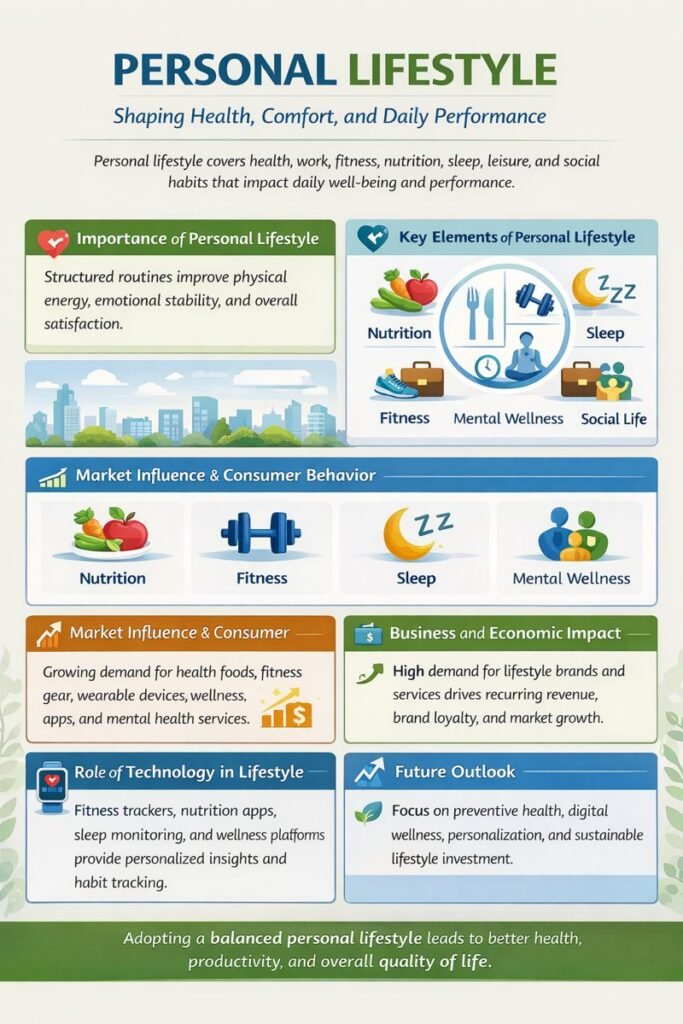
Personal lifestyle represents the way individuals manage their health, work habits, leisure activities, nutrition, fitness, and social balance. In today’s fast-moving environment, lifestyle choices directly influence productivity, mental well-being, and long-term health outcomes.
Importance of Personal Lifestyle
Modern lifestyles are increasingly influenced by digital work culture, urban living, and time pressure. As a result, consumers are now prioritizing structured routines, wellness-focused habits, and balanced daily schedules. A healthy personal lifestyle improves physical energy, emotional stability, and overall life satisfaction.
Key Elements of Personal Lifestyle
Personal lifestyle includes nutrition management, physical activity, sleep quality, mental wellness, work-life balance, and social engagement. Consumers are adopting healthier diets, fitness routines, meditation practices, and digital wellness tools to maintain consistent performance in daily life.
Market Influence and Consumer Behavior
Lifestyle choices strongly impact demand for health foods, fitness products, wearable devices, wellness apps, self-care products, and mental health services. The global lifestyle and wellness industry continues to grow due to increasing awareness, preventive healthcare focus, and rising disposable income.
Urban populations, working professionals, and young consumers are the primary drivers of lifestyle-related spending.
Role of Technology in Lifestyle Management
Smart watches, fitness trackers, nutrition apps, sleep monitoring tools, and mental wellness platforms are reshaping how people manage their lifestyle. These tools provide real-time data, personalized insights, and long-term habit tracking, supporting more disciplined lifestyle management.
Business and Economic Impact
Companies offering lifestyle-oriented products and services benefit from high customer engagement and recurring demand. Lifestyle branding also influences fashion, travel, hospitality, food, and digital service industries. A strong lifestyle focus increases customer loyalty and brand positioning.
Future Outlook
Personal lifestyle will continue to evolve toward preventive health, digital wellness, personalization, and sustainability. Consumers will increasingly invest in products and services that support long-term physical and mental well-being.
Conclusion
Personal lifestyle is no longer limited to daily routines. It has become a strategic factor in health management, productivity improvement, and quality of life enhancement. Individuals and businesses that adapt to lifestyle-driven trends will gain long-term value and growth opportunities.
