


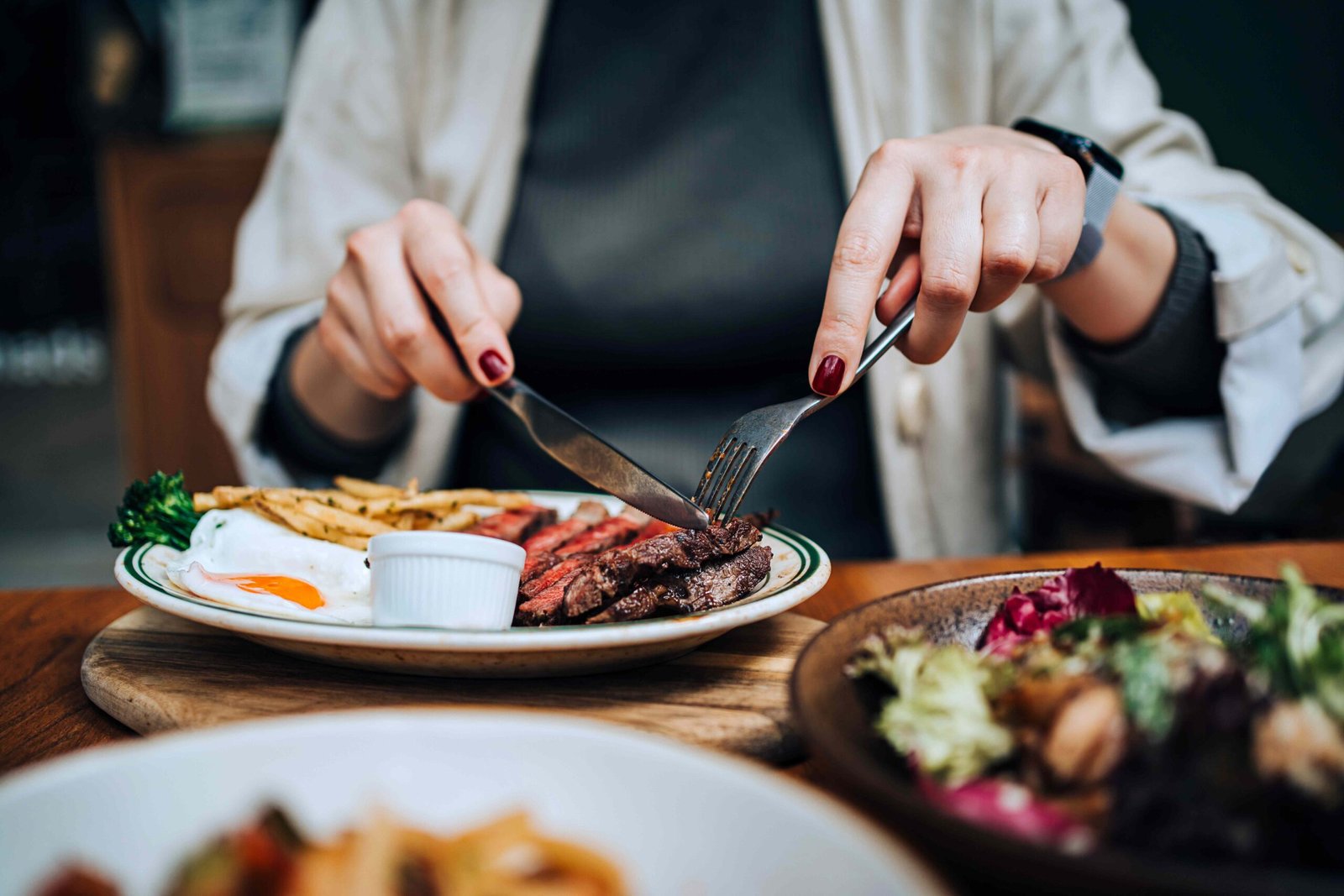
Many people pay close attention to what’s on their plate at dinnertime, but meal timing is often an afterthought, with dinner squeezed in only after work, child care, social plans, and other obligations are met. A growing body of research, however, suggests that what you eat isn’t the only factor that influences health. When you eat is important, too—and in the case of dinner, studies suggest, early birds have it right.
Humans have “body clocks that regulate our physiology and our behavior to such an extent that we’re not the same person in the morning that we are in the evening,” Frank Scheer, PhD, director of the medical chronobiology program at Brigham and Women’s Hospital, told Health.
That means the exact same meal can have different effects on your body depending on when you eat it.
Daisy Duan, MD, an assistant professor in the Department of Endocrinology, Diabetes, and Metabolism at the Johns Hopkins School of Medicine, has demonstrated that in her research.
One study by her team analyzed what happened when 20 young, healthy adults ate the same dinners on two separate occasions: once at 6 p.m., and once at 10 p.m. After the later meal, their blood sugar levels spiked higher, and fat processing decreased, compared to after the earlier meal.
Late dinners also seem to hit differently regardless of whether someone eats right before bed or gives themself time to digest before sleeping, according to one of Duan’s recent experiments.
Why is that? Scheer’s research suggests melatonin—a hormone your body secretes at night to help prepare for sleep—plays a role. Rising melatonin levels seem to interfere with the body’s ability to regulate blood sugar levels, potentially leading to higher and longer-lasting spikes after eating, he explained.
Scheer and his colleagues have also shown through laboratory research that people are hungrier and burn fewer calories if they eat dinner late versus earlier in the day, and that eating late triggers tissue-level changes that promote fat gain.
Many studies on meal timing are conducted in carefully controlled laboratory environments for short periods of time, so they don’t translate perfectly to real-life conditions.
But based on lab findings, it’s reasonable to “speculate” that if someone habitually eats dinner late, they may be at higher risk of metabolic health issues, including type 2 diabetes and obesity, Duan told Health. Plenty of studies have pointed to that connection.
On the flip side, other studies have found that front-loading calories earlier in the day may contribute to weight loss and improvements in metabolic health markers.
And it’s not only metabolic health that seems to be linked to meal timing. Other recent research by Duan suggests that people who don’t eat after 6 p.m. get more sleep than those who are free to graze all the way up until midnight.
Late eating may even be linked to a higher risk of death, according to a sobering 2024 study.
The bottom line: “For most people, it would be best to limit the amount of food intake during the nighttime hours,” Scheer said.
Scientists haven’t identified a single “best” dinner time—but it’s safe to say that “avoiding eating late is probably best for your metabolism,” Duan said. Try to give yourself at least two hours, and ideally more, between dinnertime and bedtime, she recommended.
Aiming to eat dinner at some point between 5 p.m. and 7 p.m. is generally a good goal, said Collin Popp, PhD, an assistant professor in the Department of Population Health at the NYU Grossman School of Medicine who has studied meal timing.
But, of course, sometimes life gets in the way and forces you to eat later. Don’t stress too much, especially if it’s a once-in-a-while thing, Popp says. Just try not to eat a “huge meal where you’re Thanksgiving Day-stuffed” shortly before bed, he told Health.
In fact, research generally suggests that dinner shouldn’t be your largest meal of the day, contrary to the American standard. “Eat most of your calories earlier in the day, close to when you wake up or even in the middle of the day,” Popp recommended.
If you’re used to eating late, either because of your schedule or your appetite, it can be hard to switch to an earlier mealtime.
To smooth the transition, start making changes earlier in the day, Popp suggested. If you habitually skip breakfast and scarf down a quick lunch at your desk, you’ll probably be ravenous in the evening. Prioritize early-in-the-day meals and make sure they contain plenty of protein, fiber, and healthy fats so you’re not as hungry at night, Popp said.
Some people also find it helpful to set a specific “cut-off time” after which they stop eating, rather than vaguely shooting for an earlier mealtime, Popp added.
If you use that approach, it’s OK to take baby steps, Duan said. Start by closing the kitchen just 30 minutes before you go to bed, then an hour, and so on. “You have to meet yourself where you are,” she said. “Start there.”
