

Close Menu

    Subscribe to Updates

    Get the latest creative news from FooBar about art, design and business.

    What's Hot

    Digital Boundaries That Actually Work: The Complete Guide

    October 6, 2026

    Tracking Workers’ Comp Regulation Changes Across States in 2026

    October 6, 2026

    IFAC unveils six principles to build resilience in accountancy profession

    October 6, 2026
    Facebook X (Twitter) Instagram
    Trending
    • Digital Boundaries That Actually Work: The Complete Guide
    • Tracking Workers’ Comp Regulation Changes Across States in 2026
    • IFAC unveils six principles to build resilience in accountancy profession
    • Nokia and NASA Team Up to Bring 4G to the Moon and Our Astronauts
    • 25 Good Self-Esteem Building Activities for Kids
    • How AI and Tech Are Quietly Reshaping the Way Students Learn
    • Disability : Access to assistive technologies in Haiti
    • Nutrition and Mental Health Belong in the Same Conversation
    Moving MountainsMoving Mountains
    Facebook X (Twitter) Instagram
    Tuesday, October 6
    • Home
    • Mental Health
    • Life Skills
    • Self-Care
    • Well-Being
    • Awareness
    • Inspiration
    • Workers Comp
    • Social Security
      • Injuries
      • Disability Support
      • Community
    Moving MountainsMoving Mountains
    Home » Researchers Use Math to Ensure a Wordle Win 99% of the Time
    Inspiration

    Researchers Use Math to Ensure a Wordle Win 99% of the Time

    TECHBy TECHSeptember 13, 2026No Comments3 Mins Read
    Facebook Twitter Pinterest LinkedIn Tumblr Reddit WhatsApp Email
    Researchers Use Math to Ensure a Wordle Win 99% of the Time
    Share
    Facebook Twitter LinkedIn Pinterest WhatsApp Email

    Credit: Binghamton University and State University of New York

    Millions of people playing their daily Wordle games will be eager to hear about this new research.

    Using information theory, the team of researchers from Binghamton University and State University of New York has developed a method to solve the game with a 99% success rate.

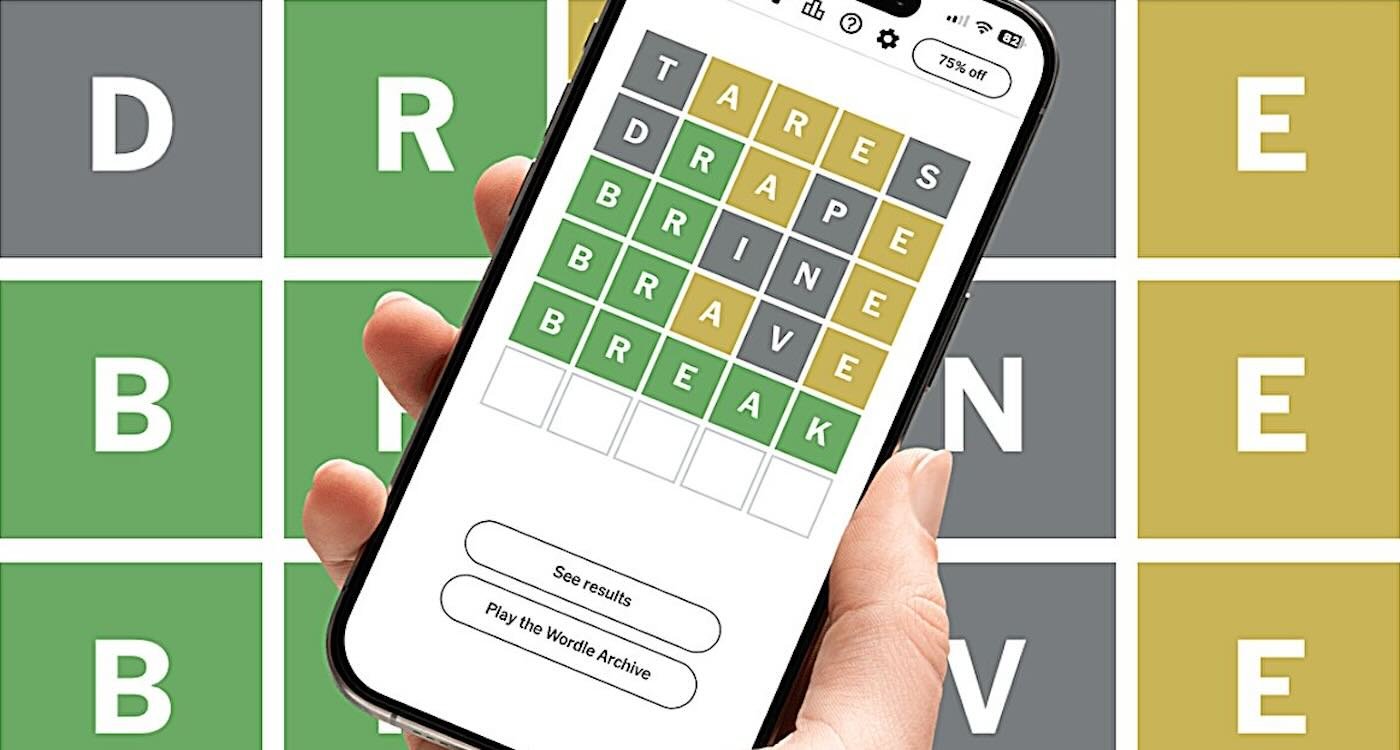
    In the The New York Times online game, players attempt to solve a five-letter word within six guesses. At the start, players are presented with five blank spaces to play any letter of their choosing, with zero hints offered. When a player guesses a word – like ‘BRAVE’ – the game provides feedback in the form of color highlights for each letter guessed.

    • Grey indicates that a guessed letter is not part of the secret word;
    • Yellow indicates that a guessed letter is part of the secret word but is not in the correct order
    • Green indicates the guessed letter is part of the secret word and in the correct order… The player keeps guessing and is presented with clues until they guess the correct word and all five squares turn green—or they run out of guesses and lose the game.

    Cracking the code

    The research team, led by Assistant Professor Congyu “Peter” Wu, applied Shannon entropy—a mathematical measure of uncertainty—to determine which guesses provide the most information. Rather than focusing solely on guessing the most likely answer from the get-go, their method prioritizes guessing words that provide as much information as possible to reduce the pool of possible words.

    “Let’s say you’re at a certain guess. The previous guesses will eliminate a whole bunch of options, and based on the remaining options, guessing some words will send you into a trajectory where information gain is speedier,” said Wu.

    “A subtle but important insight from the paper is that a guess doesn’t have to be the most likely answer; it simply has to be informative,” said Donald Stephens, a doctoral student at Binghamton University.

    “By applying Shannon entropy, the objective shifts to maximizing the expected reduction in uncertainty rather than the probability of being right. In practice, this approach can lead to solving the puzzle in fewer guesses.”

    Their method might seem more “random,” but it is more likely to lead to a successful guess by the end of the game.

    SCRABBLE LOVER? Math Teacher Becomes UK Scrabble Champ and Reveals the 2-Letter Words Experts Use to Win

    “To use the method in real time, a player would need to run a script/program on the side. The player would enter the color-coded feedback that the game provides, and the program would spit out the next best guess to attempt to provide more information,” said the team.

    They tested their strategy against a more traditional approach based on guessing common letters (e.g., “A”, “E”, “R”). In simulations, their approach solved 99% of Wordle puzzles, while the traditional method solved just 90%.

    “What is especially creative and valuable about the team’s intellectual contribution,” Wu said, “is that it transformed a static measurement (Shannon entropy) in a scientific domain into a dynamic solution that helps accomplish a popular task better, which showcases the team’s deep understanding of class material and their talent as engineers.”

    The published paper describes the math in detail, with charts, in the Northeast Journal of Complex Systems.

    5 CHANCES TO SHARE With Wordle Fans on Social Media…

    ensure Math researchers Time Win Wordle
    TECH
    • Website

    Related Posts

    Digital Boundaries That Actually Work: The Complete Guide

    October 6, 2026

    How AI and Tech Are Quietly Reshaping the Way Students Learn

    October 6, 2026

    Virginia Becomes Latest State to Enact ‘Clean Slate’ Law, to Help Residents Move on from Minor Offenses

    October 6, 2026
    Leave A Reply Cancel Reply

    Don't Miss
    Inspiration

    Digital Boundaries That Actually Work: The Complete Guide

    By TECHOctober 6, 20260

    The average person checks their phone 186 times per day. On top of this, most…

    Tracking Workers’ Comp Regulation Changes Across States in 2026

    October 6, 2026

    IFAC unveils six principles to build resilience in accountancy profession

    October 6, 2026

    Nokia and NASA Team Up to Bring 4G to the Moon and Our Astronauts

    October 6, 2026
    Stay In Touch
    • Facebook
    • Twitter
    • Pinterest
    • Instagram
    • YouTube
    • Vimeo
    Our Picks

    Digital Boundaries That Actually Work: The Complete Guide

    October 6, 2026

    Tracking Workers’ Comp Regulation Changes Across States in 2026

    October 6, 2026

    IFAC unveils six principles to build resilience in accountancy profession

    October 6, 2026

    Nokia and NASA Team Up to Bring 4G to the Moon and Our Astronauts

    October 6, 2026

    Subscribe to Updates

    Get the latest creative news from SmartMag about art & design.

    About Us

    At Moving Mountains, we believe that every individual has strength, value, and purpose—regardless of mental health challenges or physical disabilities. This platform was created to inspire hope, promote understanding, and empower people to live meaningful and confident lives beyond limitations.

    Latest Post

    Digital Boundaries That Actually Work: The Complete Guide

    October 6, 2026

    Tracking Workers’ Comp Regulation Changes Across States in 2026

    October 6, 2026

    IFAC unveils six principles to build resilience in accountancy profession

    October 6, 2026
    Recent Posts
    • Digital Boundaries That Actually Work: The Complete Guide
    • Tracking Workers’ Comp Regulation Changes Across States in 2026
    • IFAC unveils six principles to build resilience in accountancy profession
    • Nokia and NASA Team Up to Bring 4G to the Moon and Our Astronauts
    • 25 Good Self-Esteem Building Activities for Kids
    Facebook X (Twitter) Instagram Pinterest
    • About Us
    • Contact Us
    • Privacy Policy
    • Terms & Conditions
    • Disclaimer
    © 2026 movingmountains. Designed by Pro.

    Type above and press Enter to search. Press Esc to cancel.