


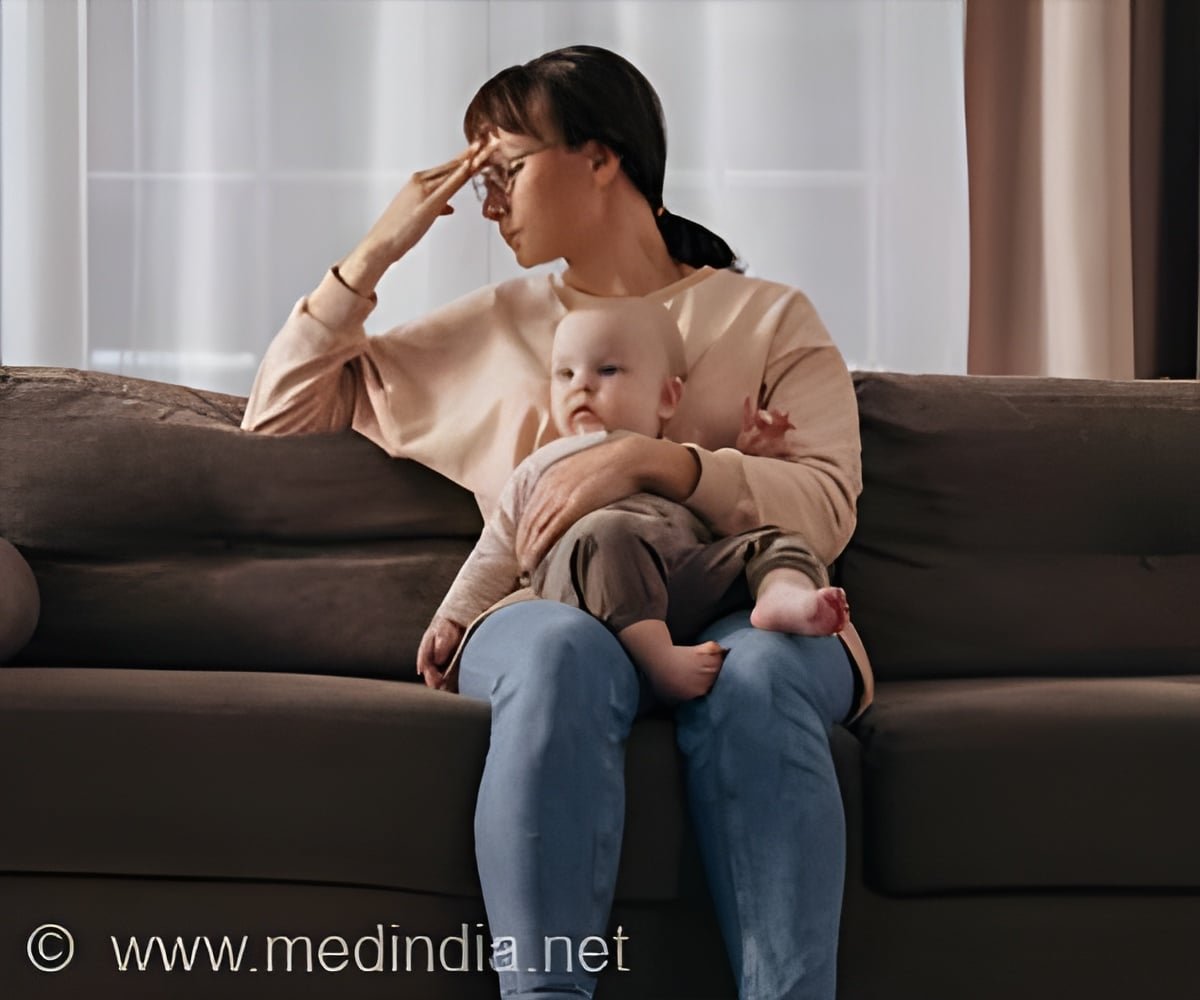
Megan Fox’s postpartum reflections highlight how time, recovery, practical support and self-care can influence maternal mental health after childbirth.
Megan Fox, the American actor known for films including Transformers and Jennifer’s Body, has spoken about experiencing greater peace after welcoming her fourth child.
The 40-year-old actor welcomed her daughter, Saga Blade, with former fiancé MGK on March 27, 2025. She also has three sons—Noah, Bodhi and Journey—with former husband Brian Austin Green.
Fox said this postpartum period felt different because she was not required to return to work immediately after giving birth. Having more time at home allowed her to remain present with her daughter and experience what she described as “a lot more peace” (American College of Obstetricians and Gynecologists. (2026). What to expect at a postpartum checkup—and why the visit matters.“,”https://www.acog.org/womens-health/experts-and-stories/the-latest/what-to-expect-at-a-postpartum-checkup-and-why-the-visit-matters”]”>1✔).
Her reflections draw attention to a wider health issue: postpartum recovery depends not only on medical care but also on rest, emotional support, practical help and the freedom to care for oneself without guilt.
Advertisement
More Time at Home Changed Megan Fox’s Experience
Fox described her latest postpartum period as markedly different from the years following the births of her sons.
This time, she could decide when to resume professional commitments rather than separating from her baby because of an immediate work obligation. She said the ability to remain present strengthened her sense of peace and connection with her daughter .
Her comments do not mean that staying home longer guarantees better mental health. Postpartum wellbeing is shaped by many interacting factors, including medical history, birth complications, sleep, finances, infant health, relationship circumstances, employment conditions and access to practical help.
Nevertheless, research increasingly treats time, rest and social support as health resources—not optional comforts.
A 2024 observational study involving women in New York found that unpaid maternity leave was associated with higher odds of postpartum depressive symptoms than having at least some paid leave. Because the study was observational, it cannot prove that paid leave alone prevented depression (Lee, H., et al. (2024). Association of maternity leave characteristics and postpartum depressive symptoms among women in New York. Maternal and Child Health Journal“,”https://pubmed.ncbi.nlm.nih.gov/39368038/”]”>5✔).
Advertisement
Why Mothers Can Feel Guilty About Taking Personal Time
Fox acknowledged that she still feels guilty when stepping away to make work calls, receive a massage or attend to her wellbeing—even though she spends most of her time with her daughter .
Maternal guilt can develop when a mother believes that every personal need takes something away from her baby. Cultural expectations may reinforce the idea that a “good mother” should be continuously available, endlessly patient and able to manage recovery without asking for help.
In reality, physical rest, medical appointments, nourishing meals, sleep and time away from caregiving can support a parent’s ability to function safely.
Self-care does not have to mean expensive treatments or long periods away from the baby. During the postpartum period, it may involve:
- Taking an uninterrupted shower
- Sleeping while another trusted adult watches the baby
- Eating a complete meal
- Attending a medical or therapy appointment
- Walking outside or spending time in daylight
- Talking honestly with a trusted person
- Taking medication as prescribed
- Having protected time without feeding, household or work duties
When personal care improves a mother’s physical safety, sleep, emotional regulation or access to treatment, it is part of healthcare rather than a reward that must be earned.
Advertisement
Postpartum Recovery Extends Beyond Six Weeks
For many years, postpartum care was commonly organised around one medical appointment approximately four to six weeks after delivery.
That schedule could create the impression that recovery should be complete by the time of the visit. In practice, healing does not follow a single timetable.
The American College of Obstetricians and Gynecologists (ACOG) now describes postpartum care as an ongoing process. It recommends early contact with a healthcare professional and a comprehensive assessment no later than 12 weeks after birth, with continued care based on the patient’s needs (American College of Obstetricians and Gynecologists. (2026). What to expect at a postpartum checkup—and why the visit matters.“,”https://www.acog.org/womens-health/experts-and-stories/the-latest/what-to-expect-at-a-postpartum-checkup-and-why-the-visit-matters”]”>1✔).
The postpartum period—sometimes called the fourth trimester—may involve:
- Healing from vaginal or cesarean birth
- Bleeding and uterine recovery
- Breast or chest-feeding difficulties
- Pelvic-floor symptoms or urinary leakage
- Incision, perineal or back pain
- Major hormonal changes
- Interrupted sleep and fatigue
- Changes in appetite, sexuality and body image
- Adjustment to a new identity and caregiving role
- Depression, anxiety, trauma symptoms or other mental-health concerns
Recovery may take longer after complications, surgery, preterm birth, traumatic delivery or when a baby requires intensive medical care.
How Postpartum Mental Health Became Part of Maternal Care
Emotional changes after childbirth have been described for centuries, but they were frequently minimised, stigmatised or treated as a private family matter.
Postnatal healthcare traditionally concentrated on physical healing, breastfeeding and the infant’s health. Mental-health symptoms could be missed unless they became severe.
Modern maternal care increasingly recognises that pregnancy and the first 12 months after delivery form a connected period of psychological as well as physical vulnerability.
ACOG recommends screening for depression and anxiety during pregnancy and at postpartum visits, while the World Health Organization (WHO) encourages maternal and child-health services to identify and respond to perinatal mental-health conditions (National Institute of Mental Health. (2024). Perinatal depression. National Institutes of Health“,”https://www.nimh.nih.gov/health/publications/perinatal-depression”]”>4✔, Lee, H., et al. (2024). Association of maternity leave characteristics and postpartum depressive symptoms among women in New York. Maternal and Child Health Journal“,”https://pubmed.ncbi.nlm.nih.gov/39368038/”]”>5✔).
This shift has also changed the idea of a postpartum check. Rather than asking only whether an incision has healed or bleeding has stopped, care should consider sleep, mood, safety, relationships, feeding, pain, contraception, chronic disease and social support.
What Causes Postpartum Depression and Anxiety?
Postpartum depression and anxiety do not have one universal cause. They usually develop through a combination of biological, psychological and social factors.
Possible contributors include:
- Rapid changes in reproductive hormones after delivery
- A personal or family history of depression, anxiety or bipolar disorder
- Depression or anxiety during pregnancy
- Severe sleep disruption
- Traumatic birth or pregnancy complications
- Infant illness, feeding difficulties or prolonged crying
- Relationship conflict or intimate-partner violence
- Limited emotional or practical support
- Financial pressure, housing insecurity or employment stress
- Pregnancy loss, neonatal loss or an unexpected birth outcome
- Pressure to appear happy or cope without assistance
Having one or more risk factors does not mean that a person will develop a mental-health disorder. Symptoms can also occur without an obvious trigger.
Postpartum depression is not caused by weakness, poor parenting or a lack of love for the baby. It is a treatable health condition.
Baby Blues, Depression and Psychosis Are Not the Same
Mood changes after childbirth vary in severity, duration and urgency. Recognising the difference can help families respond appropriately.
What Do You Need Most Today?
Choose the feeling that best matches your day to reveal one supportive next step.
I Feel Exhausted
I Feel Overwhelmed
I Feel Alone
I Do Not Feel Like Myself
Seek urgent help for thoughts of self-harm or harming the baby,
hallucinations, severe confusion, paranoia or rapidly worsening behaviour.
The US Centers for Disease Control and Prevention (CDC) reports that approximately one in eight women with a recent live birth experience symptoms of postpartum depression (Centers for Disease Control and Prevention. (2024). Symptoms of depression among women“,”https://www.cdc.gov/reproductive-health/depression/index.html”]”>2✔).
Rates vary by population and may be higher where mothers face poverty, violence, discrimination, poor healthcare access or limited support.
Postpartum psychosis is much less common, but it is a psychiatric emergency requiring immediate treatment. A person experiencing hallucinations, delusions, severe confusion or thoughts of harming themselves or the baby should not be left alone (National Institute of Mental Health. (2024). Perinatal depression. National Institutes of Health“,”https://www.nimh.nih.gov/health/publications/perinatal-depression”]”>4✔).
Support Can Protect Recovery Without Replacing Treatment
Support after childbirth is more useful when it is specific.
Telling a new mother to ask for help places another task on someone who may already be exhausted. A stronger approach is to offer a concrete action: prepare a meal, hold the baby while she sleeps, attend an appointment, manage visitors or take responsibility for household work.
Research has associated stronger perceived social support with fewer symptoms of depression and post-traumatic stress during the perinatal period. Support may also help parents engage more comfortably with their babies (MacMillan, K. K., et al. (2024). The role of social support in perinatal mental health and psychosocial stimulation. Yale Journal of Biology and Medicine, 97(1), 3–16“,”https://pubmed.ncbi.nlm.nih.gov/38559463/”]”>6✔).
However, family assistance cannot substitute for professional treatment when a mental-health disorder is present. A loving partner may reduce isolation, but cannot diagnose bipolar disorder, manage psychosis or replace evidence-based therapy and medication.
Postpartum Self-Care Cannot Depend on Privilege Alone
Fox recognised that she was able to approach her fourth postpartum period differently because she had greater control over her work and time.
Many mothers do not have that choice. They may return to paid employment before they have physically recovered because their leave is unpaid, unavailable or too short. Others may care for older children, work informal jobs or live without reliable family support.
This means postpartum wellbeing cannot be addressed only through advice telling individual women to rest or practise self-care.
Healthier recovery also depends on structural support, including:
- Affordable and accessible postpartum healthcare
- Paid parental leave
- Workplace flexibility and lactation support
- Affordable childcare
- Home-visiting and community health services
- Reliable mental-health screening and referral
- Protection from violence and discrimination
- Practical support from partners, relatives and communities
The WHO defines a positive postnatal experience as one in which women and families receive consistent information, reassurance and support from health workers operating within a responsive health system (https://www.who.int/publications/i/item/9789240045989“,”https://www.who.int/publications/i/item/9789240045989″]”>3✔).
Postpartum Warning Signs That Need Medical Attention
Emotional and physical discomfort are common after birth, but some symptoms should not be normalised or endured without medical advice.
A healthcare professional should be contacted when a new mother experiences:
- Persistent sadness, anxiety or hopelessness
- Loss of interest or pleasure
- Severe guilt, worthlessness or fear of being a bad parent
- Difficulty sleeping even when the baby is asleep
- Inability to eat, bathe or complete essential daily activities
- Intrusive thoughts that cause distress
- Difficulty bonding with or caring for the baby
- Symptoms that continue beyond two weeks or keep worsening
Emergency help is required for thoughts of suicide, plans to harm oneself or the baby, hallucinations, delusions, extreme confusion, severe agitation or behaviour that appears disconnected from reality.
Urgent physical warning signs after birth can include heavy bleeding, chest pain, difficulty breathing, seizures, fainting, severe headache, high fever or painful swelling in one leg.
Caring for the Mother Is Part of Caring for the Baby
Fox’s account illustrates how different the postpartum period can feel when a mother has greater control over her time and is not forced into an immediate separation from her baby.
Her experience should not be treated as a universal prescription. Some mothers feel restored by returning to work, while others want or need more time at home. Maternal wellbeing depends less on following one ideal arrangement than on having genuine choices, adequate support and access to healthcare.
Self-care also cannot correct every postpartum difficulty. Depression, anxiety, trauma and psychosis require appropriate assessment and treatment, not simply more sleep or positive thinking.
Caring for yourself becomes part of postpartum health whenever it protects recovery, supports safe functioning or makes it possible to ask for help before exhaustion becomes a crisis.
References:
- American College of Obstetricians and Gynecologists. (2026). What to expect at a postpartum checkup—and why the visit matters. (https://www.acog.org/womens-health/experts-and-stories/the-latest/what-to-expect-at-a-postpartum-checkup-and-why-the-visit-matters)
- Centers for Disease Control and Prevention. (2024). Symptoms of depression among women-(https://www.cdc.gov/reproductive-health/depression/index.html)
- World Health Organization. (2022). WHO recommendations on maternal and newborn care for a positive postnatal experience-(https://www.who.int/publications/i/item/9789240045989)
- National Institute of Mental Health. (2024). Perinatal depression. National Institutes of Health-(https://www.nimh.nih.gov/health/publications/perinatal-depression)
- Lee, H., et al. (2024). Association of maternity leave characteristics and postpartum depressive symptoms among women in New York. Maternal and Child Health Journal-(https://pubmed.ncbi.nlm.nih.gov/39368038/)
- MacMillan, K. K., et al. (2024). The role of social support in perinatal mental health and psychosocial stimulation. Yale Journal of Biology and Medicine, 97(1), 3–16-(https://pubmed.ncbi.nlm.nih.gov/38559463/)
Source-Medindia
