

Close Menu

    Subscribe to Updates

    Get the latest creative news from FooBar about art, design and business.

    What's Hot

    Human Resources: Making Return to Work Feel Like Return to Home

    September 14, 2026

    Feather Preserved in Dinosaur Dung Could Explain Why Birds Survived Mass Extinction

    September 14, 2026

    Following Timor-Leste’s Triumph, All of Southeast Asia Has Eliminated Trachoma

    September 14, 2026
    Facebook X (Twitter) Instagram
    Trending
    • Human Resources: Making Return to Work Feel Like Return to Home
    • Feather Preserved in Dinosaur Dung Could Explain Why Birds Survived Mass Extinction
    • Following Timor-Leste’s Triumph, All of Southeast Asia Has Eliminated Trachoma
    • Thara Brigitte Mills Simmonds wins the forty-under-40 education award
    • 60 Fundamental Ways to Make Life Simple Again
    • How ‘housing first’ is helping people leave rough sleeping behind
    • September is National Suicide Prevention Awareness Month, Maverick County Not Immune Amid Average of Six Suicides Annually
    • Psychologists agree: Homebodies who skip weekend plans aren’t just well-balanced, they’re highly self-aware
    Moving MountainsMoving Mountains
    Facebook X (Twitter) Instagram
    Monday, September 14
    • Home
    • Mental Health
    • Life Skills
    • Self-Care
    • Well-Being
    • Awareness
    • Inspiration
    • Workers Comp
    • Social Security
      • Injuries
      • Disability Support
      • Community
    Moving MountainsMoving Mountains
    Home » Feather Preserved in Dinosaur Dung Could Explain Why Birds Survived Mass Extinction
    Inspiration

    Feather Preserved in Dinosaur Dung Could Explain Why Birds Survived Mass Extinction

    TECHBy TECHSeptember 14, 2026No Comments4 Mins Read
    Facebook Twitter Pinterest LinkedIn Tumblr Reddit WhatsApp Email
    Feather Preserved in Dinosaur Dung Could Explain Why Birds Survived Mass Extinction
    Share
    Facebook Twitter LinkedIn Pinterest WhatsApp Email

    – credit, Andrey Atuchin / SWNS

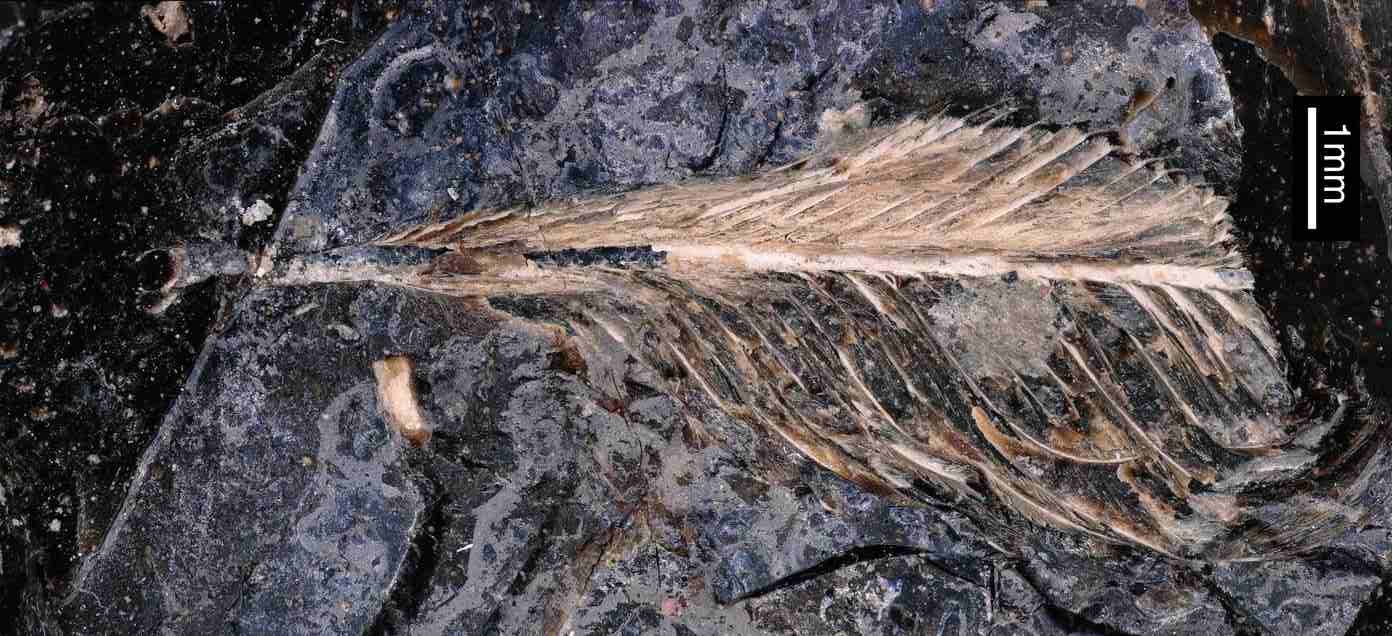
    A feather preserved inside dinosaur dung could help explain why birds survived the mass extinction that wiped out most life on Earth.

    Specifically, it could explain whether it prepared a certain lineage of birds to weather the unnatural winter that followed in the wake of the asteroid impact.

    Scientists at the Field Museum of Chicago say a dinosaur ate a bird around 66 million years ago, and that its dung preserved the best example of a feather ever found from the dinosaur age.

    By studying the feather, American researchers have found clues that help explain why birds are the only group of dinosaurs that survived the mass extinction on Earth 66 million years ago.

    “It’s such a beautiful, well-preserved feather, from such an unexpected source, and it’s exciting that it could help us answer this huge question in paleontology,” the study’s lead author Professor Jingmai O’Connor said.

    Professor O’Connor has spent years studying fossilized birds to try to find out why only one group of birds called Neornithes survived. It’s a puzzle worth solving, as every living bird today is one of their descendants.

    The fossil was discovered in 2016, by study co-author David DeMar, Jr., while conducting fieldwork in Montana.

    “I was crawling up a rocky outcrop collecting fish fossils when I came across a dark, reddish-brown nodule about half the size of a golf ball,” he remembers. “I picked it up and scanned its surface through my hand lens, and that’s when I couldn’t believe what I was seeing, a tiny fossil feather.”

    – credit, Andrey Atuchin / SWNS

    Scientists examined the specimen’s mineral composition and took CT scans of it. Not only did it contain multiple feathers, but also tiny fish scales from a gar, and leg bones from a bird called a hesperonithiform.

    “Hesperornithiforms were aquatic birds, ecologically similar to loons,” said O’Connor. “Most couldn’t fly, and instead, they used their specialized feet to dive down into the water to hunt for things like fish.”

    They are the earliest known avian lineage to lose flight in favor of a specialized foot-propelled diving lifestyle, but unlike the Neornithes, Hesperornithiforms did not survive beyond the Cretaceous era.

    The feathers found in the droppings are the first hesperornithiform feathers ever found, and their features seem to represent a middle ground between feathers that existed then and those of our present time. O’Connor believes one of the main reasons Neornithes survived is down to differences in their feathers compared to other birds.

    SEE ALSO: Single Fossil Shows a Pterosaur Eaten by an Ichthyosaur Eaten by a Pliosaur: ‘A 3-Way Chompfest’

    “Some of these diving birds’ feathers seem to have been modern-looking and water-proof, but they also had some smaller, fuzzy, primitive body feathers that we associate with dinosaurs…” she said.

    If the hesperornithiforms’ feathers weren’t as good at keeping their bodies warm as Neornithes’ feathers, O’Connor believes that could have been a major factor in their abilities to survive the impact winter following the asteroid strike.

    “The hesperornithiforms retain primitive feather types that may not have been as efficient for insulation as modern plumaceous feathers, and that could explain why they went extinct along with the enantiornithines [another group of birds].”

    DINOS OF A FEATHER: Antarctica Yields Intact Skull — An Ancestor of Today’s Waterfowl That Survived Dinosaur Extinction

    “We rarely find fossils of birds and even more rarely their feathers, giving us such important insight into the evolution of this key aspect of their biology,” said study co-author Professor Greg Wilson Mantilla, from the University of Washington.

    The study was published in the journal Current Biology, and advocates for more CT scanning of existing fossilized dung samples held in collections on the off chance that more feathers could be contained therein.

    SHARE This Clue Into The Origin Of Modern Birds With Your Friends… 

    birds Dinosaur Dung explain Extinction Feather Mass Preserved Survived
    TECH
    • Website

    Related Posts

    How ‘housing first’ is helping people leave rough sleeping behind

    September 14, 2026

    7 Signs Your Workspace Air Conditioner Is Begging for Maintenance

    September 14, 2026

    Good News in History September 14

    September 14, 2026
    Leave A Reply Cancel Reply

    Don't Miss
    Workers Comp

    Human Resources: Making Return to Work Feel Like Return to Home

    By TECHSeptember 14, 20260

                                 …

    Feather Preserved in Dinosaur Dung Could Explain Why Birds Survived Mass Extinction

    September 14, 2026

    Following Timor-Leste’s Triumph, All of Southeast Asia Has Eliminated Trachoma

    September 14, 2026

    Thara Brigitte Mills Simmonds wins the forty-under-40 education award

    September 14, 2026
    Stay In Touch
    • Facebook
    • Twitter
    • Pinterest
    • Instagram
    • YouTube
    • Vimeo
    Our Picks

    Human Resources: Making Return to Work Feel Like Return to Home

    September 14, 2026

    Feather Preserved in Dinosaur Dung Could Explain Why Birds Survived Mass Extinction

    September 14, 2026

    Following Timor-Leste’s Triumph, All of Southeast Asia Has Eliminated Trachoma

    September 14, 2026

    Thara Brigitte Mills Simmonds wins the forty-under-40 education award

    September 14, 2026

    Subscribe to Updates

    Get the latest creative news from SmartMag about art & design.

    About Us

    At Moving Mountains, we believe that every individual has strength, value, and purpose—regardless of mental health challenges or physical disabilities. This platform was created to inspire hope, promote understanding, and empower people to live meaningful and confident lives beyond limitations.

    Latest Post

    Human Resources: Making Return to Work Feel Like Return to Home

    September 14, 2026

    Feather Preserved in Dinosaur Dung Could Explain Why Birds Survived Mass Extinction

    September 14, 2026

    Following Timor-Leste’s Triumph, All of Southeast Asia Has Eliminated Trachoma

    September 14, 2026
    Recent Posts
    • Human Resources: Making Return to Work Feel Like Return to Home
    • Feather Preserved in Dinosaur Dung Could Explain Why Birds Survived Mass Extinction
    • Following Timor-Leste’s Triumph, All of Southeast Asia Has Eliminated Trachoma
    • Thara Brigitte Mills Simmonds wins the forty-under-40 education award
    • 60 Fundamental Ways to Make Life Simple Again
    Facebook X (Twitter) Instagram Pinterest
    • About Us
    • Contact Us
    • Privacy Policy
    • Terms & Conditions
    • Disclaimer
    © 2026 movingmountains. Designed by Pro.

    Type above and press Enter to search. Press Esc to cancel.