


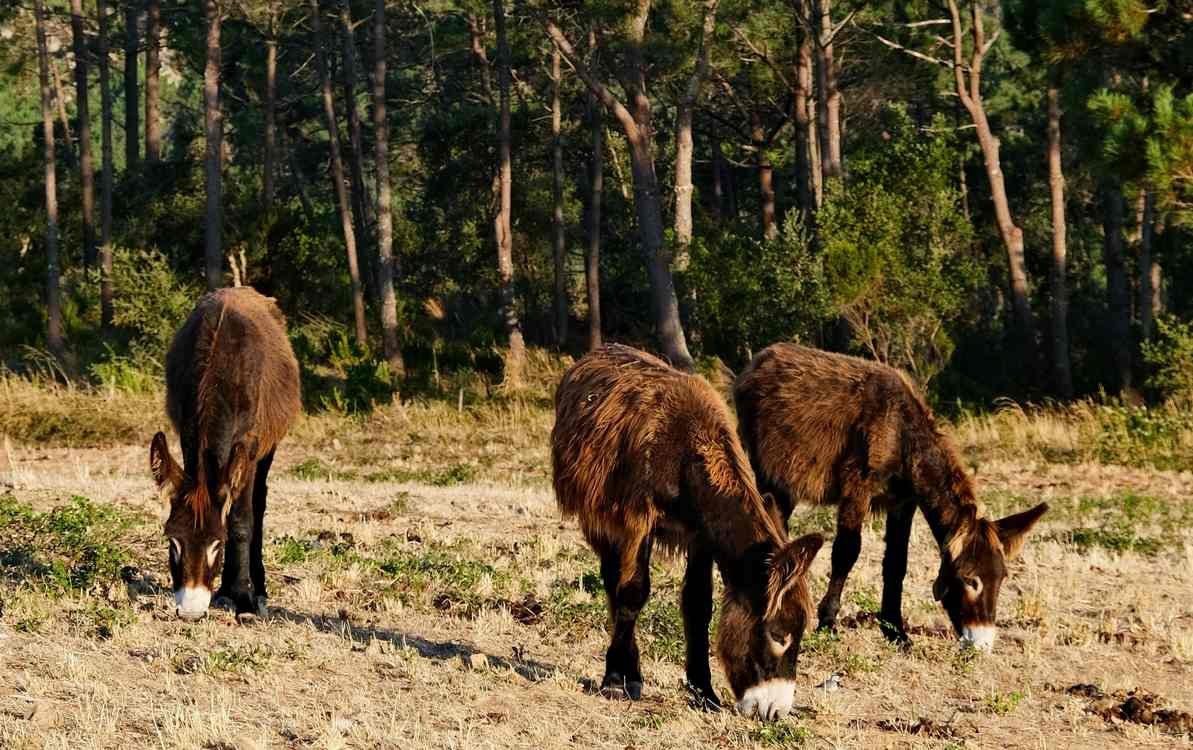
During the recent heat dome over Europe, multiple regions of Spain were scorched by wildfires.
But in the idyllic Iberian ecosystem of Doñana National Park, things were calm and lush. There hasn’t been a wildfire in the park for 9 years, in fact.
And it’s down to a very slow, very sweet team of hard workers: donkeys.
The “happy little donkeys” of Doñana have a simple job of each grazing freely across a 130 to 150 foot-long fire break, turning potential fuel in shrubs and grasses into food. From March to November, team members like Leonor, Ainoa, and Ume work 7 hours a day and drink some 8 gallons of water.
It might seem almost embarrassingly low-tech, but it works better than sheep and goats, and for Doñana, which acts as a vital refuge for Iberian lynx and migrating birds from Europe and Africa, it’s suitably low-impact.
The donkey fire brigade concept is being replicated in other areas of Spain that seem to be at ever greater risks of fires in their naturally-dry forests of pine. It is in fact the absence of donkeys that some researchers studying the increase in wildfires attribute for the greater and greater severity in burns.
Donkeys have worked in the field with Man thousands of years longer than horses. As faithful and sympathetic draft animals, they have plied the furrows, field, fells, and forests of Spain for millennia, but the onset of the major industrial revolutions and rural depopulation has removed these eating machines from the natural side of Spain, while the pre-domestic gazing wildlife which preceded them were long-since displaced or extirpated.
This has left the landscape vulnerable to explosive growth in understory vegetation and woody shrubs, which dry out in the more intense summers, and act as tinder and kindling for any spark.
LOW-TECH FIRE CONTROL: Portugal Welcomes First Wild Bison in 10,000 Years–the Keystone Species for Rewilding a Quarter-Million Acres
Nat Geo reports that Galicia, Catalonia, Ourense, Navarre, and the Basque Country have all enlisted “donkey brigades,” following Andalusia’s lead.
“A donkey weighs three times as much as a goat, so when it moves, it breaks up vegetation more effectively,” Joan Cedó, who launched Catalonia’s Tivissa Donkeys Firefighters in 2020, told the magazine. “A donkey also eats roughly 10 times more than a goat. That means its daily impact is much greater.”
MORE STORIES LIKE THIS: California Developer Builds First Neighborhood Where All the Homes Are Resistant to Wildfires
“Since we introduced donkeys in our municipality, there have been no wildfires,” says Cedó.
Sheep and goats are also used in Spain to control fires. In 2016 the Fire Flocks Project started by figuring out where the fires most often started and became the fiercest, before creating a line of premium brand meat and dairy products produced by 22 shepherds, half of them new to the job, who graze sheep, goats, and bovines in 600 fire-prone areas.
SHARE These Donkeys Helping To Protect Spain’s National Parks…
