


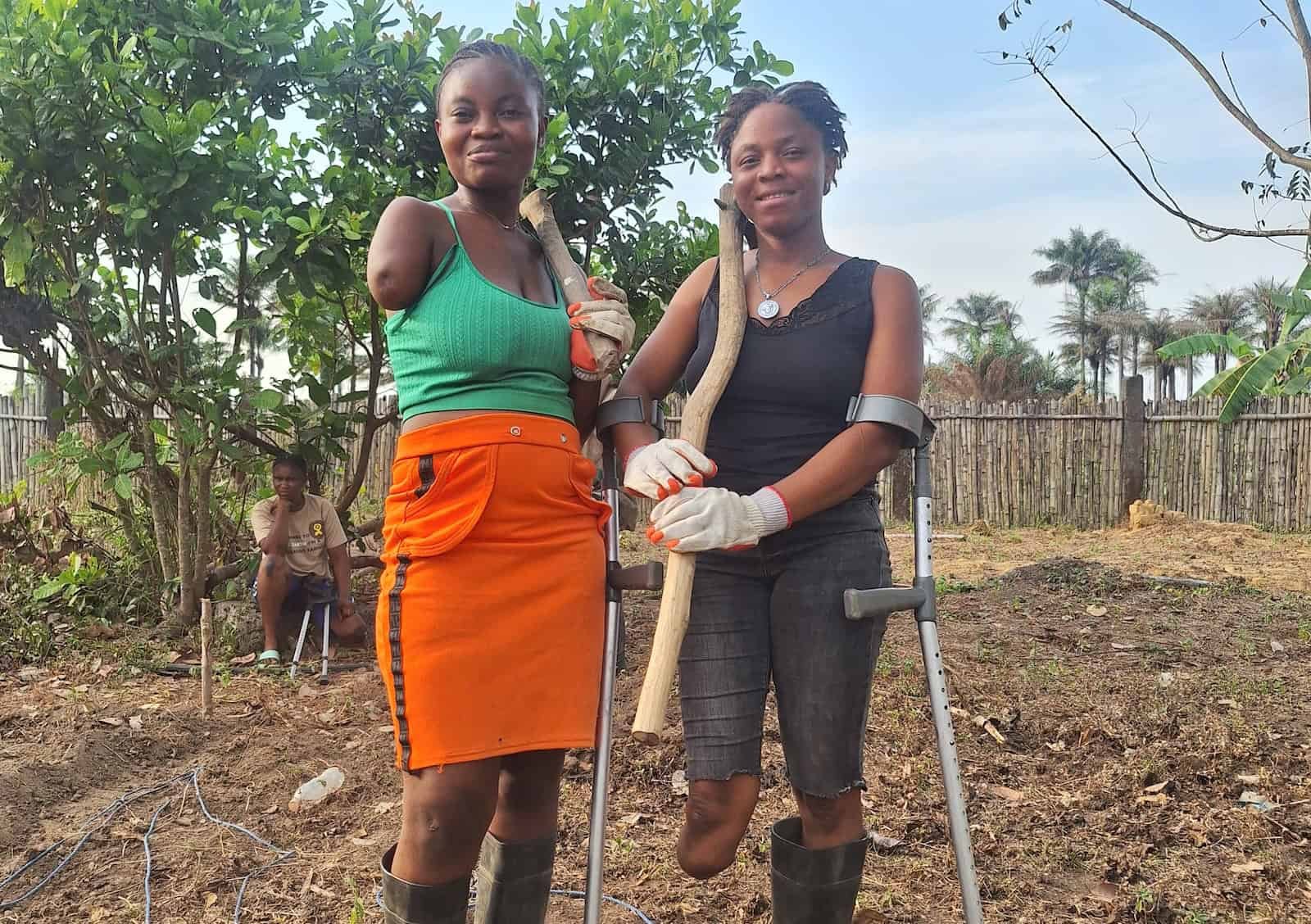
An empowering initiative teaches people with limb loss how to farm sustainably, enabling many to grow their own food and launch small commercial plots
A farming programme in Sierra Leone is helping amputees gain skills, independence and a path to income. Founded by pastor-turned-farmer Mambud Samai, the initiative teaches people with limb loss how to farm sustainably, enabling many to grow their own food and launch small commercial plots.
Samai was forced to flee the country during Sierra Leone’s 11-year-long civil war, during which many civilians suffered life-changing injuries. The conflict is estimated to have left almost 30,000 amputee victims across the country, with many still waiting for reparations, finding it difficult or impossible to get work, and left with no other option than to beg on the streets. “Historically, this community has been left with very little support from the state, few work opportunities, and very little dignity,” said Samai.
After spending two years in a refugee camp in the neighbouring country of Guinea, he decided something needed to be done to help other victims of the conflict.
Initially, he decided to use football as a means of building community for amputees, setting up the Single-Leg Amputee Sports Association in 2001. This idea found success, with leagues established not only in the capital city, Freetown, but against four other provinces, allowing both men and women to play. “We still run the association today, using the power of the beautiful game to help communities find hope.”
However, Samai felt that the amputee community still needed something more. In 2018, he travelled to the Asian Rural Institute in Japan, completing a course in community development and organic farming practices and learning skills to bring back to Sierra Leone, where he immediately set up Farming on Crutches.
The scheme runs from a small farm which operates as a ‘classroom’; participants are brought onsite from across the country, where during the duration they live, work and learn. They then take knowledge back to their own villages and are encouraged to set up their own agricultural practices.
The Single-Leg Amputee Sports Association built a community and lifelong friendships
Mustapha Bockarie, a participant in the very first Farming on Crutches training group, lost an arm after being hit with a stray bullet after the civil war and struggled with feeling like an outcast after his amputation. “My friends said I was a burden to them,” he explained, “but this training makes people who see us as beggars come closer to us. We made a name for ourselves.”
Bockarie returned to his village after the scheme, where he now runs a community farm with his neighbors; together, they raise goats and grow enough food to eat and sell. He even keeps bees and teaches others about sustainable farming, which provides him with a steady income.
Samai is particularly proud of the achievements of a 2024 cohort who, using bicycle wheels, timber, and bamboo already growing on the farm, set about designing and constructing a more accessible wheelbarrow.
Zainab Makieu, a member of this team, said: “The bamboo wheelbarrow is very important for us who are physically challenged. Because I wouldn’t say we are disabled: we all know disability is not inability. I see my other disabled brothers and sisters and feel comfortable when I’m here.”
Farming on Crutches is now facing a waitlist of eager hopefuls in Sierra Leone wanting to join the scheme; the programme recently welcomed its 100th participant, with plans to expand to other West African countries in the coming years. It also plans to incorporate further teachings in skills like bee-keeping, and adding more value to the farmers’ raw produce through drying, fermenting, storage and packaging.
“I’ve been so delighted, and deeply rewarded, to see my own passion for sustainable farming be matched by the enthusiasm of our participants,” said Samai. “At the very beginning they may know next to nothing about agriculture, but they complete our course and return to their local communities as change makers.”
Images: Farming on Crutches
Be part of the solution
At Positive News, we’re not chasing clicks or profits for media moguls – we’re here to serve you and have a positive social impact. We can’t do this unless enough people like you choose to support our journalism.
Give once from just £1, or join 1,800+ others who contribute an average of £3 or more per month. Together, we can build a healthier form of media – one that focuses on solutions, progress and possibilities, and empowers people to create positive change.
Support Positive News
