


For decades, animals along the north-south migration corridor of the Cascade Mountains in Washington State faced a harrowing obstacle: a six-lane highway where tens of thousands of motor vehicles sped by every day.
In late 2018, the Washington State Department of Highways teamed up with the United States Forest Service and various nonprofits to build a wildlife overpass so that elk, deer, coyotes, and more could pass safely.
Before the bridge even officially opened in 2019, animals already began using it, picking their way along the native vegetation to continue their natural migration.
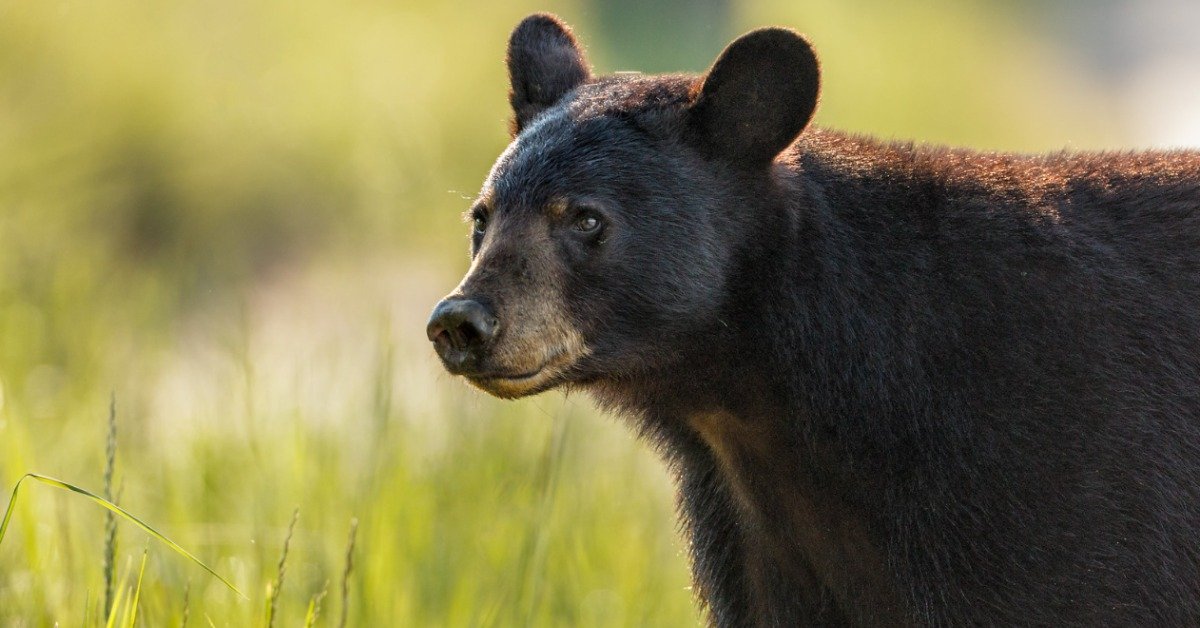
But although many animal visitors have used the I-90 Snoqualmie Pass wildlife crossing, one species remained deterred: black bears.
A coyote traversing a snow-covered wildlife overcrossing on Interstate 90 in Washington state. Image via Washington State Department of Transportation
Compared to other animals, black bears reportedly have a higher risk assessment when it comes to busy roadways, crossing them largely at night to avoid traffic or avoiding them altogether. Research shows that they view unnatural crossing structures, like tunnels and bridges, with extreme caution.
But on June 28, eight years after the wildlife crossing was built, one brave black bear braved the bridge.
“Hey bear!” The Washington State Department of Highways said in an Instagram post. “We’ve seen 9,390 total wildlife visitors on the I-90 Snoqualmie Pass wildlife overcrossing since we started recording in late 2018. And on June 28 — our first bear!”
In the social media post, the WSDOT account shared trail camera footage of a black bear bounding along the crossing, with mountains rising in the background.
“Researchers at Banff National Park reported similar ‘bear-haviors’ on their wildlife crossings. That is: Bears take several years to warm up to these crossings, but they do eventually start using them,” the post continued. “We’re hoping this means more visits in the future!”
Annually, there are estimated to be more than 1 million instances of vehicles crashing into large mammals — and in California alone, one study found that more than 557 black bears were killed during one five-year period.
In addition to reducing traffic collisions, wildlife crossings also prevent animals from getting separated from critical food and water sources. Habitat degradation can also lead to inbreeding, which is especially troublesome for endangered and threatened populations already in decline.
Although black bears are not endangered, they are important links in the food web, acting as “forest gardeners” by eating and dispersing berry seeds and keeping deer populations in check through predation.
An elk herd crosses under I-90 at the Gold Creek Wildlife Undercrossing. Image via Washington State Department of
So far, WSDOT has recorded 38,321 wildlife crossings on our overpass and underpass structures along I-90.
“Which means we’re helping everyone get where they need to go,” they wrote, “whether they travel by wheel, foot, hoof, or paw.”
You may also like: Scientists just cleared an endangered species’ name — with the help of camera traps
Header image via Tim Lumley (CC BY-NC-ND 2.0)
