


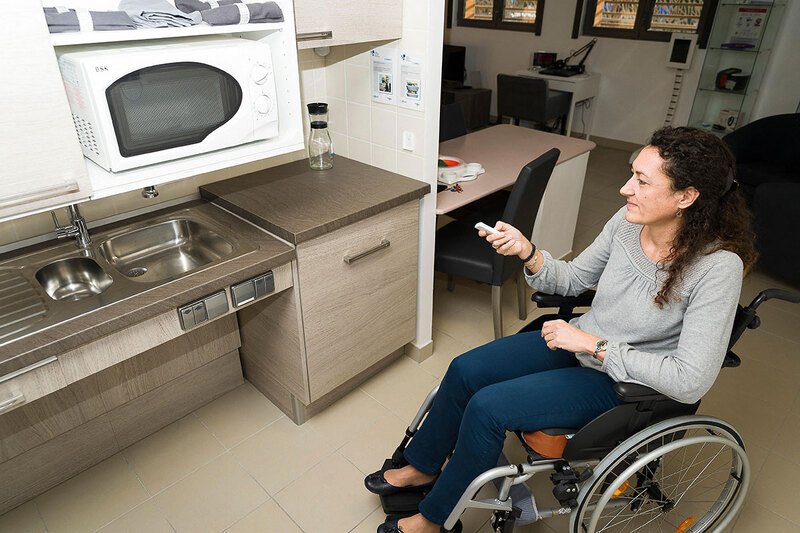
Dr Alan Bullion, insight group member and member of Tunbridge Wells & Area Access Group, said accessibility for all is a common-sense economic move.
“If all new homes were built to M4(2) or M4(3), it would save lots of money in the long run by reducing the need for costly, retrofitted home adaptations, as well as ensure social equity and greater safety,” he said.
Sarah, a London-based postgraduate student and insight group member, said: “I hope this letter will mean that disabled people are listened to and understood by the government.
“Due to a lack of accessible housing in my area, I’ve had to move to a different county to get temporary council accommodation that’s only partially suitable for me.
“This has reduced my quality of life, my social support network and access to adult social care, impacting my health and career prospects. How can young disabled people, like me, be expected to work when they haven’t got a stable and safe place to live?”
Habinteg’s chief executive, Martin Warhurst, said: “Accessibility is still being treated as an optional extra, but you cannot create fair, inclusive and future-ready communities without it.
“By mandating a 100% M4(2) baseline, supplemented by local targets for M4(3) wheelchair-user homes, this government can deliver a housing stock that is truly built to last.”
The insight group will be connecting with All-Party Parliamentary Groups relating to housing, social care and health in the lead-up to Habinteg’s Accessible Homes Week, taking place from 12-16 October.
