


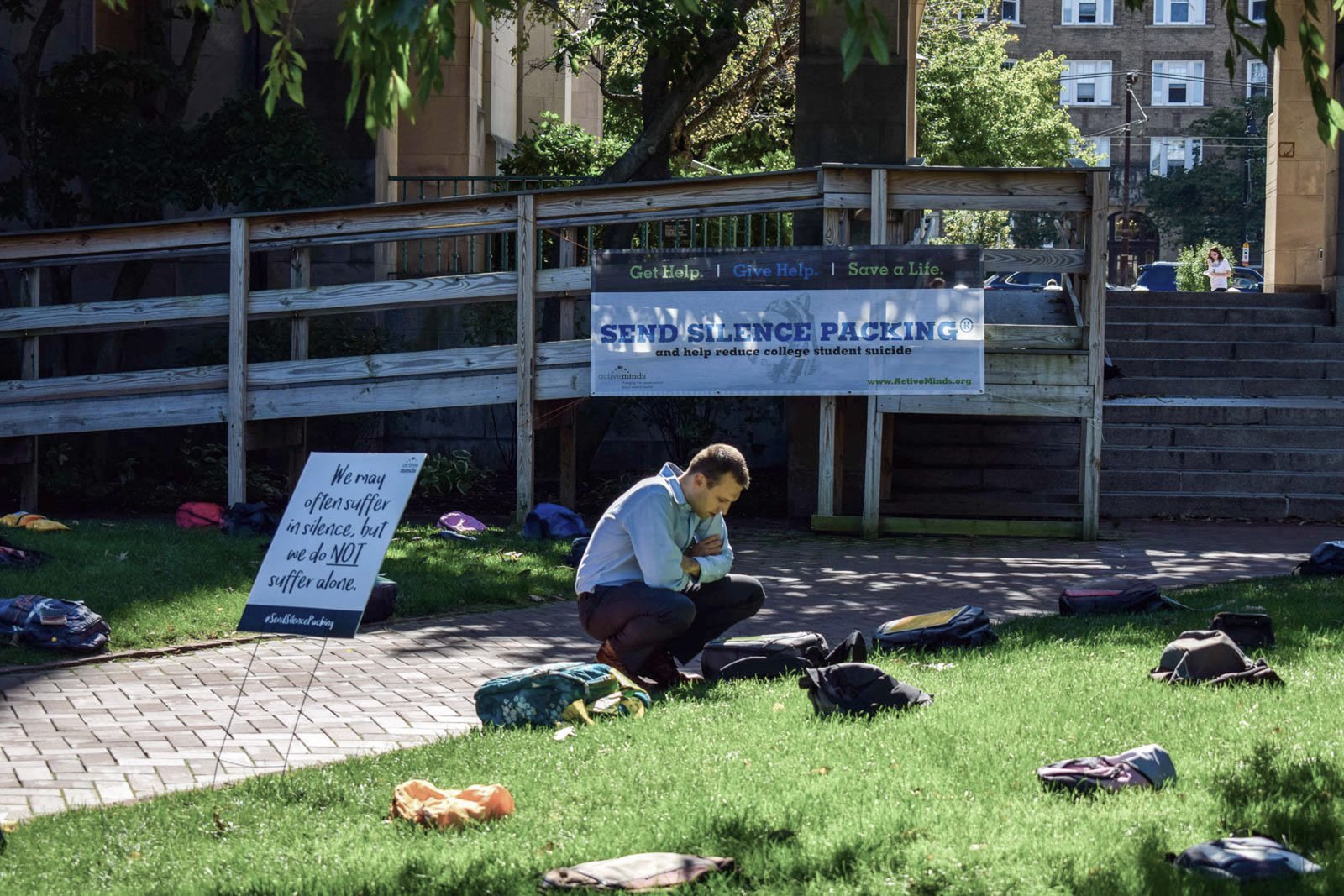
Nearly 1,400 people participated in the annual Out of the Darkness Walk on the Boston Common Sunday to raise awareness for suicide prevention.
The three-mile walk, starting at the Parkman Bandstand, received more than 2,500 donations, raising over half the event’s $350,000 fundraising goal, according to the American Foundation for Suicide Prevention website.
“A lot of us deal with living in dark spaces and not being able to have those comfortable spaces to go to,” said attendee Kenneth Wade, 33, whose nephew died by suicide 5 years ago.
It was nice to see the community show up for this cause, he said.
Valerie Alfeo, AFSP’s Boston area walk chair and K-12 math director at Waltham Public Schools, organized the walk, which she called “very gratifying.” The purpose of the walk is to promote mental health awareness and make sure people are aware there’s a community of people connected to the cause, she said.
Alfeo has been AFSP’s Boston walk chair for a decade, but her involvement with the organization started before her official title. Her father died 15 years ago, and Alfeo “hasn’t looked back since” she joined the walk committee 12 years ago.
Boston’s Out of the Darkness Walk has raised over $4.5 million since it began in 2002, and those funds return to the local community to promote advocacy in Massachusetts, Alfeo said.
Through the funding it receives, the AFSP provides volunteers with opportunities to meet with representatives in the Massachusetts State House or with congress in Washington D.C. to help push towards suicide prevention and mental health awareness on state and federal levels.
“Our main goal is always to get the word out about mental health awareness and sharing resources for suicide prevention,” Alfeo said.
Alfeo works year-round to spread awareness about the AFSP and the upcoming walks. She said meeting and connecting with people who have gone through a loss “means everything” to her.
Tessa Kim, a 21-year-old student originally from Seattle, Washington, who attended to honor her loved ones affected by suicidal thoughts, said she came to try and find a community of people with similar experiences.
“The more we talk about it, the less afraid people will be to speak up when it’s impacting them, and I think that’s really important,” Kim said.
The walk also consisted of an opening ceremony, activities centered around hope and resource tables surrounding the Parkman Bandstand.
Alfeo said participants wear honor beads in differing colors, each representing a different connection to the cause.
“When I’m wearing gold and I look out and I see other people wearing gold, it’s like we have this unspoken connection,” Alfeo said. “We know what each other just went through, right? And that’s really powerful.”
It is the realization that others have a similar connection to the struggle or loss of suicide that encourages them seek help, she said.
Dario Hernandez, an attendee and 30-year-old writer from New York, said the event was more about realizing the pain he has felt isn’t an isolating one. Hernandez said he’s struggled with suicidal ideation in the past, and two of his friends died by suicide over the summer.
The event felt like “a communal healing,” Hernandez said.
Anthony Narag, 30, a software engineer from California who walked with his family to honor his cousin David, said events like the walk bring together those affected by suicide who want to help prevent similar tradegies.
“We’re in an age currently where a lot of progress has been made in terms of awareness and stigma [of mental health],” Narag said. “It’s more common now that people understand that suicide, depression, mental health issues can happen to a variety of people for any variety of reasons.”
