


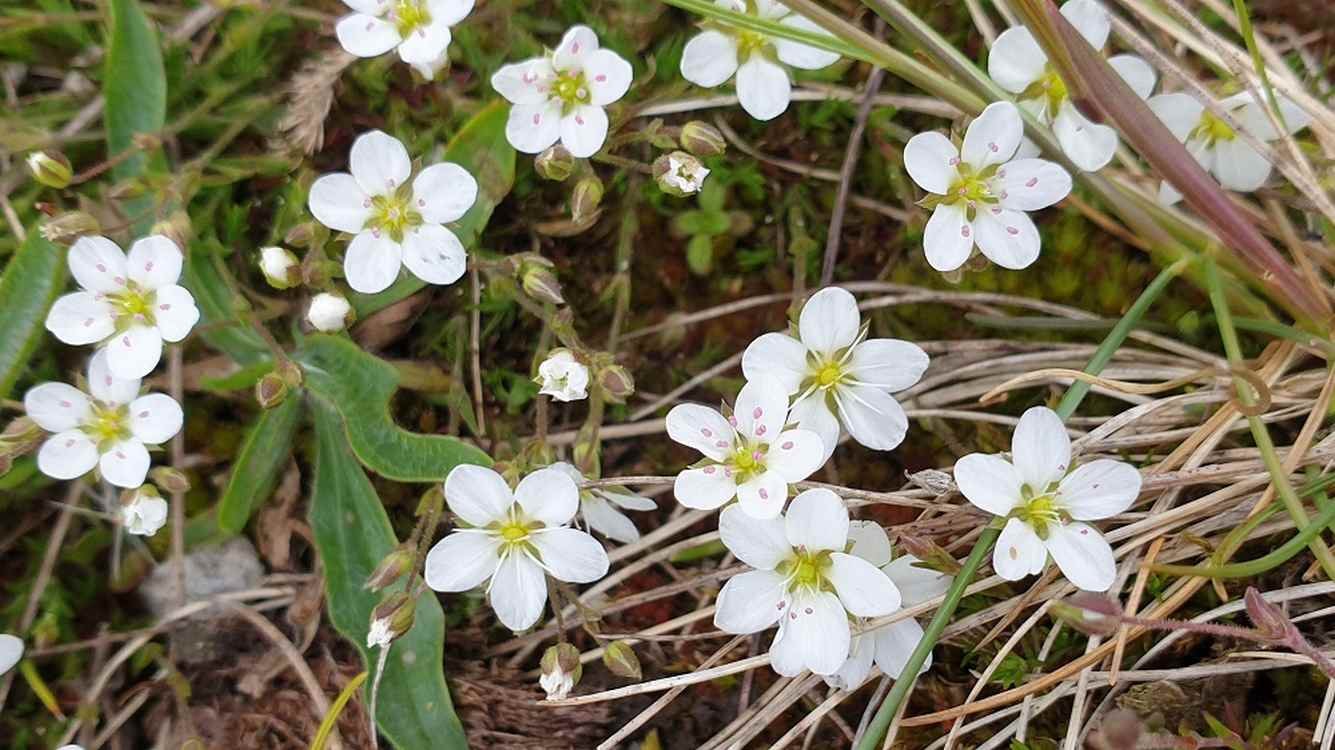
Spring Sandwort, a metallophyte – credit, Douglal, CC 4.0. via Wikimedia
For areas contaminated by lead and zinc mining across Europe, a class of plants known as “metallophytes” are helping enrich nature while diminishing pollution.
The Guardian reported on this kind of ecological double speak, where wildflowers seemingly grow in healthy abundance on semi-mountainous landscapes in the north of the UK, a place that has seen lead and zinc mining since Roman times.
Calaminarian grassland is a rare biome that exists where topsoil has been eroded away by water and wind enough for plants to touch the tips of zinc, lead, or cadmium deposits; calamine being an old European name for zinc.
Chief among the plants that thrive on the continent is the Viola calaminaria, or the zinc violet, a rare yellow flower that blooms in metal-rich soils. In the UK, it’s the mountain pansy, and its almost never a natural phenomenon.
Covering just 450 hectares (1,100 acres) these grasslands are especially found in areas like Durham, the North Pennines, and Cumbira. Here, most of the UK’s lead and zinc mines were closed over 100 years ago, but their presence on the landscape is clear thanks to the pansies, spring sandwort, and Alpine penny-cress, a group collectively known as metallophytes.
Next to them can be found sea thrift, bladder campion, and kidney vetch, writes the Guardian’s Mark Hillsdon, hardy species that are tolerant in a variety of intolerable landscapes.
Today, mining companies in the West undergo rigorous environmental reviews and permiting processes, and their land reclamation and environmental remediation work is budgeted in from the earliest feasibility studies.
In the 19th century, nothing of the sort was required, and often miners would dam and then unleash rivers onto mining areas to strip away soil and reveal the metal deposits. That contaminated dirt would accumulate in big “spoil piles” which have overtime been covered by a layer of humus and turned into the calaminarian grasslands.
English county authorities are at pains to decide what to do with these curious places: their existence is predicated on one or many neurotoxic pollutants, but the plants’ ability to take up the toxic heavy metal, and weave it into complex organic molecules in their roots which renders them nontoxic is not only saving millions of dollars in remediation work, but going on while the area is enriched from the food web diversity they help anchor.
ALSO CHECK OUT: New Bamboo Plantations Are Healing Villages Choked by Toxic Ash from Coal Plants in India
On the other hand, Durham and Cumbria are keen to reduce levels of zinc, cadmium, and lead in wild rivers and streams, and environmental authorities are aware that this will diminish these unique and almost precious microhabitats.
Even still, there may be a calaminarian boom before the habitat goes bust. In county Durham, the government’s Water and Abandoned Metal Mines (WAMM) program is establishing calaminarian grasslands by hands on identified mine spoil piles along the River Tees.
DECONAMINATING SOILS: Cotton and Squid-Bone Sponge Can Soak Up 99.9% of Microplastics, Scientists Say
Planted by the thousand around the spoil piles’ perimeters, they stop heavy metals from leaching out into the river and surrounding soils.
GNN has reported before on fungal solutions to cleaning up pollution from mining and industry, but never vegetation.
SHARE This Unique, Unexpected Surprise Beneath Flowering English Meadows…
