


It’s clear that LGBTQ+ folks have a lot to navigate.
From finding social and familial acceptance, exploring their own identities, and protecting their safety every single day, the last thing this community has time for is myth-busting.
Unfortunately, though, there is a lot of misinformation in the world that dehumanizes queer and trans folks. And a lot of times, it’s up to queer and trans folks to defend themselves or “explain” why things are the way they are. And that’s a lot of emotional labor!
Plus, sometimes, when someone’s curiosity sounds a lot more like judgment, we don’t have the best words to offer them.
So, we created this resource, with the help of Lee Airton, the author of “Gender: Your Guide, 2nd Edition: The Gender-Friendly Primer on What to Know, What to Say, and What to Do in the New Gender Culture.”
In addition to being an author, Dr. Airton is an associate professor of gender and sexuality studies in education at Queen’s University in Kingston, Ontario. A teacher educator for over 15 years, Dr. Airton has also worked with hundreds of new and veteran teachers to “widen the circle of belonging” for all people in schools.
And now, they’re here to teach you, too.
Our goal was to take some of the most prevalent (though, often unfounded) concerns of the moment, answer them in a clear and concise way, and provide queer and trans folks (and their loved ones) with a script for the questions they frankly shouldn’t have to answer.
Dr. Airton’s answers have been edited for length and clarity.
5 myths about queer and trans people: Debunked
Myth #1: Why is everyone suddenly saying they’re queer or trans?
Dr. Airton: I totally get how, if you aren’t someone who has LGBTQ+ people in your family or among your friends, it can feel like a lot more people are queer or trans these days. There’s an important difference between queer/trans people existing, and queer/trans people being out as who we are in all areas of our lives.
The first isn’t new, but the second is.
Over the past decade in Canada and the U.S., and until the recent backlash in some states, it was becoming more possible to be out and also keep your job, housing, friends and family.
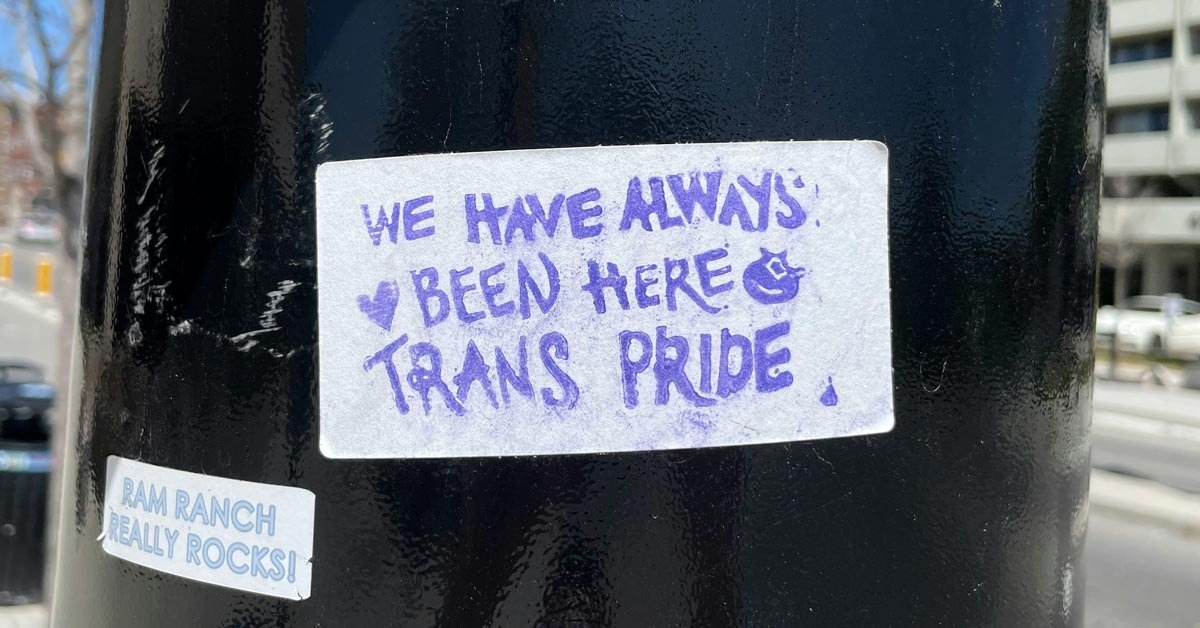
This is because societal acceptance of gender and sexual diversity has grown so much, as have legal protections from discrimination. LGBTQ+ people have always been here, only now we can grow up knowing who we are.
Myth #2: Why are “pronouns” such a big deal these days?
Dr. Airton: Research has shown that meeting a trans person really makes a difference in how you feel about transgender people: more comfortable with and holding more favorable attitudes toward us.
When you get to know a trans person and say their pronouns, you’ll see that this is (a) no big deal, actually, and (b) a really kind, impactful and easy thing to do.
You don’t need to completely understand the science behind human sex, gender, and sexuality or figure out exactly where you stand politically before you do this one simple thing: Say a pronoun that feels right to someone else.
But for most people, it’s something new and weird. That will change as time goes on.
Myth #3: Should I be worried about my kids being exposed to LGBTQ+ people?
Dr. Airton: People who worry about this typically think being transgender isn’t real (it is), or that same-sex relationships are sinful or wrong (they aren’t), and that they can somehow keep their kids away from the normal range of human gender and sexual variation that they’ll encounter online, in media, at school, and someday their workplace, if not within themselves.
The only risk of ‘exposing kids to LGBTQ+ people’ is exposing them to what freedom looks like, and many people with rigid views of gender and sexuality would rather their kids not experience that.
They worry that their kids will “become gay” or “become trans,” but research has shown that you can’t change someone’s sexual orientation or gender identity — you can only make them miserable.
Parents have a lot of power to decide the kind of relationship they have with their kid, but not whether their kid is queer or trans.
Myth #4: What is gender-affirming care for kids, exactly? Are kids actually changing their genitals?
Dr. Airton: Unequivocally, no — zero children have surgeries on their genitals because they’re trans. Gender-affirming care for children is limited to hormone suppression to delay puberty, because puberty produces irreversible effects on the body that often can’t be reversed later without a lot of expensive and complex medical treatment.
A very tiny number of transgender adolescents with significant gender dysphoria choose to have a gender-affirming surgery, but this happens with caution and after a lot of exploratory consultation. It’s also typically limited to chest surgeries like breast removal or breast enhancement, which do not touch fertility or sexual function.
Myth #5: Is being trans or gender nonconforming a mental illness?
Dr. Airton: Easy! No. The Diagnostic and Statistical Manual of the American Psychiatric Association is the touchstone of what is and is not a mental illness, and being transgender is not in there.
Transgender people do have higher-than-average rates of mental illnesses like depression and anxiety, but these are typically linked to experiencing discrimination and harassment for being trans.
Some trans people experience gender dysphoria — acute distress because their body does not match up with their gender identity — but not all trans people do.
Gender dysphoria is in the current DSM, but simply being transgender is not. This makes sense because transgender people are a historically documented phenomenon and part of the normal spectrum of human diversity, across time and across cultures.
A version of this article was originally published in The 2024 Pride Edition of the Goodnewspaper.
You may also like: New study: Most people are not actually worried about trans women in women’s bathrooms
Header image by charliewarl on Unsplash
