


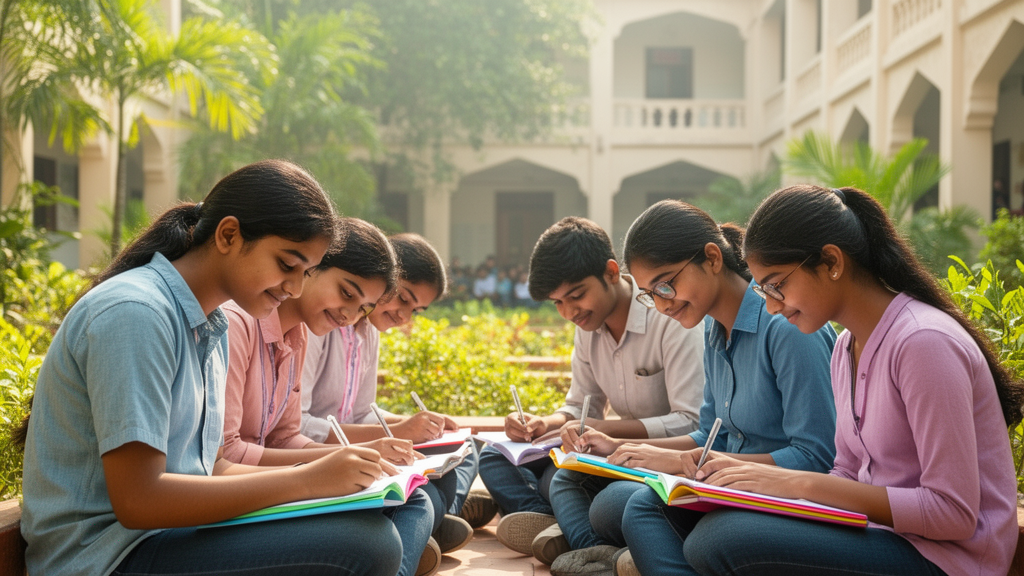
School-going adolescents in India who regularly utilize adaptive coping strategies demonstrate substantially higher odds of experiencing positive mental well-being compared with peers who employ fewer coping mechanisms, according to findings from a large multicentric cross-sectional investigation. Conducted across six geographically and socioculturally diverse sites throughout the country, the study surveyed 6,168 students aged 10 to 19 years to assess how behavioral coping responses, individual psychological resources, and interpersonal dynamics correspond with subjective well-being. Rather than focusing exclusively on psychiatric symptoms, psychological distress, or diagnostic categories of disorder, the research evaluated positive dimensions of mental health across ordered gradations ranging from poor to moderate and best well-being. In multivariable models adjusting for psychosocial characteristics, adolescents with moderate coping behaviors exhibited more than twice the odds of belonging to a superior mental well-being category, while those reporting high coping engagement experienced an adjusted odds ratio of 2.31, underscoring the strong empirical connection between active coping efforts and constructive psychological functioning during secondary school years.
The study addresses a critical gap in global adolescent epidemiology, where clinical investigations historically prioritize psychopathology and symptom checklists over the protective assets that support flourishing psychological states. Adolescence constitutes a formative life stage marked by rapid biological, cognitive, emotional, and social development during which individuals navigate academic demands, changing household roles, and shifting peer environments. While worldwide public health estimates indicate that approximately one in seven adolescents experiences a diagnosable mental disorder, researchers have increasingly noted that mental health extends beyond the mere absence of psychiatric illness. In low- and middle-income countries like India, which is home to one of the largest adolescent populations globally, documented regional variations in disease burden and substantial treatment gaps have traditionally overshadowed examinations of positive well-being. By applying an ecological developmental framework that views adolescent functioning as an interaction between individual psychological agency, familial support, peer networks, and broader educational environments, the research team aimed to identify practical, school-relevant assets that correlate with favorable emotional health.
Fieldwork was conducted between October 2025 and January 2026 across six purposively selected medical institute centers: All India Institute of Medical Sciences (AIIMS) Gorakhpur in Uttar Pradesh, AIIMS Nagpur in Maharashtra, AIIMS Deoghar in Jharkhand, AIIMS Rajkot in Gujarat, AIIMS Guwahati in Assam, and the Jawaharlal Institute of Postgraduate Medical Education and Research (JIPMER) in Puducherry. These locations were chosen to encompass an expansive spectrum of regional cultures, languages, and urban-rural environments, including semi-urban and tribal settings. The sampling methodology employed a multistage cluster design wherein government and private secondary schools served as primary sampling units. Schools were eligible if they maintained an enrollment of at least 50 students in the target age bracket and granted institutional permission, though institutions already running structured mental health or substance abuse interventions were excluded to avoid confounding background exposures.
To evaluate psychological functioning, the researchers formulated a five-item composite mental well-being index that captured positive emotional experiences and everyday coping difficulties, specifically measuring life satisfaction, optimism, anxiety, stress-related sleep disturbances, and perceived emotional support. Each item was recorded on a five-point Likert scale ranging from Never to Always, with negative items reverse-coded to create a composite score spanning 5 to 25. For analytical purposes, participants were classified into three ordinal categories: poor mental well-being (scores of 13 or lower), moderate well-being (scores of 14 to 18), and best well-being (scores of 19 to 25). Psychometric evaluation of this composite measure yielded an internal consistency Cronbach’s alpha of 0.520 and a Kaiser-Meyer-Olkin sampling adequacy measure of 0.583. Concurrently, coping strategy use was appraised via five items reflecting constructive responses to acute stress, including discussing difficulties with family or friends, engaging in physical exercise, practicing relaxation techniques, pursuing creative activities, and seeking guidance from trusted adults. The resulting composite coping score ranged from 1 to 5, demonstrating robust internal consistency with a Cronbach’s alpha of 0.801 and Kaiser-Meyer-Olkin value of 0.817, and was categorized into low, moderate, and high coping intervals.
Among the 6,168 adolescents enrolled in the overarching investigation, baseline characteristics revealed an evenly balanced sex distribution comprising 50.44 percent male and 49.56 percent female respondents. Most participants were aged 14 to 16 years (61.98 percent), followed by those aged 10 to 13 years (28.42 percent) and older adolescents aged 17 to 19 years (9.60 percent). The vast majority attended government schools (79.56 percent), while 52.43 percent attended schools situated in urban localities. Regarding domestic environments, 87.47 percent lived with both parents, and 57.17 percent resided in households containing five or more family members. Household economic status was distributed among poor (40.39 percent), middle (19.84 percent), and rich (39.77 percent) strata. Maternal education was most commonly reported as higher secondary schooling (31.47 percent), with 59.60 percent of mothers identifying as homemakers, whereas fathers were predominantly employed in agricultural or skill-based vocations (28.50 percent) or skilled and semiskilled labor (28.36 percent). Anthropometric evaluations classified 56.68 percent of assessed students as thin and 35.22 percent within a healthy body mass index range, while current tobacco and alcohol use were reported by 4.44 percent and 2.74 percent of participants, respectively.
Descriptive and bivariate evaluations highlighted a clear distribution of well-being across the adolescent cohort, while revealing noticeable differences linked to psychosocial traits and individual habits. Complete mental well-being outcome data were recorded for 5,704 participants, among whom 14.31 percent fell into the poor well-being bracket, 39.87 percent reported moderate well-being, and 45.83 percent achieved the best well-being category. Coping data were available for 5,851 students, classifying 23.33 percent into low coping, 39.17 percent into moderate coping, and 37.50 percent into high coping. Cross-tabulating the 5,496 adolescents possessing complete data on both measures demonstrated a steep gradient: 28.32 percent of students with low coping reported poor mental well-being, compared to only 10.69 percent in the moderate group and 9.39 percent in the high coping group. Conversely, the prevalence of best well-being climbed from 30.80 percent among low copers to 47.93 percent and 52.60 percent among moderate and high copers, respectively, yielding a highly significant chi-square statistic of 315.80 (p < 0.001). Bivariate comparisons also demonstrated significant associations with age, religion, maternal education, and parental occupation, whereas gender, household size, living arrangements, and economic status showed no statistically significant unadjusted differences.
To rigorously examine how coping behaviors relate to ordinal mental well-being categories while managing clustering across 131 school units, the researchers constructed three sequential ordered logistic regression models using cluster-robust standard errors. In the baseline unadjusted specification (n = 5,496), moderate coping yielded an unadjusted odds ratio of 2.47 (95% CI: 1.97–3.09), and high coping produced an odds ratio of 2.94 (95% CI: 2.30–3.76). When Model 2 adjusted for personal psychological attributes (n = 5,393)—including future planning, self-assurance in resisting peer pressure, and peer health choices—the adjusted odds ratios remained pronounced at 2.17 (95% CI: 1.76–2.68) for moderate coping and 2.42 (95% CI: 1.91–3.07) for high coping. The comprehensive psychosocial specification in Model 3 (n = 5,238) incorporated family support, access to trusted adults, constructive family communication, peer norms, and proximity to peers using tobacco or alcohol. In this final model, moderate coping retained an adjusted odds ratio of 2.08 (95% CI: 1.69–2.56; p < 0.001) and high coping reached 2.31 (95% CI: 1.81–2.94; p < 0.001). Concurrently, future planning (aOR = 1.46; 95% CI: 1.07–1.98) and meaningful family discussions (aOR = 1.37; 95% CI: 1.03–1.82) remained independently associated with better well-being.
Recognizing that proportional-odds assumptions may not hold uniformly across cumulative outcome thresholds, the researchers executed a complementary partial proportional-odds regression using the continuous coping score alongside sociodemographic and contextual controls across 5,496 participants. A Wald test evaluating coping coefficients across thresholds proved statistically significant (chi-square = 10.99; p = 0.0009), demonstrating that the impact of coping differed between transition points. Specifically, each one-point increase on the continuous coping scale generated a 64 percent rise in the adjusted odds of securing moderate or best well-being versus poor well-being (aOR = 1.64; 95% CI: 1.47–1.82; p < 0.001). In contrast, the same one-point rise was associated with a 41 percent increase in the odds of achieving the highest well-being tier compared to poor or moderate states (aOR = 1.41; 95% CI: 1.30–1.54; p < 0.001). This mathematical disparity suggests that basic adaptive coping competencies may be especially instrumental in protecting vulnerable adolescents from sinking into poor psychological functioning, whereas reaching optimal well-being may necessitate complementary interpersonal and environmental resources.
The multivariable partial proportional-odds models also revealed substantial geographic heterogeneity across the participating academic sites that persisted after demographic adjustment. Using AIIMS Gorakhpur as the analytical reference category, students attending schools surveyed around AIIMS Nagpur exhibited markedly higher adjusted odds of reporting moderate or best well-being over poor well-being (aOR = 2.45; 95% CI: 1.59–3.79; p < 0.001), a pattern mirrored at AIIMS Rajkot (aOR = 2.34; 95% CI: 1.63–3.37; p < 0.001). However, neither Nagpur nor Rajkot retained statistically significant advantages at the second threshold distinguishing best well-being from poor or moderate levels, with adjusted odds ratios of 1.51 (p = 0.066) and 0.91 (p = 0.556), respectively. Furthermore, sites such as AIIMS Guwahati and AIIMS Deoghar documented the highest raw proportions of poor mental well-being in descriptive tables (21.57 percent and 20.45 percent, respectively), yet their differences relative to Gorakhpur did not achieve statistical significance in adjusted regression models. Socioeconomic indicators demonstrated a minor influence: adolescents from rich households displayed a borderline positive association with well-being (aOR = 1.14; 95% CI: 1.00–1.31; p = 0.050) compared to poor households, whereas age, gender, parental education, and school type showed no independent predictive power.
In evaluating these findings, the authors detailed multiple methodological strengths alongside critical limitations inherent to observational school surveys. Major strengths include the robust sample size exceeding 6,000 students, the recruitment of participants from diverse cultural and socioeconomic regions of India, the rigorous accounting for school-level clustering via cluster-robust variance estimators, and the application of partial proportional-odds models to prevent biased regression estimates. Nevertheless, the study’s cross-sectional architecture strictly prohibits drawing causal determinations or establishing temporal sequence; it remains equally plausible that possessing favorable mental well-being supplies adolescents with the emotional energy needed to deploy adaptive coping behaviors, or that unmeasured household stability fosters both attributes simultaneously. Additionally, the purposive selection of participating centers and the exclusive inclusion of enrolled students present in class during survey administration restrict generalizability, leaving out-of-school youths and chronically absent students unrepresented. Measurement reliance on self-reported questionnaires and a study-derived well-being scale with modest internal consistency (Cronbach’s alpha of 0.520) also requires cautious interpretation, as the scoring thresholds represent descriptive statistical tiers rather than clinically validated psychiatric diagnoses.
Given that nearly 40 percent of surveyed adolescents reported moderate well-being, preventive initiatives should avoid focusing solely on severe psychiatric crises and instead foster broader life-skills programming across entire student bodies. Integrating problem-solving instruction, emotional regulation exercises, constructive help-seeking techniques, and opportunities for future goal-setting into existing secondary school curricula could systematically reinforce developmental resilience. Furthermore, the demonstrated benefit of meaningful family dialogue suggests that school-based programs should actively involve parents rather than treating student well-being in institutional isolation. Because geographic differences indicate that contextual pressures vary substantially across Indian states, future mental health strategies must be tailored to regional educational settings and rigorously evaluated through longitudinal cohort studies to determine whether enhancing adaptive coping skills directly improves long-term adolescent outcomes.
Subject of Research: Cross-sectional analysis of coping strategies, psychosocial factors, and mental well-being among school-going adolescents in India
Article Title: Coping strategies, psychosocial factors, and mental well-being among school-going adolescents in India: evidence from a multi-site cross-sectional study
Article References: Venkatesh, U., Hossain, M., Joshi, K., Bhattacharya, S., Chinnakali, P., Gandhi, A. P., & Agarwalla, R. (2026). Coping strategies, psychosocial factors, and mental well-being among school-going adolescents in India: evidence from a multi-site cross-sectional study. Tropical Medicine and Health, 54(1), Article 245. https://doi.org/10.1186/s41182-026-01124-0
Image Credits: AI Generated
DOI: 10.1186/s41182-026-01124-0
Keywords: Adolescent Mental Health, India Public Health, Coping Strategies, Mental Well-Being, School-Based Health, Cross-Sectional Study, Multicentric Survey, Ordered Logistic Regression, Partial Proportional-Odds, Future Planning, Family Communication, School Clustering, Psychosocial Factors, Adolescent Development, Life Satisfaction, Cluster-Robust Analysis
