


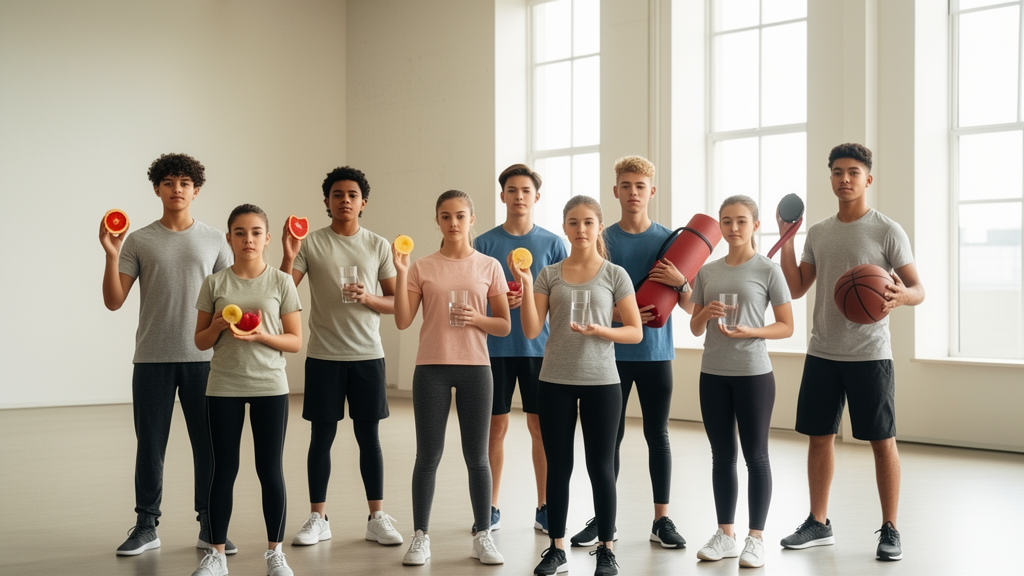
Sixteen-year-old adolescents view the management of daily lifestyle habits as a delicate balancing act that directly shapes both physical functioning and mental well-being, according to qualitative research published in BMC Public Health. The study participants emphasized that lifestyle routines must be autonomously chosen and carefully adjusted to match their personal life situations in order to achieve genuine satisfaction with health.
Developing and supporting healthy lifestyle habits early in the lifespan can have meaningful positive impacts on reducing the later risk of chronic non-communicable diseases. According to the research team, gaining a deeper, more detailed understanding of how adolescents perceive lifestyle habits and relate them to overall well-being during this developmental phase is crucial for designing successful, targeted public health interventions.
To explore these personal viewpoints, the study team investigated adolescents’ perspectives regarding the precise impact of lifestyle habits on health and well-being. The investigators recruited twenty-eight adolescents aged 16 years by purposive sampling from Swedish upper secondary schools, gathering their reflections through individual interviews administered with a semi-structured interview guide.
The research team subsequently analyzed the resulting interview transcripts using inductive qualitative content analysis to elicit descriptive categories directly from the participants’ words. This methodological approach enabled the researchers to systematically organize the adolescents’ statements regarding their daily experiences into distinct thematic categories reflecting physical and mental health.
The adolescents stated that lifestyle habits exert substantial influence over two major physical areas: body functions and energy levels, which the investigators categorised under the theme “Lifestyle habits affect the body.” When describing these bodily functions, the participants explicitly pointed to changes in brain capacity, physical fitness, illness, and general health as direct outcomes of their daily habits.
In addition to physical outcomes, the adolescents expressed that lifestyle habits also exert a powerful impact on mental aspects, which were categorised under the theme “Lifestyle habits affect the mind.” Specifically, the teenagers noted that their choices influence mood and emotions as well as self-esteem, detailing how their routines interact with self-confidence and their social context.
Across these discussions, the participants characterized their daily health choices as a continuous balancing act between how lifestyle habits affect health and the emotions and feelings related to maintaining those habits. The adolescents described that achieving satisfaction with health and well-being requires lifestyle habits to be properly balanced, personalized, and autonomously selected according to one’s personal life situation.
Ultimately, the adolescents described that lifestyle habits must be of the right type, properly dosed, personalised, and balanced to positively impact health and well-being over time. The study concluded that when supporting adolescents in developing balanced healthy lifestyle habits, practitioners and intervention designers must carefully consider their developmental phase and concentrate on beneficial effects while respecting personal autonomy.
Subject of Research: Adolescent perspectives on how lifestyle habits affect physical and mental health
Article Title: Adolescents’ perspectives on the impact of lifestyle habits on health and well-being – a balancing act
Article References: Tell, M. N., Hedin, K., Lingfors, H., Nilsson, M., Eyles, H., & Golsäter, M. (2026). Adolescents’ perspectives on the impact of lifestyle habits on health and well-being – a balancing act. BMC Public Health, 26(1), Article 3437. https://doi.org/10.1186/s12889-026-30370-4
Image Credits: AI Generated
DOI: 10.1186/s12889-026-30370-4
Keywords: adolescent health, lifestyle habits, qualitative content analysis, Swedish upper secondary schools, purposive sampling, semi-structured interviews, non-communicable diseases, personal autonomy, brain capacity, energy levels, physical fitness, self-esteem, self-confidence, mood and emotions, social context, developmental phase, health and well-being
