


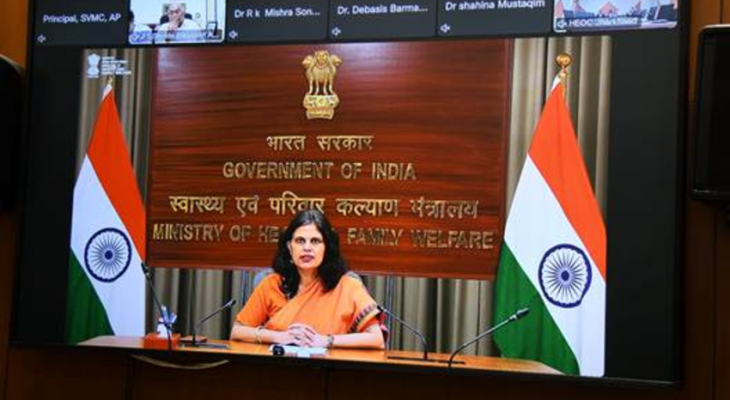
The Union Ministry of Health and Family Welfare on 18 November, 2026, inaugurated the national observance of World Antimicrobial Resistance (AMR) Awareness Week 2026 at Kartavya Bhawan, New Delhi, calling for coordinated action to address the growing threat of drug-resistant infections. Addressing the event virtually, Union Health Secretary Punya Salila Srivastava emphasised the need for responsible antimicrobial use, stronger infection prevention practices and a One Health approach to contain antimicrobial resistance across human, animal, plant and environmental systems.
Highlighting this year’s theme, ‘One Health, One Action: Prevent AMR Now’, Srivastava said the misuse and overuse of antimicrobial medicines were gradually reducing their effectiveness, threatening the ability to treat common infections and potentially reversing decades of medical progress.
She stressed that antimicrobial resistance was no longer confined to the healthcare sector, as inappropriate antimicrobial use across agriculture, veterinary medicine, food systems and the environment could contribute to the emergence and spread of resistant microorganisms.
Strengthening AMR Containment
Srivastava highlighted the government’s National Action Plan on Antimicrobial Resistance 2.0 (NAP AMR 2.0), covering 2025–2029, which was launched by Union Health Minister J.P. Nadda during World AMR Awareness Week in November 2025. The framework focuses on strengthening surveillance, infection prevention and control, responsible antimicrobial use, research and intersectoral coordination.
She also outlined initiatives under the National Programme on AMR Containment, coordinated by the National Centre for Disease Control (NCDC), which aims to improve laboratory capacity for resistance surveillance, antimicrobial stewardship, infection prevention and public awareness.
Emphasising the role of healthcare professionals, Srivastava said antibiotics should be prescribed only when clinically indicated and in accordance with appropriate treatment guidelines. Pharmacists, she added, must ensure that antimicrobials are dispensed against valid prescriptions and provide patients with guidance on their correct use.
She urged citizens to avoid self-medication, sharing antibiotics and using leftover medicines. Antibiotics are ineffective against viral infections such as the common cold and influenza, she noted, highlighting the importance of hygiene, sanitation, safe drinking water, food safety and vaccination in preventing infections and reducing unnecessary antibiotic consumption.
Addressing Non-prescription Sales
Participants at the meeting highlighted gaps in antimicrobial regulation and consumption practices, noting that more than half of antimicrobial sales in India take place without prescriptions, while nearly half of outpatient antibiotic prescriptions are inappropriate.
Stakeholders identified several measures requiring wider implementation, including public awareness campaigns, restrictions on non-prescription antibiotic sales, proper disposal of expired medicines and stronger action against substandard and spurious drugs.
The discussions also emphasised responsible antibiotic use in veterinary medicine, particularly among food-producing animals, alongside improved quality standards in healthcare facilities to prevent infections and their spread.
The event brought together representatives from the National Health Systems Resource Centre, Central Drugs Standard Control Organisation, Department of Animal Husbandry, Indian Medical Association and All India Association of Druggists and Chemists, along with officials from States and Union Territories.
Srivastava urged healthcare institutions, educational organisations, state governments and community groups to sustain AMR awareness beyond the designated week. She emphasised that preserving the effectiveness of essential antimicrobial medicines would require collective responsibility in prescribing, dispensing and consumption practices.
World AMR Awareness Week is observed globally from November 18 to 24 to improve understanding of antimicrobial resistance and encourage responsible practices among the public, policymakers and One Health stakeholders.
