


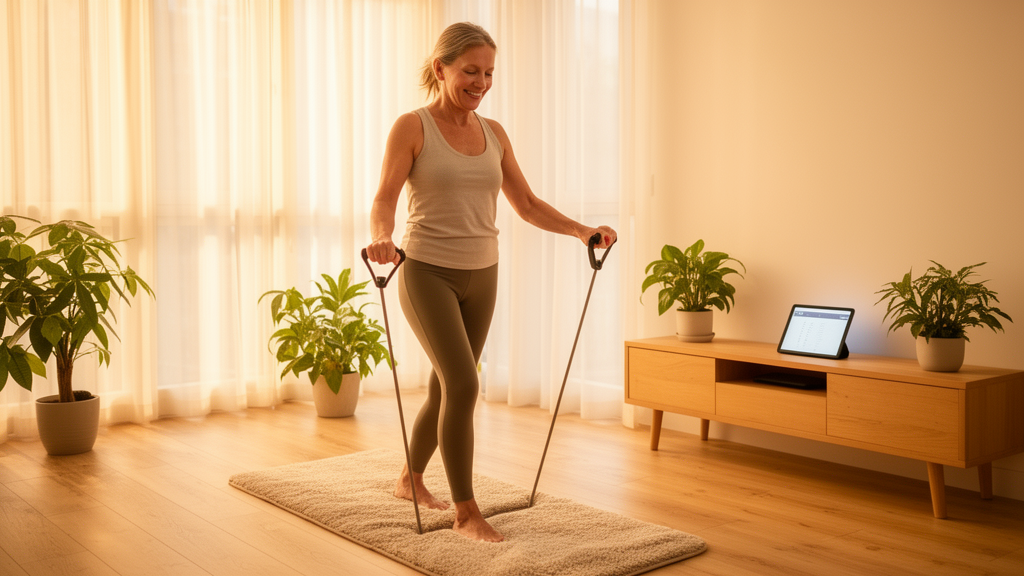
A 12-week digital, competence-oriented physical activity intervention significantly improved two specific physical activity-related health competence elements—manageability of endurance demands and physical activity-specific self-control—among persons with multiple sclerosis, according to a secondary data analysis published in Frontiers in Rehabilitation Sciences.
The study evaluated physical activity-related health competence, abbreviated as PAHCO, to establish which competence components are associated with physical activity volume and health outcomes in individuals diagnosed with multiple sclerosis, and to examine whether a structured intervention could intentionally modify those components.
To evaluate these associations and intervention responses, researchers combined datasets gathered from a cross-sectional survey and a randomized controlled waitlist trial. Structural equation modeling was utilized across a sample of 475 individuals with multiple sclerosis to identify which PAHCO factors linked most directly to physical activity volume and health indicators.
The modeling analysis revealed that four distinct competence domains exhibited the strongest associations with physical activity volume and health: manageability of endurance demands, body awareness, affect regulation, and physical activity-specific self-control.
To test whether targeted training could alter these specific competencies, 56 clinically stable individuals with multiple sclerosis who fulfilled digital participation criteria were randomized to either a 12-week digital competence-oriented physical activity intervention group or a usual care control group under trial identifier NCT04367389.
Intervention outcomes were assessed using repeated-measures multivariate analysis of variance based on an analytical sample comprising 24 participants in the intervention cohort and 26 participants in the control cohort. Compared with usual care, participants receiving the 12-week digital intervention demonstrated measurable improvements in the manageability of endurance demands and physical activity-specific self-control.
For the remaining identified competence elements, affect regulation displayed a non-significant numerical trend favoring the intervention group over the control group, while the intervention did not produce significant modifications in body awareness.
The authors concluded that the competence-oriented digital program successfully modified two of the four competence elements linked to activity volume and health, indicating that specific PAHCO elements represent viable target ingredients for physical activity promotion programs in multiple sclerosis.
Their report was published in Frontiers in Rehabilitation Sciences under the Interventions for Rehabilitation section, following submission in July 2026 and acceptance in October 2026.
Subject of Research: Digital competence-oriented physical activity intervention in multiple sclerosis
Article Title: Promoting central competencies for health-enhancing physical activity in individuals with multiple sclerosis. Findings from a secondary data analysis across a cross-sectional study and a randomized controlled trial
Article References: Lorenz, E., Hartung, V., Flachenecker, P., Geidl, W., Tallner, A., Pfeifer, K., & Carl, J. (2026). Promoting central competencies for health-enhancing physical activity in individuals with multiple sclerosis. Findings from a secondary data analysis across a cross-sectional study and a randomized controlled trial. Frontiers in Rehabilitation Sciences, 7, 1953434. https://doi.org/10.3389/fresc.2026.1953434
Image Credits: AI Generated
DOI: 10.3389/fresc.2026.1953434
Keywords: multiple sclerosis, physical activity-related health competence, PAHCO, manageability of endurance demands, physical activity-specific self-control, affect regulation, body awareness, physical activity volume, digital intervention, randomized controlled waitlist trial, cross-sectional survey, structural equation modeling, repeated-measures MANOVA, behavior change, rehabilitation sciences, usual care, exercise, NCT04367389
