


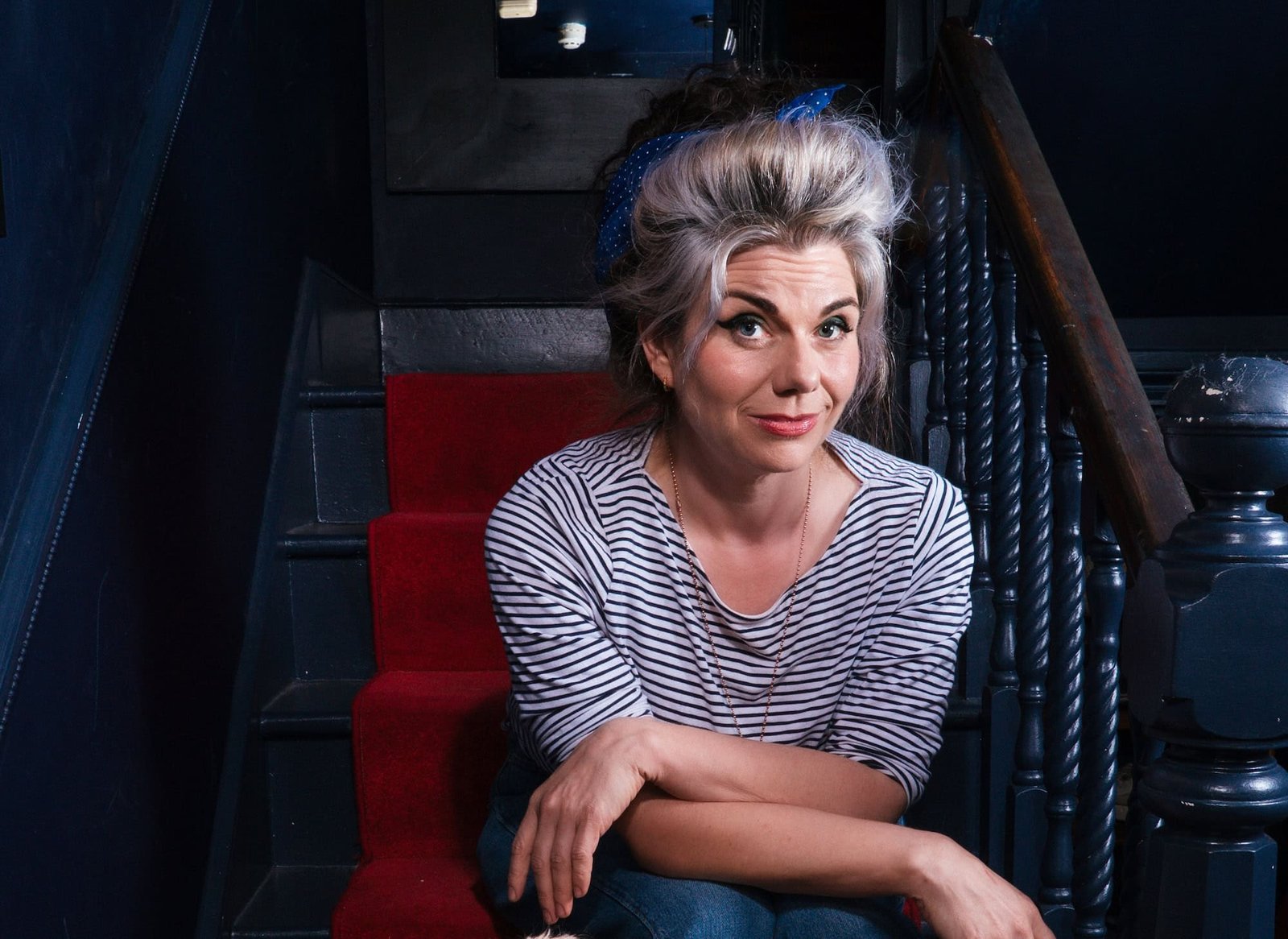
After a year looking for reasons to be hopeful in gardens, neighbours and strangers, journalist and author Caitlin Moran says hope is not simply optimism – but deciding to act
Ever since Caitlin Moran decided to “invite” nature into her back garden in north London, there’s been a steady stream of visitors and new residents: butterflies, bees, frogs, newts, woodpeckers, goldfinches …
Their presence, including a bird of prey paddling in her pond, has done wonders for her mental health. “If you have ADHD, like me, you have permanently lower levels of dopamine, so you tend to go online and get a little dopamine hit, or you comfort eat or smoke or drink,” she explains. “But if you want a hit that’s good for you, put a feeder in your garden and every time you see a bird or butterfly go past, you’ll get a massive hit. The day I saw a peregrine falcon was better than any ecstasy tablet I’ve ever taken.”
Her decision to ‘rewild’ her garden – tearing up the lawn, removing the patio and metal planters, installing two ponds – was one of many steps Moran took during a year-long quest to feel more hopeful about life, the world and the future of humanity.
Her new book, How to Be Hopeful, was written from a starting point of personal despondency, depression and chronic anxiety, for which she also sought therapy. In an era when cynicism and pessimism are the default position for many, hope is, Moran argues, a powerful act of rebellion. “One thing I did during my quest, in order to get the shitness of the modern era into perspective, was studying a lot of history,” she says.
“What you find time and time again is, if you have an anxious, depressed and suppliant populace, it’s for the benefit of – and often engineered by – the richest and most powerful people in society: people who want sad, anxious peasants feeling things are hopeless. What you don’t want is for people to rebel and go: ‘No, I want there to be a better world.’”
She applies this argument to today’s social media giants, which profit from online division, as well as to companies and governments that benefit when people feel helpless to change anything. “My quest starts off with me picking up litter, which feels like a little thing, but by the end it’s like: ‘No, this is a global problem.’ There’s a reason why we’ve all been made to feel anxious and depressed.”
If you have an anxious, depressed and suppliant populace, it’s for the benefit of – and often engineered by – the richest and most powerful people in society
Moran quotes Nick Cave – “Hope is optimism with a broken heart” – when I ask how she defines the slippery concept. “It’s being aware that things are bad and having gone through bad times yourself, but restabilising and going: ‘The only way through this is to be hopeful,’” she reasons. “It’s about putting on your own oxygen mask before you help others. If you’re panicking and crushed by how terrible things are, that doesn’t help, so hope is the necessary thing. If one by one, we make our lives and our days better, we’re far better placed to be able to do something about the world.”
Her refusal to accept things the way they are comes from her childhood, growing up in poverty, one of eight children in a council house in Wolverhampton, England. Her family survived on her father’s disability benefits. “I grew up in a household that palpably wasn’t working,” she explains. “My parents were just, like: ‘Well, this is just the way things are.’ From a very early age, my rebellion was to go: ‘I don’t accept that things can’t get better.’”
Moran’s books, such as How to Be a Woman, her irreverent 2011 take on feminism and modern womanhood, and the more recent What About Men? – about toxic masculinity – have applied that thinking more widely, offering alternatives to harmful cultural challenges. “When you see society doing something that’s not working, that’s when I like to go: ‘Could we try something different?’,” she says.
Photographed by her daughter, Dora Paphides, Moran urges us to give the next generation reasons to believe things can get better
Rather than a masterplan to overthrow governments, armies and corporations to create a new utopia, her approach is about smaller, quieter, often local changes, such as picking up litter around her local Finsbury Park and donating blood.
But Moran argues that cultivating hope is not simply a route to personal happiness; it can also change how we respond to the world around us. “It’s because of my children. If you look at the stats on young people, they think there’s no hope.
They say they’re not going to have children. That’s because they’ve listened to mummy and daddy having huge conversations around the dinner table with their friends going: ‘We’re fucked.’ That’s really bad parenting by our generation. It’s not our right to tell kids: ‘Everything’s fucked, bad people are in charge of the world, and we can’t do anything.’ The future is theirs. The one favour we can do our kids is to look them in the eye and tell them: ‘You’ll find a way through this. You’re brilliant. There is hope.’”
Moran is aware that, as a successful, well-paid journalist and author, she has more options than most people. But her central idea still makes sense: that we need to cultivate hope; that it’s a process we need to actively engage in. “We need to stop feeling powerless,” she says.
Rewilding her garden is one example of hope being contagious and of practical actions having more impact than yelling at strangers online. Moran was influenced by a visit to Knepp, Isabella Tree and Charlie Burrell’s pioneering transformation of their 3,500-acre West Sussex farm.
‘Collectively our back gardens take up more space than our national parks’, says Moran. Image: Jonnie Goodsell
“We’re right to worry about the environment,” she says. “The UK is one of the most nature-denuded countries in Europe, but collectively our back gardens take up more space than our national parks. My neighbours have all seen my garden, and they’re rewilding bits of theirs, making holes in their fences for hedgehogs … We can be our own ‘national park’. We don’t need to wait for a government to do that. We can do something today that would be the change we wish to see.”
It’s the difference compared with being an online ‘activist’, she notes. “We’ve been told that the way we change the world is to shout about things on the internet and ‘burn’ people who we disagree with. That changes nothing.”
Moran talks a lot about social media and the internet. Once a passionate advocate, she came off Twitter in 2024, viewing it as a place of hatred and division. Rather than accepting the deluge of online content that can fuel despair, people should take control of their algorithm, seeking out, posting and sharing positive content, she advises. “What anyone can do is make a space and set the tone. You have to take responsibility for it and if you can’t make it work for you, come off it.”
The one favour we can do our kids is to look them in the eye and tell them: ‘You’ll find a way through this. You’re brilliant. There is hope’
Getting a good night’s sleep, rather than surrendering the evening to doomscrolling, may seem obvious, but that doesn’t make it any less useful: hope is easier to sustain when we’re rested. As she writes in the book: “Every day starts the night before.” Rather than spending hours each day consuming 24/7 rolling news about world events, Moran’s reduced her daily intake, and started paying more attention to local news. Aware that the mainstream news is often dominated by dire and desperate stories, from conflicts in the Middle East to the climate crisis, she recommends seeking out and sharing the hopeful developments happening around the world that might otherwise go unnoticed.
Something as simple as removing your headphones can also be transformative. “You think you’re ‘connected’ and learning about the world if you’re listening to a podcast about Gaza,” she says. “But it’s also very important to be present in your life.”
Moving around London without headphones on, Moran found the sound of rain landing on leaves could bring her to tears. She enjoyed listening to people talking on buses and trains. “Unlike social media, human beings don’t tend to sit on a bus debating furiously about trans issues or Gaza and Palestine, to the point of screaming: ‘I hate you – you should die,’” she says. “They’re working out what to have for tea and getting on with each other.”
Humour in hard times is also useful, she suggests, as “the best way to virally spread information”. Most importantly, though, a more hopeful world requires a change in how we think and communicate. “If we’re hopeful people, rather than angry people resigned to the fact that things are going to get worse, the world can change. We’ve passed peak despair: people don’t want to feel so despairing any longer. We need to talk about the future differently.”
How to Be Hopeful: A Year of Attempting to Feel Less Awful About the World, by Caitlin Moran, is out now, published by Ebury
Main image: Dora Paphides
Because the world needs it
Positive News reports on the people and ideas driving progress. We believe that giving attention to solutions helps them spread.
Our journalism is independent and powered by our readers. There are no media moguls or shareholders extracting profits: your contribution funds our work to investigate what’s working, understand why, and bring those stories to a wider audience.
If you value a fuller picture of what’s happening in the world, please become a Positive News supporter today.
Support Positive News
