


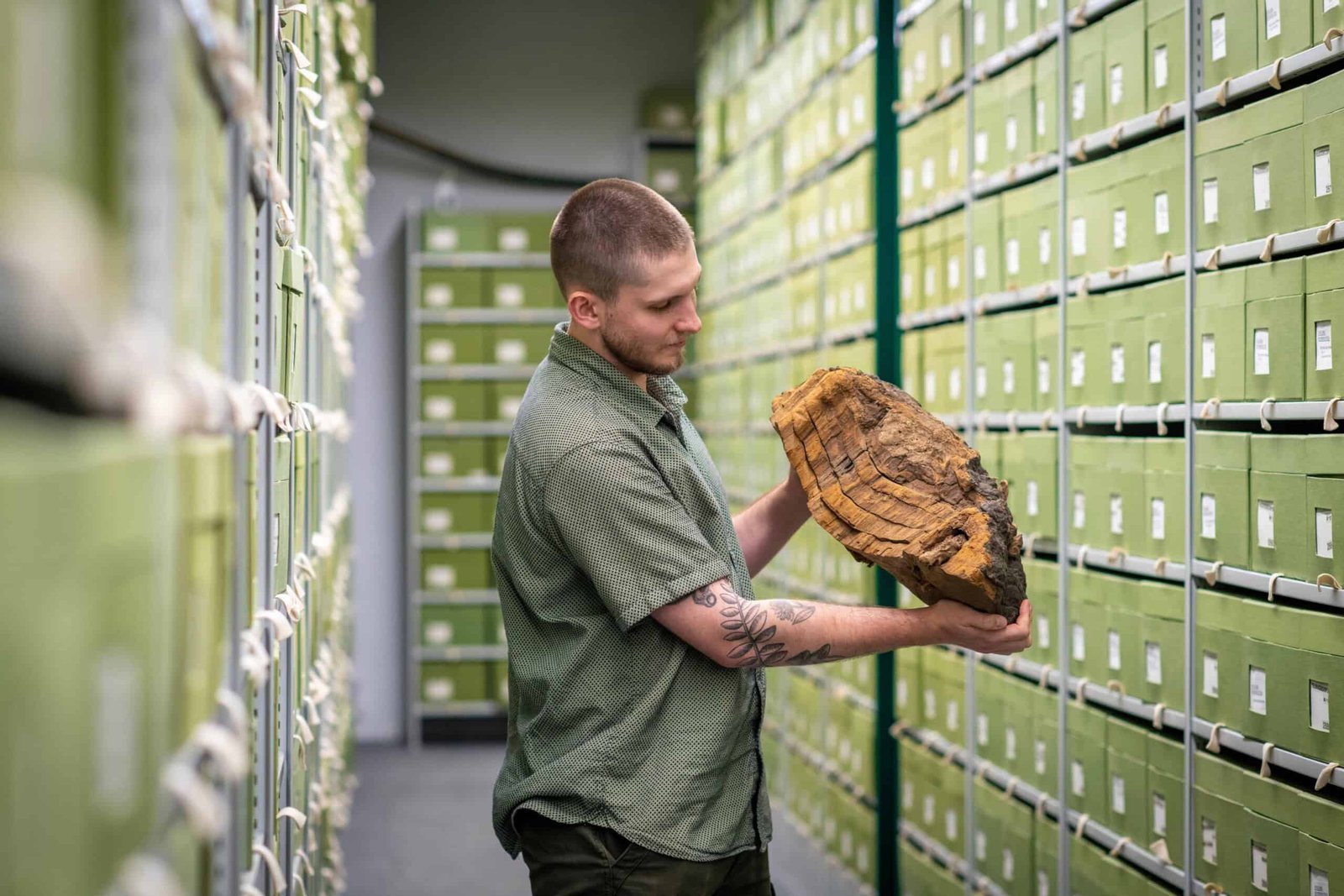
The State of the World’s Plants and Fungi 2026 report, drawing on the expertise of more than 400 scientists from 40 countries, suggests that technology is transforming conservation efforts. AI is helping to identify challenging plants, and even pinpoint species new to science, its authors say.
Meanwhile, specimens are being analysed at an ‘unprecedented scale’, and digital advances are speeding up cataloguing and data-sharing. Kew, for example, has digitised 7.4m plant and fungi specimens in its collection. Laid end-to-end they would stretch almost 3,000km.
Professor Alexandre Antonelli, executive director of science at Kew, said: “Scientists, practitioners and anyone with a keen interest in biodiversity are now being equipped with unprecedented data and tools to learn and contribute in ways that are faster, better and more impactful than ever before.”
The benefits are not without limitations. AI-generated identifications still require scientific validation, and the technology doesn’t remove the need for expert judgement or address the underlying causes of biodiversity loss.
Its environmental costs also merit scrutiny. AI depends on energy-intensive infrastructure, including data centres that can consume significant amounts of electricity and, in some locations, water for cooling.
Main image: Ines Stuart Davidson
