


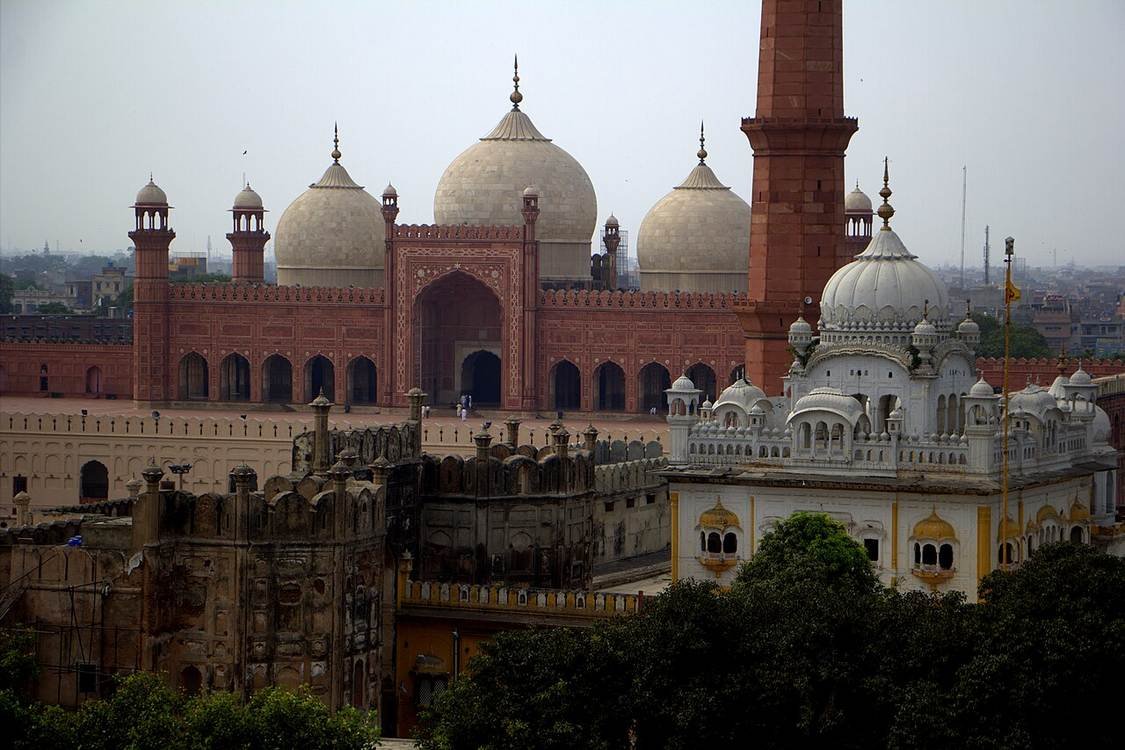
A famous mosque and gurudwara stand side by side in Lahore, Pakistani Punjab – credit, the Walled City of Lahore Authority, CC BY-SA 4.0, via Wikimedia Commons
In the Indian state of Punjab, Muslims are watching Sikhs and Hindus organize the rebuilding of old mosques destroyed following Partition.
Emotional to say the least, the inter-faith community building is being led by many old enough to remember the strife which ripped across the state. A portion of this ancient and proud land was allocated to Pakistan and another to India, dividing families and homes—sometimes literally—in two.
Detailed in a Guardian photo essay from the villages of Jakhiwal, Punawal, and Umarpura, these villages are seeing mosques either restored or built from the ground up—across more than one occasion, on land donated by a neighbor of another faith.
In Jakhiwal, it was 77-year-old Sikh Bibi Rajinder Kaur who urged her grandson to donate land for the purpose of building a new mosque. In Punawal, it was 48-year-old Jaspal Sharma, from a family of Hindu priests, that made such a donation. When it was completed in February, he hosted a feast for the entire village to mark the occasion.
While the call to prayer is silenced in Western countries, Sharma said he found it made for “a lively atmosphere” in the village.
“And it wasn’t just us; everyone in the village, Hindus and Sikhs together, contributed what they could,” Sharma told the Guardian‘s Cheena Kapur. “Some gave money; others donated bricks and cement.”
In Umarpura, local Sikhs helped restore an antique Muslim shrine.
“We live as one and no matter what happens in the rest of the country, the mood here is that of love and unity. Punjab’s conscience cannot tolerate cruelty against a being, irrespective of caste and religion,” said Sukhjinder Pander, one of the men who donated his labor to the work.
MORE STORIES LIKE THIS: For First Time in 72 Years, Sikhs Can Visit One of Their Holiest Sites Thanks to New Peace Corridor
This isn’t a new phenomenon. India Tomorrow reported 3 years ago on a different group of villagers from a different group of villages performing exactly the same acts of religious tolerance and neighborly support.
India is often held up as one of the strongest examples that democracy works because of the staggering diversity in languages, races, and faiths the country guarantees equal protections for.
Far from the halls of power, these Punjabi residents need no courts or constitution to enact the same policy. It’s woven into the fabric of this diverse landscape, where “Eid and Gurpurab [Sikhs’ most holy festival] are celebrated by both communities with the same fervor,” said Pander.
SHARE This Uplifting Example Of Religious Tolerance With Your Friends…
